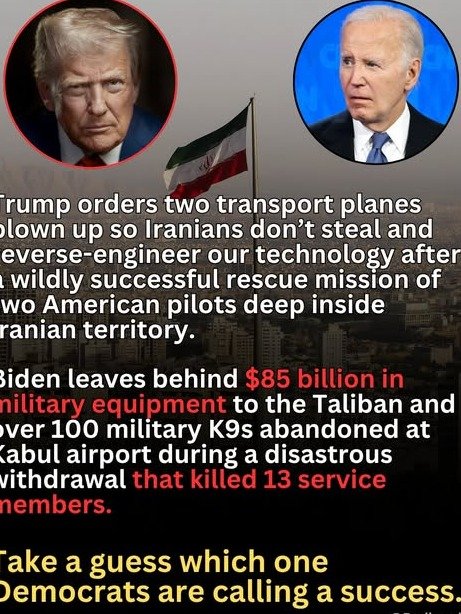
Imagine a scenario where the most powerful military in the world intentionally destroys its own state-of-the-art equipment. It sounds counterintuitive, even shocking, but sometimes, in the shadowy world of geopolitical strategy, such a drastic measure becomes not just necessary, but absolutely critical for national security. This is precisely the kind of high-stakes decision that can unfold behind closed doors, driven by the imperative to protect vital intelligence.
Such an order, reportedly made by then-President Trump, to destroy two advanced transport planes, wasn’t a casual decision. It was a calculated, extreme measure taken to prevent sensitive American military technology from falling into the hands of adversaries, specifically Iran. The goal was clear: safeguard national secrets and maintain a technological edge at all costs, especially after a critical, high-risk operation.
The Stakes: Protecting America’s Technological Edge
Why would any nation destroy its own multi-million dollar assets? The answer lies in the immense value of military technology. Modern warfare is increasingly defined by technological superiority. From avionics and communication systems to materials science and sensor arrays, every component of an advanced military aircraft holds proprietary information and design secrets that are invaluable to potential adversaries.
Transport planes, while not frontline fighters, are crucial logistical assets packed with sophisticated navigation, communication, and electronic warfare countermeasures. If these systems were compromised, reverse-engineered, or even simply studied by a hostile power, it could provide them with critical insights into American capabilities, vulnerabilities, and operational methodologies.
The Threat of Reverse Engineering: A Game-Changer
The concept of reverse engineering is a nightmare scenario for any advanced military. It’s the process of deconstructing a man-made object to discover its design, architecture, or to extract knowledge from the object. For military hardware, this means an adversary could:
- Understand Weaknesses: Identify flaws or vulnerabilities in systems that could be exploited in future conflicts.
- Develop Countermeasures: Create defenses against American technology, negating its effectiveness.
- Accelerate Own Development: Bypass years of research and development by simply copying or adapting existing designs.
- Compromise Future Operations: Learn about communication frequencies, encryption methods, or sensor capabilities, making it harder for U.S. forces to operate securely.
This isn’t just about copying a blueprint; it’s about understanding the underlying principles, the materials, the software, and the manufacturing processes that give American military technology its unparalleled edge. Losing this advantage could have catastrophic long-term consequences for national security.
U.S.-Iran Tensions: A History of Strategic Rivalry
The relationship between the United States and Iran has been fraught with tension for decades, characterized by proxy conflicts, economic sanctions, and a constant struggle for regional influence. In this environment, intelligence gathering and counter-intelligence operations are paramount. Both nations are acutely aware of the other’s capabilities and constantly seek to gain an advantage.
Iran has demonstrated a persistent interest in acquiring and developing advanced military technology, often through illicit means or by attempting to reverse-engineer captured equipment. This makes any U.S. military asset potentially exposed in a region where Iran has influence an immediate, high-priority target for intelligence exploitation.
“In the realm of national security, the cost of losing technological secrets far outweighs the financial value of the equipment itself. It’s a strategic investment in maintaining an asymmetric advantage.” – A former intelligence official.
The Context: High-Stakes Operations and Compromise
While the specific details of the “rescue mission of two American pilots” mentioned in the original context remain unverified in public records, the underlying scenario points to a critical incident where U.S. assets were potentially compromised in a hostile or contested environment. In such situations, military doctrine often dictates extreme measures to prevent classified technology from falling into enemy hands.
Whether an aircraft is downed, severely damaged, or simply in a location where recovery is impossible or too risky, the decision matrix shifts. The priority moves from asset recovery to intelligence protection. This could involve precision strikes, demolition charges, or other methods to ensure complete destruction.
The Commander-in-Chief’s Dilemma: A Tough Call
The decision to destroy high-value military assets is never taken lightly. It involves a complex calculus of risks, costs, and strategic implications, ultimately landing on the desk of the Commander-in-Chief. For then-President Trump, this would have involved weighing:
- The immediate financial cost of losing two transport planes, potentially hundreds of millions of dollars.
- The long-term strategic cost of Iran potentially gaining access to sensitive U.S. technology.
- The operational risk of attempting a recovery mission in a hostile area.
- The message sent to both allies and adversaries about America’s resolve to protect its secrets.
Such a decision underscores the gravity of national security concerns and the willingness of leadership to make unpopular or costly choices when the stakes are incredibly high. It reflects a deep understanding of the intelligence war that is constantly being waged beneath the surface of overt conflicts.
Ensuring Total Obliteration: The Operational Aspect
Once the order to destroy is given, the execution must be precise and thorough. The goal isn’t just to make the plane unusable, but to obliterate any component that could yield intelligence. This often involves specialized demolition teams or, if available, precision air strikes.
The methods employed are designed to ensure that materials are scattered beyond recovery, systems are melted or crushed beyond recognition, and data storage devices are utterly destroyed. The aim is to leave nothing behind that an adversary could exploit, turning a technological marvel into an unrecognizable heap of scrap metal and debris.
Beyond the Headline: The Unseen Battles
This incident, if confirmed in its full scope, serves as a powerful reminder of the unseen battles fought every day in the realm of national security. It highlights the constant vigilance required to protect sensitive information and maintain a strategic advantage against determined adversaries.
The story of destroying one’s own planes to deny technology to an enemy is more than just a dramatic headline; it’s a window into the cold, hard realities of modern geopolitical competition, where every piece of information is a weapon, and protecting secrets is as vital as any military victory. It reinforces the idea that sometimes, the most effective defense is a devastating offense against one’s own property, all in the name of safeguarding the nation.
Ultimately, such an order is a testament to the fact that in the high-stakes game of international power, some secrets are simply too valuable to risk, even if it means sacrificing immensely valuable assets in the process. The long-term security of a nation often depends on these difficult, often controversial, decisions.
About the Author




