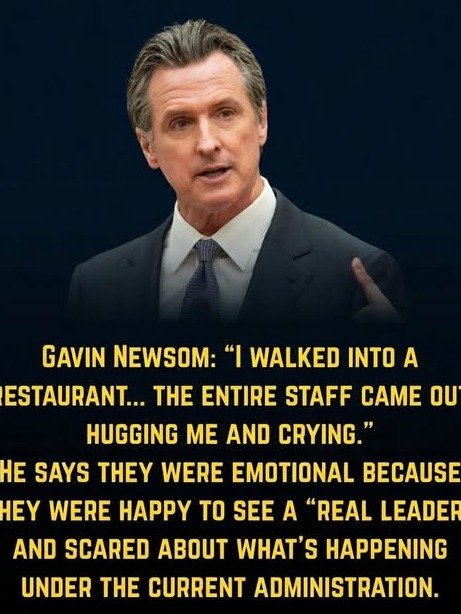
Imagine walking into a busy restaurant, not for a quiet meal, but to be met with an outpouring of raw emotion – a desperate, tearful plea from the very people serving your food. That’s precisely what Governor Gavin Newsom encountered recently, an experience that pulled back the curtain on the profound anxieties gripping everyday Americans and sent shockwaves through the political landscape.
This wasn’t a staged event or a planned photo op. It was a spontaneous, deeply human interaction that Newsom himself recounted, sharing how restaurant staff, from the cooks in the back to the servers on the floor, approached him with a mix of relief and palpable fear. Their message was clear, heartbreaking, and unforgettable: they were terrified of former President Trump’s potential return to power.
A Scene of Raw Emotion
The encounter, as shared by Newsom, unfolded in a setting many of us frequent daily – a local restaurant, a hub of community life. When the governor entered, he was met not just with professional greetings, but with a wave of personal, emotional responses. Staff members, one after another, approached him, their faces etched with concern.
Newsom described how these individuals, often the backbone of our local economies, didn’t just shake his hand; they emotionally embraced him. Their eyes welled up with tears, and their voices, though hushed, carried an undeniable urgency. It was a moment that transcended political rhetoric, revealing the deeply personal impact of national politics on ordinary lives.
The Heart of Their Fear: Trump’s Potential Impact
What compelled these hard-working individuals to express such profound distress to a high-ranking politician? Newsom indicated their fears were explicitly tied to the potential return of Donald Trump to the White House. This wasn’t a vague political concern; it was a deeply personal dread about how a change in leadership could fundamentally alter their lives, their livelihoods, and their communities.
Their anxieties weren’t abstract; they were rooted in very real concerns about economic stability, social cohesion, and fundamental rights. The staff, representing a diverse cross-section of the working class, articulated worries that painted a vivid picture of the stakes they believe are at play in the next election cycle.
Economic Instability and Small Business Worries
Many of the fears expressed revolved around the economy and the future of small businesses, especially in the hospitality sector. Restaurant workers often operate on thin margins, and they remember previous administrations’ policies with keen detail. They worry about potential shifts in economic policy that could impact minimum wage, labor laws, and the overall stability of the job market.
“They talked about their small businesses, their families, their fear of what a Trump presidency would mean for their ability to thrive, to keep their doors open,” Newsom recounted, emphasizing the economic undercurrents of their emotional plea. “It wasn’t just about politics; it was about survival.”
The memory of economic uncertainty, trade wars, and fluctuating consumer confidence during past administrations weighs heavily on these individuals. They see their jobs, their family’s financial security, and the viability of their workplaces directly linked to who holds the highest office.
Threats to Social Fabric and Community Values
Beyond economics, the restaurant staff conveyed deep anxieties about the social and cultural impact of a potential Trump return. Many expressed fears about heightened divisions, rhetoric that targets marginalized communities, and policies that could undermine civil liberties or social progress.
- Immigration Concerns: For many in the service industry, immigration policies are not abstract. They affect their colleagues, friends, and family members directly. Fears of increased deportations, stricter border policies, and a more hostile environment for immigrants were a significant part of their distress.
- LGBTQ+ Rights: Others voiced worries about the erosion of LGBTQ+ rights and protections, recalling past policy changes and rhetoric that targeted these communities. They feared a rollback of progress and a less inclusive society.
- Racial Justice and Equity: The staff also spoke to concerns about racial justice, fearing that a change in leadership could exacerbate racial tensions and undermine efforts towards greater equity and understanding in communities.
These are not just political talking points for them; they are deeply personal aspects of their identity and the safety of their loved ones. The embrace of Newsom was, in many ways, an embrace of a perceived ally against these looming threats.
Healthcare, Education, and Environmental Protections
The conversation extended to crucial areas like healthcare access, the future of education, and environmental protections. Many expressed apprehension about potential changes to the Affordable Care Act (ACA), which has provided health coverage to millions, including many service industry workers who might not otherwise have access.
Parents working in the restaurant industry worried about the impact on public education, funding for schools, and the broader future for their children. Environmental concerns also surfaced, with staff expressing fears that a new administration might roll back climate initiatives, impacting the planet and future generations.
Newsom’s Role: A Listener and a Symbol
In this charged atmosphere, Governor Newsom wasn’t just a politician; he became a confidant, a symbol of hope, and a recipient of raw, unvarnished fear. His recounting of the event highlighted the profound responsibility he felt in that moment, not just as a governor but as a public servant listening to the genuine concerns of his constituents.
His presence seemed to unlock a dam of pent-up emotions, giving these individuals a direct channel to express their deepest political anxieties. He listened, offered reassurance, and acknowledged the gravity of their fears, reinforcing his role as a vocal opponent of Trump’s political agenda and a champion of progressive values.
A Microcosm of National Anxieties
This single, emotional encounter in a restaurant serves as a powerful microcosm of the broader political climate sweeping across the nation. It underscores that for millions of Americans, political choices are not just about policy debates or party platforms; they are about the fundamental fabric of their lives, their families, and their futures.
The staff’s emotional appeal to Newsom wasn’t an isolated incident; it reflects a widespread sentiment of deep apprehension and uncertainty about the country’s direction. It’s a testament to how deeply intertwined personal well-being has become with national leadership and policy decisions.
The Stakes Have Never Been Higher
The viral nature of Newsom’s story isn’t just because it’s a dramatic anecdote. It resonates because it taps into a universal truth: the stakes in our political discourse feel incredibly high for many. For the restaurant staff, their tears weren’t for a political party, but for the stability, inclusivity, and humanity they believe are on the line.
Their plea was a reminder that behind every election, every poll, and every headline, there are real people with real fears and hopes. They are the individuals who serve our food, clean our streets, and educate our children, and their voices, filled with raw emotion, are a powerful indicator of the current national mood.
A Call to Empathy and Engagement
The encounter between Governor Newsom and the restaurant staff is more than just a political story; it’s a profound call to empathy and a stark reminder of the human element in politics. It urges us to look beyond the headlines and engage with the very real concerns that motivate citizens to act, to vote, and to express their fears so openly.
As the nation moves towards critical electoral decisions, the emotional embrace and tearful pleas witnessed by Gavin Newsom serve as a powerful testament to the intense personal investment many Americans have in the outcome. It’s a reminder that for countless individuals, the future of their communities, their livelihoods, and their very sense of security hangs in the balance.
About the Author




