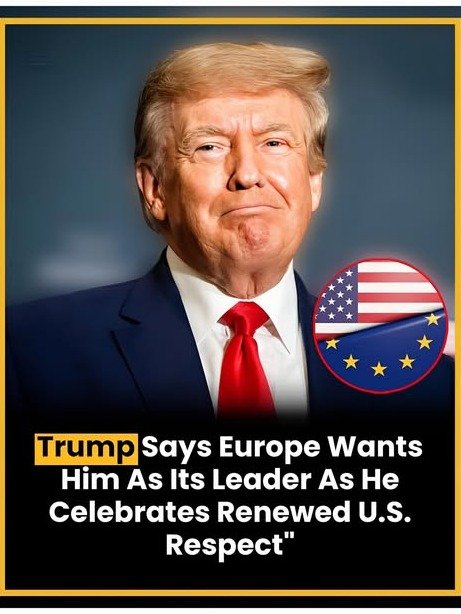
Did Donald Trump just drop a bombshell claim about his international appeal? Recently, the former President ignited a firestorm of discussion by suggesting that his distinctive leadership style is not only recognized but also highly regarded across the globe, specifically pointing to various nations within Europe. This assertion challenges widely held perceptions and begs the question: is there a hidden truth behind his confidence?
Forget what you think you know about global perceptions of Trump. While many narratives focus on widespread disapproval, Trump’s recent comments force us to look deeper. He believes that despite conventional wisdom, his direct, ‘America First’ approach resonates with key figures and segments of the population even in traditionally allied European countries. But is this a genuine sentiment, a strategic political play, or something else entirely?
Unpacking Trump’s Bold European Claims
Donald Trump’s statement wasn’t just a passing remark; it was a deliberate claim designed to highlight a perceived disconnect between media portrayals and an underlying reality. He emphasized that leaders he interacted with, even those who might publicly distance themselves, privately expressed admiration for his decisiveness and unconventional approach to international relations. This suggests a more complex diplomatic landscape than often presented.
His supporters often point to specific instances or leaders who, at various times, seemed to find common ground with Trump’s policies or admired his willingness to challenge established norms. From discussions on NATO burden-sharing to trade negotiations, Trump’s approach often bypassed traditional diplomatic niceties, a style that, for some, cut through bureaucracy and delivered results.
The Nuance of European Opinion: Beyond the Headlines
It’s crucial to understand that ‘Europe’ is not a monolithic entity. Public and political opinions across the continent are incredibly diverse, often swinging between admiration, apprehension, and outright opposition to the former U.S. President. While polls in many Western European nations often showed low approval ratings for Trump during his presidency, these aggregate numbers don’t tell the whole story.
Digging deeper, one finds pockets of significant support, particularly within certain conservative, nationalist, and populist movements. Leaders like Viktor Orbán of Hungary, who openly praised Trump, or figures within parties like France’s National Rally or Germany’s AfD, often echoed Trump’s anti-establishment rhetoric and his stance on issues like immigration and national sovereignty. For these groups, Trump represented a refreshing alternative to what they saw as an overly liberal and globalist consensus.
“There is a segment of European political thought that genuinely sees Trump’s ‘America First’ as a model for their own ‘Nation First’ policies. They admire his perceived strength and his willingness to challenge international institutions.”
‘America First’ and Its Echoes Across the Atlantic
Trump’s ‘America First’ doctrine, while often viewed critically in Europe for its perceived unilateralism, paradoxically resonated with some European factions advocating for similar nationalistic agendas. His skepticism towards multilateral institutions like the European Union and NATO, while alarming to many, was appealing to those who felt their national interests were being subsumed by broader regional or global bodies.
For instance, his demands for increased defense spending from NATO allies, though initially met with resistance, did prompt some European countries to reassess their contributions. While the manner of his demands was often controversial, the underlying message about equitable burden-sharing was not entirely dismissed by all, especially by those who felt their nations were shouldering too much of the defense cost.
- Trade Policy: Trump’s aggressive stance on trade, including tariffs on steel and aluminum, caused friction but also forced European leaders to confront their own trade imbalances and protectionist tendencies.
- Immigration: His strong rhetoric on border security and controlled immigration found common ground with European populist parties grappling with similar challenges and public anxieties.
- Energy Independence: Trump’s push for American energy dominance, while contrasting with European climate goals, appealed to some who sought to reduce reliance on potentially unstable energy sources.
The Divide: Mainstream vs. Populist Perceptions
The stark difference in perception often boils down to a fundamental ideological divide. Mainstream European leaders and media typically viewed Trump’s presidency through the lens of traditional diplomacy, multilateralism, and democratic norms. From this perspective, his actions often appeared disruptive, unpredictable, and potentially damaging to the transatlantic alliance.
However, for a significant, albeit often less vocal, segment of the European electorate and their political representatives, Trump’s style was a breath of fresh air. They saw him as a strong leader unafraid to challenge political correctness, prioritize national interests, and speak directly to the concerns of ordinary citizens who felt left behind by globalization. This populist appeal is what Trump likely refers to when he speaks of international regard.
Media Portrayal vs. Ground Reality: A Disconnect?
Much of the European media landscape, particularly in Western Europe, tends to be critical of populist movements and leaders perceived as authoritarian or disruptive. This often led to a portrayal of Trump that emphasized his controversies, gaffes, and the negative reactions from traditional allies.
Yet, the reality on the ground, especially in regions like Eastern Europe or among specific demographics, was more complex. Many felt that the mainstream media painted an overly simplistic and often biased picture, failing to capture the genuine concerns and aspirations that made figures like Trump appealing to a certain demographic both in the US and abroad.
Looking Ahead: What a Second Term Could Mean
If Donald Trump were to return to the White House, his claim of international regard would undoubtedly be put to the test once more. Many European capitals are already bracing for a potential shift in U.S. foreign policy, with discussions ranging from renewed trade disputes to questions about NATO’s future and the U.S. commitment to global climate initiatives.
However, a second Trump term might also embolden those European leaders and movements who align with his ideology. It could accelerate a re-evaluation of European strategic autonomy and potentially foster new, unconventional alliances or diplomatic approaches, further fragmenting the traditional transatlantic relationship.
The Complex Tapestry of Global Opinion
Ultimately, Donald Trump’s assertion about his leadership style being well-regarded internationally, including in parts of Europe, is not entirely without merit, nor is it universally true. It highlights the deeply fractured nature of global political opinion and the growing chasm between traditional diplomatic establishments and burgeoning populist movements.
While many Europeans undoubtedly view his style with apprehension, there are undeniable segments – both political and public – who see in Trump a decisive leader unafraid to challenge the status quo. Understanding this complex tapestry of opinions is crucial to grasping the full scope of his global impact and the potential shifts in international relations that his influence continues to provoke.
About the Author




