Could the very systems designed to protect our democracy be under attack from within? A recent bombshell claim from a prominent political figure has ignited a fierce debate, leaving many Americans questioning the security of their vote and the future of electoral processes. This isn’t just about politics; it’s about the bedrock of our nation.
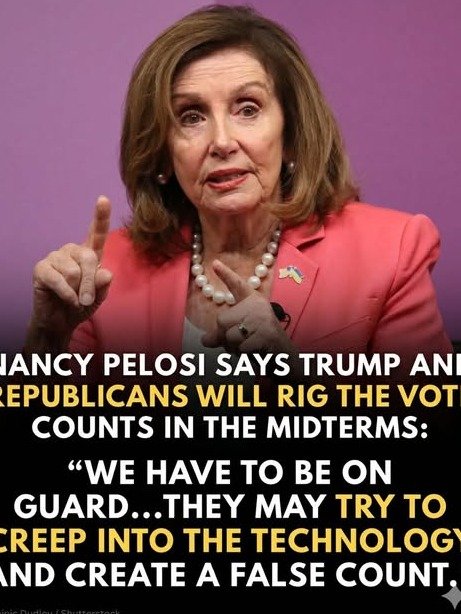
House Speaker Emerita Nancy Pelosi has made a startling accusation, asserting that former President Donald Trump is actively seeking to undermine the integrity of our voting technology. Her statements suggest a grave concern that the foundational elements of free and fair elections are being targeted, potentially eroding public trust in the democratic process itself.
The Alarming Accusation: Pelosi’s Stance on Election Integrity
According to Pelosi, what should be a universally accepted goal – the robust protection of our elections – is being paradoxically reframed as a “threat” by certain factions. This perspective starkly contrasts with the overwhelming sentiment of the American public, who overwhelmingly desire secure, transparent, and trustworthy electoral outcomes.
Pelosi’s remarks underscore a growing chasm in how political leaders perceive and communicate about election security. She posits that by casting doubt on established voting mechanisms, Trump’s actions could inadvertently, or even deliberately, weaken the public’s faith in the electoral system, thereby threatening democracy from within.
“When you have a former president actively working to cast doubt on the very machines that count our votes, and when efforts to secure those systems are labeled as a ‘threat,’ we are truly in dangerous territory for our democracy,” Pelosi reportedly emphasized. “The American people deserve to know their vote is counted fairly and accurately, without political interference.”
Unpacking the “Undermining” Allegations: What Actions Are in Question?
So, what specific actions or rhetoric might Pelosi be referring to when she speaks of Trump undermining voting technology? Throughout and after the 2020 election, former President Trump and his allies frequently questioned the reliability and security of various voting machines and software, particularly those from companies like Dominion Voting Systems and Smartmatic.
These challenges often involved claims of widespread fraud, software glitches, and even foreign interference, despite repeated debunking by election officials, cybersecurity experts, and numerous court rulings. Such rhetoric, Pelosi suggests, serves to sow seeds of doubt rather than address legitimate concerns through established channels.
Furthermore, calls for extensive, often unprecedented, audits and recounts, sometimes based on unsubstantiated theories, have been interpreted by critics as attempts to delegitimize election results rather than ensure accuracy. While transparency in elections is crucial, critics argue that these efforts sometimes crossed into territory that actively eroded confidence.
The Public’s Perspective: Security vs. Skepticism
The American public finds itself caught in the middle of this contentious debate. On one hand, there’s a deep-seated desire for secure, fair, and accessible elections. Citizens want assurance that their vote matters and that the outcome reflects the will of the people.
On the other hand, the constant barrage of claims and counter-claims from political figures has undoubtedly fueled skepticism among a segment of the population. When high-profile leaders question the fundamental mechanics of voting, it’s natural for some citizens to become wary, regardless of the veracity of those claims.
This creates a challenging environment where genuine efforts to improve election security can be conflated with partisan attacks, making it difficult for voters to discern fact from politically motivated fiction. The stakes couldn’t be higher for maintaining a healthy, functioning democracy.
The Nuts and Bolts: Modern Voting Technology Explained
Understanding the debate requires a basic grasp of modern voting technology. Today’s elections utilize a variety of systems, each with its own advantages and potential vulnerabilities:
- Direct-Recording Electronic (DRE) Machines: These touchscreen machines record votes electronically, often without a paper trail. While convenient, their lack of a physical record can make auditing challenging.
- Optical Scan Systems: Voters mark paper ballots, which are then fed into a scanner that tabulates the votes. These systems provide a paper trail, making audits more robust.
- Ballot Marking Devices (BMDs): These machines assist voters (especially those with disabilities) in marking a paper ballot, which is then scanned. They provide accessibility while still generating a paper record.
The move towards systems with verifiable paper trails has been a major focus for election security advocates. A paper trail allows for manual audits and recounts, providing a crucial check against electronic tabulation errors or malicious interference.
Safeguarding the Ballot: Current Security Measures
Despite the political rhetoric, election officials and cybersecurity experts work tirelessly to secure voting systems. This involves a multi-layered approach:
- Physical Security: Voting machines and ballots are stored in secure locations, often under lock and key, with strict chain-of-custody protocols.
- Cybersecurity: Networks are hardened, software is regularly updated, and systems are isolated from the internet to prevent remote hacking.
- Pre-Election Testing: Machines undergo rigorous testing and certification processes to ensure they function correctly and accurately count votes.
- Post-Election Audits: Many states conduct risk-limiting audits (RLAs) after elections, comparing a statistical sample of paper ballots to machine counts to verify accuracy.
These measures are designed to detect and deter fraud or errors at multiple points in the election process. The goal is to build resilience and ensure that even if one layer of security is breached, others can catch and correct issues.
The Debate Over Election Integrity: A Political Divide
The conversation around election integrity has become deeply politicized, with both sides often viewing the other with suspicion. For some, rigorous scrutiny of voting technology, including calls for extensive audits, is seen as a necessary safeguard against potential fraud or error.
This perspective often emphasizes transparency and accountability, arguing that questioning the system is a patriotic duty to ensure its purity. Proponents of this view believe that if the systems are truly secure, they should withstand any level of examination.
Conversely, critics argue that constant, unsubstantiated claims of fraud and widespread system failures only serve to delegitimize legitimate election outcomes and erode public faith in democratic institutions. They contend that while scrutiny is good, it must be based on evidence and follow established legal and procedural frameworks, not merely on partisan grievances.
This ideological divide makes it incredibly challenging to have a productive national conversation about how to truly strengthen election security in a way that garners broad public support and trust.
The Critical Role of Public Trust in Democracy
At its heart, this debate is about public trust. A healthy democracy relies on citizens believing that their votes are counted fairly and that the electoral process is legitimate. When that trust erodes, the consequences can be severe.
Widespread distrust can lead to reduced voter participation, increased political polarization, and even civil unrest. It can empower those who seek to undermine democratic norms and make it harder for elected officials to govern effectively.
The claims made by political leaders, especially those in positions of power or influence, carry immense weight. Their words can either build or shatter the fragile foundation of public confidence in our electoral system.
Moving Forward: Rebuilding Faith in Our Elections
So, how can we move past this deeply contentious period and rebuild faith in our elections? It will require a concerted, bipartisan effort focused on transparency, education, and consistent standards.
Firstly, election officials must continue to be transparent about their processes, security measures, and audit results. Clear, accessible information can help dispel misinformation and build understanding.
Secondly, public education campaigns are vital to help citizens understand how their votes are cast, counted, and secured. Demystifying the process can empower voters and reduce susceptibility to false claims.
- Bipartisan Cooperation: Encouraging leaders from across the political spectrum to work together on election reform and security initiatives.
- Evidence-Based Discussions: Shifting the conversation away from speculation and towards verifiable facts and expert consensus.
- Consistent Standards: Developing and implementing nationwide best practices for voting technology and election administration.
Ultimately, the goal must be to create an electoral system that is not only secure and accurate but also perceived as such by the vast majority of citizens, regardless of their political affiliation.
The debate surrounding voting technology and election integrity is far from over. Pelosi’s claims highlight the profound political and societal implications of how we discuss and safeguard our democratic processes. The future of our democracy hinges on finding common ground to ensure that every eligible vote is counted, and every citizen trusts the outcome.
About the Author




