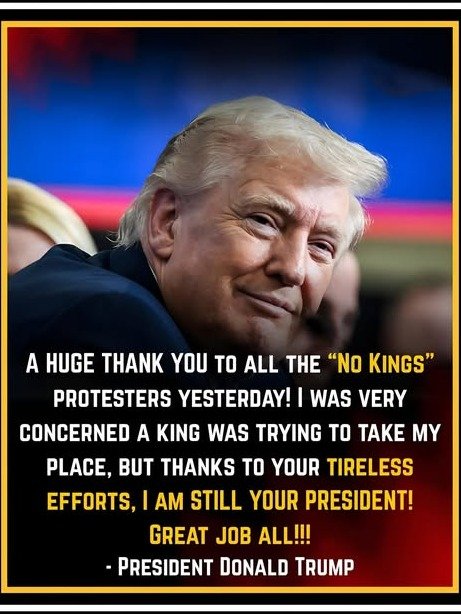
A single, potent phrase has begun echoing across cities, sparking intense debate and shaking the foundations of traditional power structures: “No Kings.” While seemingly a direct challenge to monarchy, these recent protests are far more than just a rejection of crowns and castles. They represent a powerful undercurrent of discontent, revealing deep-seated frustrations that connect to broader, unsettling political tensions around the globe.
Have you ever wondered what truly fuels these impassioned demonstrations? It’s not just about historical grievances or a simple dislike of inherited privilege. These movements are tapping into a complex web of modern anxieties, economic disparities, and a growing skepticism towards established institutions that impacts everyone, regardless of their nation’s political system. Ignoring their message would be a grave mistake.
Unpacking the “No Kings” Mantra: Beyond the Monarchy
At first glance, the “No Kings” slogan appears straightforward: a call for the abolition of monarchies. Indeed, during significant royal events, such as recent coronations, protesters have prominently displayed signs and chanted this very phrase, making their anti-monarchist stance undeniably clear. Their arguments often center on the inherent inequality of inherited power and the anachronistic nature of a system that grants immense privilege based solely on birthright.
However, to view these protests merely as an attack on specific royal families would be to miss a much larger, more significant point. The “No Kings” sentiment has evolved into a powerful metaphor, a shorthand for rejecting all forms of unaccountable, unelected power. It’s a cry against systems perceived as inherently unfair, where a select few benefit disproportionately while the majority struggle.
The Deep Roots of Discontent: Economic Hardship and Inequality
One of the most significant drivers behind the resurgence of anti-establishment sentiment, including the “No Kings” movement, is the crushing weight of economic hardship. Across many nations, ordinary citizens are grappling with unprecedented cost-of-living crises, soaring inflation, and stagnant wages. The stark contrast between public struggle and the perceived opulence of traditional power structures creates a fertile ground for resentment.
When people are struggling to afford basic necessities like food, housing, and energy, the sight of lavish state ceremonies or the continued existence of inherited wealth can feel like a direct affront. It fuels a powerful question: why are some born into a life of privilege, seemingly immune to these struggles, while others face constant precarity? This question lies at the heart of many modern protests.
A Crisis of Trust: Political Tensions and Institutional Skepticism
Beyond economics, the “No Kings” protests also tap into a broader crisis of trust in political institutions. Globally, there’s a palpable sense of disillusionment with elected governments, perceived corruption, and a feeling that political systems are rigged against the average person. Scandals, broken promises, and a perceived disconnect between leaders and the populace have eroded faith in democracy itself.
“When people feel their voices aren’t heard by elected officials, they often turn their frustration towards the most visible symbols of power, whether inherited or elected.” – Political Analyst
In this context, a monarchy, even a largely ceremonial one, can become a lightning rod for all these frustrations. It embodies an old order, a system that many feel is out of touch and unresponsive to modern challenges. The demand for “No Kings” becomes a demand for fundamental change, for a system that is more equitable, accountable, and representative.
The Critics’ Chorus: Debating Relevance and Impact
Of course, these protests are not without their critics. Many argue that focusing on monarchies, especially in countries where they hold little political power, is a misdirection of energy. Critics often contend that the real battles lie in reforming parliamentary systems, tackling corruption, or addressing specific economic policies, rather than targeting a largely symbolic institution.
Some also question the effectiveness of such protests, suggesting they can be divisive and distract from more pressing issues. There’s a debate about whether these movements truly offer concrete solutions or merely express frustration. “Are they truly revolutionary,” one commentator might ask, “or just a symptom of a deeper malaise without a clear path forward?” These are valid questions that highlight the complexity of the political landscape.
Historical Echoes: A Long Legacy of Republicanism
It’s important to remember that the sentiment behind “No Kings” is far from new. Throughout history, societies have grappled with the concept of inherited power versus democratic rule. The Enlightenment era saw a surge in republican ideals, leading to revolutions that toppled monarchies in France, America, and elsewhere. The very idea of a republic, where power resides with the people and their elected representatives, is a direct counterpoint to monarchical rule.
From the Roman Republic to the American Revolution, the struggle against concentrated, unaccountable power has been a recurring theme. The current “No Kings” protests can be seen as a modern manifestation of this ancient struggle, re-contextualized for an era defined by global communication, instant information, and widespread economic anxiety. They remind us that the debate over how we are governed is never truly settled.
A Global Trend: Is “No Kings” a Universal Cry?
While the “No Kings” slogan gained particular prominence in monarchical nations, the underlying sentiment resonates globally. The desire for greater equality, accountability, and a fairer distribution of resources is a universal aspiration. We see similar anti-establishment movements in countries without monarchs, often targeting political elites, corporate power, or perceived injustices within democratic systems.
- Anti-corruption movements: Protesters demanding transparency and an end to graft.
- Economic justice protests: Campaigns against corporate greed and wealth inequality.
- Democratic reform movements: Calls for greater citizen participation and electoral fairness.
These diverse movements share a common thread: a rejection of systems that benefit a few at the expense of the many, and a powerful yearning for a more just and equitable world. The “No Kings” slogan, therefore, transcends its literal meaning, becoming a symbol for a much broader revolutionary impulse.
What Does This Mean For Our Future?
The “No Kings” protests, and the broader political tensions they highlight, serve as a critical barometer of public sentiment. They signal a growing impatience with the status quo and a demand for fundamental change. Whether these movements lead to the abolition of specific monarchies or simply force a re-evaluation of governance, their impact is undeniable.
For citizens, it means a renewed call to engage with their political systems, to question power, and to advocate for the kind of society they wish to live in. For leaders, it’s a stark reminder that legitimacy is not inherited; it must be earned through responsiveness, fairness, and a genuine commitment to the well-being of all citizens.
Ultimately, the debate around “No Kings” is a debate about the very nature of power, privilege, and justice in the 21st century. It challenges us to look beyond the headlines and understand the complex forces shaping our world, forcing us to confront uncomfortable truths about who holds power and for whose benefit. The future, it seems, will be defined by how we choose to answer these profound questions.
About the Author




