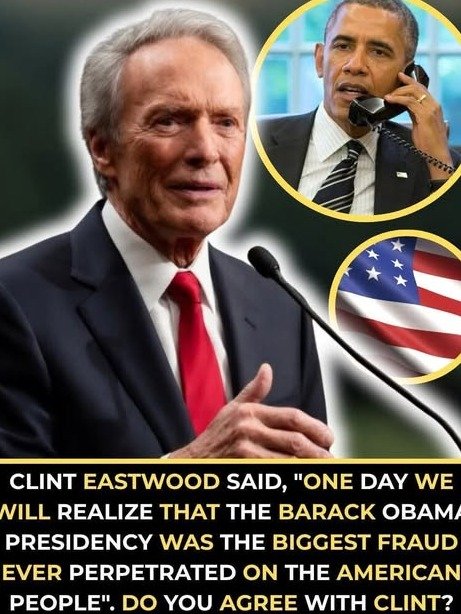
Imagine a legend, a cinematic icon, stepping onto a national political stage… and talking to an empty chair. This wasn’t a scene from a movie; it was the reality of the 2012 Republican National Convention, and the man at the podium was none other than Clint Eastwood. His impromptu, unscripted monologue became an instant cultural phenomenon, sparking a firestorm of debate, confusion, and amusement across the nation.
The moment was bizarre, captivating, and utterly unforgettable, leaving millions wondering: What exactly happened that night? Was it a stroke of genius, a disastrous misstep, or simply a Hollywood legend being himself? We’re diving deep into the full, untold story of the ’empty chair’ speech, its context, its immediate fallout, and its lasting legacy in American political theater.
The Stage is Set: A Nation Divided in 2012
The year 2012 saw America grappling with significant challenges. President Barack Obama was seeking re-election amidst a slow economic recovery, lingering anxieties from the Great Recession, and the contentious rollout of the Affordable Care Act. The political climate was already highly charged, marked by a growing partisan divide that fueled intense debates on everything from healthcare to government spending.
Against this backdrop, the Republican Party gathered in Tampa, Florida, for its National Convention, aiming to galvanize its base and present a compelling alternative to Obama’s leadership. Their chosen standard-bearer was Mitt Romney, a former Massachusetts governor and businessman, who sought to paint himself as the pragmatic leader capable of steering the nation back to prosperity. The convention was designed to be a meticulously choreographed event, a showcase of unity and purpose.
A Legend’s Unexpected Entrance
Clint Eastwood, a name synonymous with rugged individualism and American grit, was a surprising choice for a prime-time speaking slot. Known more for his iconic roles as Dirty Harry and the Man with No Name, Eastwood had long been an enigmatic figure in Hollywood’s often liberal landscape, publicly identifying as a libertarian-leaning Republican. His presence alone signaled an attempt by the Romney campaign to appeal to a broader demographic, perhaps even those disillusioned with traditional politics.
As the lights dimmed and his name was announced, a ripple of excitement went through the crowd. Here was a true American legend, a man who embodied strength and no-nonsense integrity. What profound message would he deliver to rally the party faithful and sway undecided voters?
The Unscripted Monologue: An Empty Chair Takes Center Stage
What followed was anything but conventional. Instead of a prepared speech, Eastwood launched into an unscripted, rambling monologue directed at an empty chair placed beside him on the stage. The chair, he explained, represented President Barack Obama.
“I’ve got Romney and Ryan, and of course, the President. I can’t go to him because he’s… uh… he’s always back in the White House. He’s always back in the White House, and he’s not doing anything.”
With an invisible President Obama, Eastwood proceeded to engage in a mock debate, questioning the President’s policies and decisions, and playfully chiding him for perceived failures. He touched on issues like the economy, the wars in Iraq and Afghanistan, and the promise to close Guantanamo Bay, all while maintaining a conversational, almost grandfatherly tone.
A Whirlwind of Reactions: Confusion, Laughter, Outrage
The immediate reaction inside the convention hall was a mix of bewilderment and nervous laughter. Some delegates cheered, appreciating the unconventional humor and the directness of Eastwood’s critique. Others sat in stunned silence, unsure how to process the surreal spectacle unfolding before them. The Romney campaign, reportedly caught off guard, struggled to respond, with some aides visibly uncomfortable.
As the speech aired live, social media exploded. #EmptyChair and #Eastwooding immediately trended worldwide. Memes featuring empty chairs in various scenarios flooded the internet within minutes. Late-night comedians had a field day, with Jon Stewart famously declaring, “Clint Eastwood yelled at a chair tonight. He yelled at a chair!”
The Media Frenzy and Political Fallout
The media reaction was equally polarized. Critics lambasted the speech as bizarre, incoherent, and disrespectful, arguing that it detracted from the serious message the Romney campaign was trying to convey. Many felt it made the Republican Party look out of touch and even silly, overshadowing the more polished presentations by other speakers.
Conversely, some pundits and supporters defended Eastwood, praising his authenticity and willingness to speak his mind without a teleprompter. They saw his performance as a refreshing departure from stale political rhetoric, a genuine expression of frustration from an everyday American (albeit a very famous one). They argued that his unconventional approach resonated with voters who felt ignored by the political establishment.
Did It Help or Hurt Romney? The Great Debate
The central question that emerged from the ’empty chair’ spectacle was its impact on Mitt Romney’s presidential bid. Did it energize the conservative base, or did it alienate crucial independent voters? The consensus among most political analysts was that it was, at best, a distraction, and at worst, a significant gaffe that overshadowed Romney’s acceptance speech and the convention’s overall message.
- Distraction: The speech dominated news cycles for days, diverting attention from Romney’s policy proposals and positive messaging.
- Perception: It reinforced a perception for some that the Republican Party was out of touch or even unserious.
- Engagement: While it generated immense buzz, much of it was focused on the spectacle itself rather than the core issues of the campaign.
Ultimately, it’s difficult to quantify the exact electoral impact of a single speech. However, in a tightly contested election, any misstep can be magnified. Romney went on to lose the election to Obama, and many still point to the ’empty chair’ as one of the more memorable, if perplexing, moments of his campaign.
Eastwood’s Own Reflections: “It was a lot of fun”
In the aftermath, Clint Eastwood remained largely unfazed by the controversy. In subsequent interviews, he maintained that he had been asked to speak for six to eight minutes and that the empty chair idea was entirely his own, a spontaneous decision made just before he went on stage. He wanted to represent Obama’s absence from the debate and his perceived failures.
“It was a lot of fun,” Eastwood told reporters later. He expressed no regrets, emphasizing his belief in freedom of speech and the importance of expressing one’s opinions, even if unconventional. He reiterated his frustration with the political status quo and his desire for a change in leadership.
The Enduring Legacy: A Cultural Touchstone
More than a decade later, Clint Eastwood’s ’empty chair’ speech remains a fascinating cultural and political touchstone. It serves as a vivid reminder of:
- The Power of Celebrity in Politics: How a famous face can command attention, for better or worse, on the national stage.
- The Blurring Lines of Entertainment and Politics: The increasing theatricality of political conventions and campaigns.
- The Virality of the Absurd: How quickly an unconventional moment can spread and become ingrained in public consciousness, especially in the age of social media.
- The Value of Authenticity (or Perceived Authenticity): For some, Eastwood’s unscripted approach was a breath of fresh air, a stark contrast to the often-staged nature of modern politics.
The speech has been referenced in countless articles, documentaries, and political discussions, often invoked when discussing celebrity endorsements, political gaffes, or the unpredictable nature of live events. It even became a shorthand for any awkward or unexpected political moment.
Beyond the Chair: A Reflection on Political Discourse
Clint Eastwood’s ’empty chair’ speech wasn’t just about a famous actor talking to an imaginary president; it was a microcosm of the political discourse of its time. It highlighted the deep divisions, the frustration with leadership, and the yearning for direct, unfiltered communication that often cuts through the polished rhetoric.
While its immediate political impact might have been debatable, its cultural footprint is undeniable. It cemented its place in the annals of American political history as one of the most talked-about, debated, and meme-worthy moments of the 21st century, reminding us that sometimes, the most memorable statements are the ones that defy all expectations.
Whether you viewed it as a brilliant act of protest or a baffling spectacle, the empty chair became a symbol, a conversation starter, and a moment that perfectly encapsulated the unpredictable drama of a presidential election year.
About the Author




