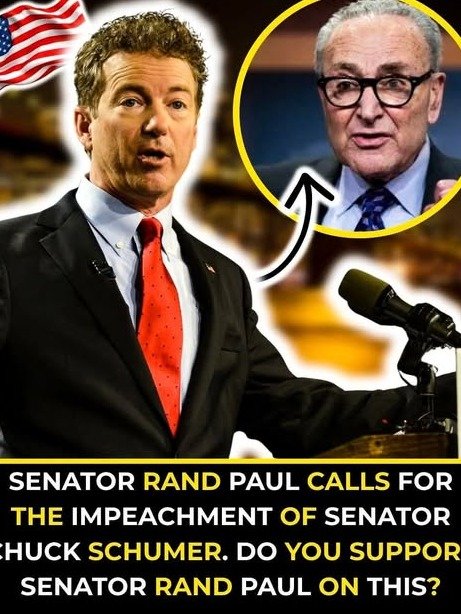
Imagine a government where the very people elected to represent you are stifled by an invisible hand, their efforts to serve sidelined by an opaque power structure. Senator Rand Paul just pulled back the curtain on this exact scenario, reigniting a fiery debate in Washington about the true nature of power, accountability, and the limits of leadership within the U.S. Senate.
His direct call to hold Senate leadership accountable isn’t just a political skirmish; it’s a profound challenge to the established order. This isn’t merely about partisan squabbles; it delves into fundamental questions of fairness in governance, the robustness of oversight mechanisms, and the very boundaries of political authority that shape our nation’s laws and future.
The Unseen Hand of Senate Leadership
At the heart of Senator Paul’s provocative stance lies a critical examination of how the Senate truly operates. Many perceive the legislative branch as a collection of 100 equal voices, each senator holding similar sway. However, the reality of Senate power dynamics is often far more complex, with a significant amount of influence concentrated in the hands of a select few.
Senate leadership, comprising figures like the Majority and Minority Leaders, along with key committee chairs, wields immense power. This power extends beyond simply guiding their respective parties. It encompasses control over the legislative agenda, the timing of votes, committee assignments, and even which bills are brought to the floor for consideration. This centralized control can, at times, overshadow the voices and legislative priorities of individual members.
Why Accountability Is More Than Just a Buzzword
When Senator Paul speaks of accountability, he’s not just talking about individual ethics or public transparency, though those are certainly part of it. He’s challenging a systemic issue: the ability of a small group of leaders to make decisions that impact the entire legislative body, often with limited recourse or oversight from the broader membership.
This lack of internal accountability can manifest in various ways. It might mean a senator’s bill, despite broad support, never sees the light of day because it doesn’t align with leadership’s priorities. It could involve procedural maneuvers that limit debate or bypass the regular committee process, effectively silencing dissenting voices or thorough examination of legislation.
“When the legislative process becomes a top-down mandate rather than a collaborative effort, the very essence of representative democracy is at risk. Accountability ensures that power is not absolute, even within our own chambers.” – A hypothetical observation on the debate.
The Erosion of Fairness in Governance
The concept of fairness is central to Paul’s argument. In a body designed for deliberation and consensus, an imbalance of power can lead to perceived injustices. Senators from smaller states or those new to the institution might find their legislative efforts repeatedly sidelined, fostering a sense of disenfranchisement.
This doesn’t just impact individual senators; it affects their constituents. If a senator’s ability to advocate for their state’s needs or introduce relevant legislation is consistently hampered by leadership control, then the democratic promise of representation begins to fray. The debate, therefore, isn’t abstract; it has real-world consequences for every American.
Oversight: A Two-Way Street
One of the primary roles of Congress is to provide oversight of the executive branch. Yet, Paul’s challenge implicitly raises the question: who provides oversight of Congress itself, particularly its leadership? If leadership can operate with limited checks and balances internally, it can potentially weaken the institution’s ability to conduct robust external oversight.
A Senate where leadership decisions are opaque or unchallenged risks becoming less effective at holding other branches of government accountable. This internal dynamic directly impacts the integrity and strength of our system of checks and balances, a cornerstone of American democracy.
- Centralized Power: How much authority should be concentrated in the hands of a few leaders?
- Procedural Fairness: Are all senators given an equal opportunity to influence legislation?
- Transparency: Are decisions made behind closed doors or through open debate?
- Member Empowerment: Do individual senators have sufficient agency to represent their constituents effectively?
The Limits of Political Power: A Constant Struggle
The debate ignited by Senator Paul is not new; it’s a perpetual struggle in democratic systems to define and limit political power. From the framers of the Constitution, who carefully designed a system of checks and balances, to modern political theorists, the question of how to prevent the abuse of power remains paramount.
In the context of the Senate, this means continually scrutinizing the rules, traditions, and informal practices that govern its operations. Are these mechanisms still serving their intended purpose of fostering deliberation and ensuring broad representation, or have they become tools for consolidating power?
Impact on Legislation and Policy Making
When leadership exerts too much control, the legislative process can suffer. Bills might be rushed through without adequate debate or amendment opportunities. Key provisions could be inserted or removed without broad consensus, leading to less effective or less popular laws.
This can result in a legislative agenda that reflects the priorities of a few powerful individuals rather than the diverse needs and perspectives of all 50 states. It undermines the very idea of a deliberative body where ideas are openly debated, refined, and ultimately shaped by the collective wisdom of its members.
Public Trust and the Future of the Senate
Ultimately, this debate has profound implications for public trust in government. When the legislative process appears to be controlled by an elite few, rather than being a transparent and fair forum, cynicism can grow. Voters may feel that their voices, channeled through their elected senators, are not truly being heard.
Senator Paul’s call serves as a stark reminder that the health of our democracy depends not only on elections but also on the internal workings and integrity of our institutions. Ensuring accountability within Senate leadership is crucial for maintaining the credibility, effectiveness, and democratic legitimacy of one of our nation’s most vital legislative bodies.
What Could Accountability Look Like?
If Senator Paul’s challenge gains traction, what changes might we see? Accountability could manifest in several ways. It might involve reforms to Senate rules that limit the power of the Majority Leader to block bills or amendments. It could mean greater transparency in committee assignments or in the process of bringing legislation to the floor.
Empowering individual senators and committees to play a more significant role in drafting and debating legislation would also be a step towards greater accountability. The goal isn’t to create chaos, but to ensure that power is distributed more equitably and that the legislative process truly reflects the diverse voices and needs of the American people.
The debate ignited by Senator Rand Paul is far more than a fleeting news cycle; it’s a vital conversation about the very soul of our legislative branch. It forces us to confront uncomfortable truths about power, fairness, and oversight within the highest echelons of government. How Washington chooses to respond to this challenge will undoubtedly shape the future of the Senate and, by extension, the direction of our nation.
The Ongoing Battle for Balance
The push for greater accountability within Senate leadership is an ongoing battle, one that reflects the eternal struggle to maintain balance in any powerful institution. It’s a reminder that even within a democracy, vigilance is required to prevent the concentration of power and ensure that the voices of all are heard and respected.
Whether Senator Paul’s specific calls lead to immediate structural changes or simply spark a more profound internal reflection, the conversation itself is invaluable. It compels us to re-examine the mechanisms that govern our representatives and to ask whether those mechanisms truly serve the best interests of the American public.
Conclusion: A Call for Reform and Reflection
Senator Rand Paul’s audacious call to hold Senate leadership accountable has undeniably struck a nerve in Washington. It has peeled back layers of established practice to reveal the intricate and often opaque nature of power within the legislative branch. This isn’t just a political spat; it’s a profound demand for introspection and potential reform, touching upon the core tenets of fairness, robust oversight, and the responsible exercise of political authority.
The ensuing debate is crucial for the health of our democracy. It challenges us to consider whether the current structures truly foster a representative and deliberative body, or if they inadvertently concentrate too much power, potentially silencing diverse voices and undermining public trust. The outcome of this discussion will undoubtedly have lasting implications for how the Senate operates and how effectively it serves the American people.
About the Author




