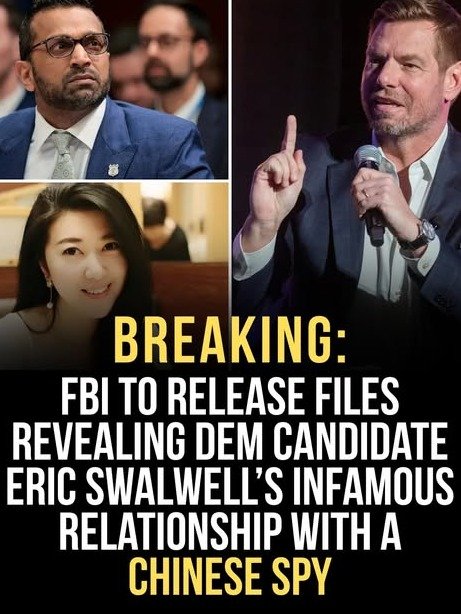
Remember the name Fang Fang? The alleged Chinese intelligence operative whose ties to high-profile American politicians sent shockwaves through Washington? Well, prepare for déjà vu. Explosive reports are now circulating that documents related to the past controversy involving Representative Eric Swalwell and his alleged links to Chinese intelligence are back in the spotlight, sparking renewed scrutiny and raising critical national security questions.
This isn’t just old news; the re-emergence of these files suggests a deeper dive into the implications of foreign influence operations within American politics. What exactly do these circulating documents contain, and why are they resurfacing now? The answers could unravel a complex web of connections and reignite a debate about the vulnerability of U.S. officials to adversarial intelligence efforts.
The Original Controversy: A Quick Refresher
For those who might have forgotten, the controversy first erupted with revelations about Representative Eric Swalwell’s alleged association with Christine Fang, also known as Fang Fang, a suspected Chinese intelligence operative. Fang reportedly engaged in political fundraising and networking with a number of American politicians, including Swalwell, between 2011 and 2015.
During this period, Fang allegedly developed close ties with Swalwell, even helping to place an intern in his congressional office. Swalwell, a Democrat representing California’s 15th congressional district, was reportedly briefed by the FBI about Fang’s activities in 2015 and subsequently cut off contact. However, the extent of their relationship and the potential impact on national security remained a subject of intense debate and concern.
Why Are These Documents Resurfacing Now?
The sudden re-circulation of these documents suggests a renewed interest or perhaps a new phase in the ongoing assessment of foreign influence. It could indicate that intelligence agencies, congressional committees, or investigative journalists are revisiting the case, possibly due to fresh leads, declassified information, or a broader review of China’s espionage activities.
The timing is crucial. In an era of heightened geopolitical tensions with China, any allegations of foreign espionage or influence peddling involving high-ranking U.S. officials take on an even greater significance. The public and policymakers alike are eager to understand the full scope of these threats and ensure the integrity of American institutions.
What Could Be Inside These ‘New’ Files?
While the exact contents of the circulating documents remain under wraps, speculation is rife about what they might reveal. These files could encompass a wide range of materials:
- FBI Investigative Reports: Detailed accounts from the initial FBI investigation into Fang Fang’s network and her interactions with Swalwell.
- Intelligence Briefings: Records of the briefings Swalwell and other officials received regarding Fang’s status as a suspected operative.
- Communication Records: Emails, text messages, or other forms of correspondence between Swalwell’s office and Fang, or individuals connected to her network.
- Financial Records: Information related to campaign contributions, fundraising events, or any financial transactions linked to Fang’s activities.
- Internal Memos: Documents from intelligence agencies or congressional oversight bodies discussing the implications of the controversy.
Each of these categories could shed new light on the nature of the relationship, the potential vulnerabilities exposed, and the measures taken—or not taken—to mitigate national security risks.
The Stakes for National Security
The Swalwell-Fang Fang controversy, and the re-emergence of related documents, highlights a critical vulnerability: the sophisticated methods employed by foreign adversaries to gain influence and intelligence. China, in particular, is known for its long-term strategy of cultivating relationships with rising political stars, academics, and business leaders.
“Foreign intelligence services, including those of China, often target individuals who are seen as rising stars in politics, academia, and business,” explains a former intelligence official. “Their aim is to establish long-term influence and gather intelligence, sometimes without the target even realizing they are being compromised.”
This method of influence operations, often referred to as “Panda Diplomacy” or “honey traps,” seeks to exploit personal relationships and professional ambitions to serve the interests of a foreign power. It’s a subtle, insidious form of espionage that can be far more difficult to detect and counter than traditional spying.
Political Fallout and Renewed Scrutiny
For Representative Swalwell, the re-circulation of these documents undoubtedly brings renewed scrutiny and potential political challenges. Despite being cleared by House leadership to remain on the House Intelligence Committee after the initial revelations, this fresh wave of attention could reignite calls for a deeper investigation or even his removal from sensitive committees.
Opponents are likely to seize on these reports to question his judgment, his access to classified information, and his suitability for positions of national security trust. This could become a significant talking point in upcoming elections or internal party debates, further complicating the already contentious political landscape in Washington.
Broader Implications for U.S. Policy
Beyond Swalwell himself, the resurfacing of these documents forces a broader conversation about how the U.S. government screens and protects its officials from foreign influence. Are current protocols sufficient? Are there systemic weaknesses that need addressing?
This situation underscores the need for:
- Enhanced Vetting Procedures: More rigorous background checks and ongoing monitoring for individuals in positions of trust.
- Increased Awareness Training: Better education for politicians and their staff on the tactics used by foreign intelligence services.
- Bipartisan Cooperation: A unified approach to addressing foreign influence, transcending partisan divides.
- Transparency: Greater openness with the public about the nature and extent of these threats, while protecting classified sources and methods.
The integrity of American democracy and national security hinges on the ability of its leaders to withstand such sophisticated foreign pressures. The Swalwell case, and the attention it draws, serves as a stark reminder of these ongoing challenges.
What Happens Next?
The immediate future remains uncertain. Will these circulating documents lead to official investigations? Will new details emerge that fundamentally alter our understanding of the Swalwell-Fang Fang affair? Or will they simply add fuel to existing political fires?
One thing is clear: the national conversation about foreign influence, espionage, and the vulnerability of American political figures is far from over. The re-emergence of these files serves as a potent reminder that the shadows of past controversies can quickly return, demanding renewed attention and accountability from those entrusted with safeguarding the nation’s interests.
As these reports continue to circulate, the eyes of Washington—and indeed, the nation—will be watching closely for what these “back in the spotlight” documents truly reveal. Stay tuned, because the implications could be far-reaching.
The Unseen Battle: Protecting Democracy from Covert Influence
The Swalwell case is not an isolated incident but rather a visible tip of a much larger iceberg. Covert influence operations by nations like China and Russia represent a persistent and evolving threat to democratic institutions worldwide. These operations often target individuals at various stages of their careers, seeking to build long-term relationships that can be leveraged for intelligence gathering or policy manipulation.
Understanding the nuances of these tactics is crucial. It’s not always about stealing classified documents; sometimes, it’s about shaping narratives, influencing public opinion, or gaining access to decision-making processes through seemingly innocuous relationships. The resurfacing of Swalwell-related documents forces us to confront these subtle, yet potent, forms of espionage.
A Call for Vigilance: Why This Matters to Every Citizen
While the focus often lands on high-profile politicians, the broader implications of foreign influence extend to every citizen. When foreign powers can compromise or influence elected officials, it directly impacts the policies that govern our lives, from economic decisions to national defense strategies. It erodes trust in government and undermines the democratic process itself.
Therefore, staying informed about these developments is not just about political intrigue; it’s about understanding the threats to our collective security and sovereignty. The circulation of these documents serves as a critical reminder that vigilance is paramount in protecting the integrity of our nation.
About the Author




