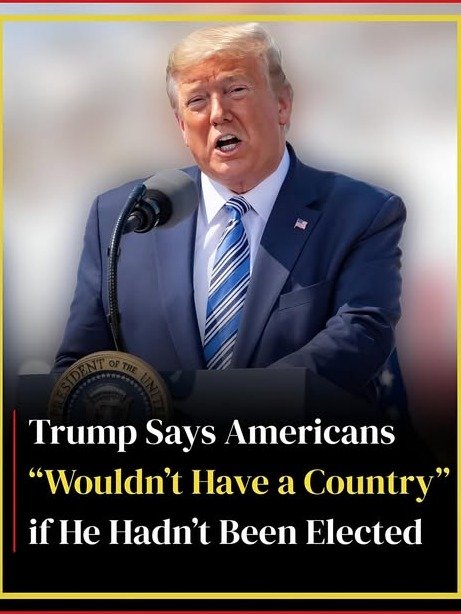
Imagine a leader boldly declaring that their time in office single-handedly steered a nation away from an unseen precipice, preserving its very soul. That’s precisely the claim former President Donald Trump has made, igniting a national firestorm and forcing Americans to confront a fundamental question: did his leadership truly ‘preserve the country’s direction’?
This provocative statement has not only reignited discussions about his presidency but also underscored the deep ideological divides within the United States. Trump’s assertion positions his administration as a bulwark against perceived threats to American identity and progress, framing his actions as essential for maintaining the nation’s core values and trajectory.
The Genesis of a Controversial Claim
Former President Donald Trump’s recent remarks, emphasizing his critical role in “preserving the country’s direction,” have thrust his legacy back into the national spotlight. These statements are not merely retrospective reflections; they are a powerful framing of his four years in office, designed to shape public perception and influence ongoing political discourse.
For Trump and his ardent supporters, this claim resonates deeply. It speaks to a belief that prior administrations, or broader societal forces, were leading the nation astray from its foundational principles. His presidency, in this view, was a necessary course correction, a decisive intervention to safeguard what they consider the true essence of America.
Defining “The Country’s Direction”: Two Worlds Apart
What exactly does “preserving the country’s direction” mean? The answer, predictably, depends entirely on who you ask. For many who align with Trump, this direction involves a return to traditional values, robust economic nationalism, a strong border, and a judiciary committed to conservative interpretations of the Constitution.
They point to specific policies and appointments as evidence of this preservation. From the appointment of three conservative Supreme Court justices to deregulation efforts aimed at boosting industry, these actions are seen as deliberate steps to halt or reverse what they perceived as a progressive drift. The “America First” foreign policy, too, is viewed as a re-prioritization of national interests over globalist agendas.
Supporters’ Perspective: A Nation Reclaimed
Those who champion Trump’s claim often cite a range of achievements and policy shifts as proof. They argue that his economic policies, including significant tax cuts and deregulation, unleashed American business and led to unprecedented job growth and low unemployment rates prior to the pandemic. This, they contend, was crucial for maintaining the nation’s economic vitality and global competitiveness.
Furthermore, the appointment of conservative judges at all levels of the federal judiciary is frequently highlighted. For many conservatives, this was a monumental effort to ensure the long-term integrity of the legal system and to uphold constitutional principles that they felt were being eroded. They see these appointments as a lasting legacy that will continue to ‘preserve’ the country’s direction for generations.
- Economic Revival: Tax cuts and deregulation spurred business growth and job creation.
- Judicial Transformation: Appointment of conservative judges to federal courts, including the Supreme Court.
- Border Security: Efforts to strengthen border enforcement and build a wall.
- “America First” Stance: Prioritizing U.S. interests in trade and foreign policy.
- Energy Independence: Promoting domestic oil and gas production.
Critics’ Counter-Argument: A Dangerous Detour
Conversely, critics of former President Trump vehemently dispute the notion that his leadership preserved the country’s direction. Many argue that his presidency, far from preserving, fundamentally altered the nation’s trajectory in ways they deem detrimental. They contend that his actions eroded democratic norms, exacerbated social divisions, and damaged America’s standing on the global stage.
From their perspective, the emphasis on “America First” led to strained alliances and a retreat from international cooperation. Domestically, they point to increased political polarization, challenges to institutional integrity, and rhetoric that, in their view, undermined civil discourse. They would argue that the direction was not preserved but rather veered sharply off course, creating new challenges for the nation’s future.
The Erosion of Norms and Institutions
A significant point of contention for critics revolves around the perceived assault on democratic norms and institutions. They often cite instances where Trump challenged election results, criticized the judiciary, or questioned the impartiality of government agencies. For these individuals, the “direction” of the country includes a steadfast commitment to democratic processes, checks and balances, and the peaceful transfer of power.
Therefore, any actions seen as undermining these foundational elements are viewed not as preservation, but as a dangerous deviation. The debate here is less about policy specifics and more about the very fabric of American governance and societal cohesion. The question becomes: can a nation truly preserve its direction if the mechanisms of its democracy are perceived to be under threat?
“To say that a presidency ‘preserved’ the country’s direction implies a static, agreed-upon path. The reality is, America is constantly evolving, and what one leader sees as preservation, another sees as stagnation or regression.” – Political Analyst
The Economic and Social Impact: A Divided Narrative
The economic impact of Trump’s presidency is another area of intense debate. While supporters herald tax cuts and deregulation, critics often highlight the increase in national debt and the long-term implications of certain trade policies. They argue that while some sectors saw growth, the benefits were not evenly distributed, potentially widening wealth gaps.
Socially, the narrative is equally fractured. Supporters believe Trump gave voice to a segment of the population that felt ignored, reinforcing traditional values and national pride. Critics, however, argue that his rhetoric exacerbated racial and social tensions, leading to a more divided society. The question of whether the country moved forward or backward on issues of equality and inclusion remains a deeply divisive one.
The “America First” Doctrine and Global Standing
The “America First” foreign policy stance is central to Trump’s claim of preserving direction. For proponents, it was a necessary recalibration, ensuring that American interests were paramount and challenging what they saw as unfair trade deals and burdensome international commitments. This approach, they argue, strengthened the nation’s sovereignty and economic leverage.
Yet, critics contend that this isolationist approach damaged vital alliances, weakened international institutions, and ceded global leadership to rival powers. They argue that America’s long-term “direction” has always included a role as a global leader and a champion of democracy and human rights abroad. From this perspective, the “America First” doctrine was a significant departure, not a preservation.
Historical Context: Presidential Legacies and Claims
Presidents throughout history have sought to define their legacies and argue for the enduring positive impact of their administrations. However, Trump’s specific phrasing—”preserving the country’s direction”—carries a unique weight. It implies a specific, perhaps even existential, threat that only his leadership could counteract.
This claim forces a national introspection into what “the country’s direction” truly is. Is it a fixed ideological path, or a dynamic, evolving journey? The debate over Trump’s role in this preservation is therefore not just about his policies, but about the very identity and future trajectory of the United States. It’s a question that taps into fundamental disagreements about American values and priorities.
The Enduring Political Ramifications
The debate sparked by Trump’s assertion is more than just a historical review; it has significant implications for the current political landscape and future elections. By framing his past actions as essential for preservation, he reinforces his narrative as a necessary leader and a protector of American ideals.
This rhetoric mobilizes his base, solidifies loyalty, and sets the stage for future campaigns where similar themes of national preservation and course correction will likely be central. For opponents, it serves as a rallying cry to counter what they perceive as a dangerous ideology, ensuring that the debate over America’s true direction will continue to rage on, shaping the nation’s political future.
Conclusion: A Nation Divided on its Path
Donald Trump’s declaration that his leadership was critical in “preserving the country’s direction” has undeniably reignited a profound national conversation. It’s a statement that encapsulates the deep chasm in American political thought, where one side sees a savior who steered the ship back on course, and the other sees a captain who veered dangerously off it.
Ultimately, whether one believes Trump preserved the country’s direction depends on their individual definition of that direction. This ongoing debate is not just about a former president’s legacy; it is a fundamental struggle over America’s identity, its values, and its path forward in a rapidly changing world. The conversation is far from over, and its outcome will undoubtedly continue to shape the nation for years to come.
About the Author




