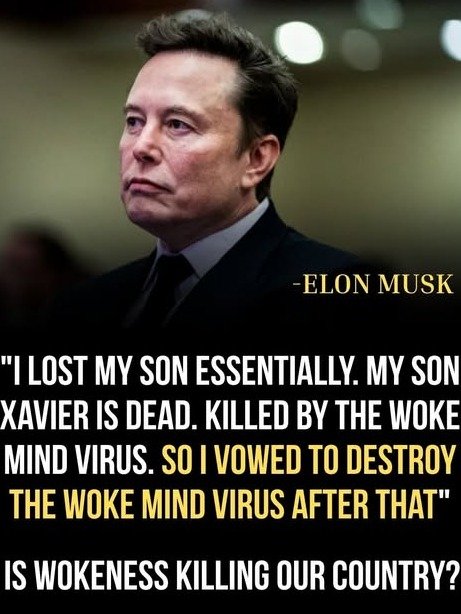
Elon Musk, a name synonymous with futuristic innovation and audacious ambition, has increasingly found himself at the epicenter of cultural and political debates. While many see his outspokenness as a recent development, a closer look reveals that his most controversial stances might not be sudden outbursts at all. Instead, they appear to be deeply rooted in a series of profoundly personal experiences – experiences that have quietly shaped the man behind Tesla and SpaceX for decades.
Far from being random pronouncements, Musk’s recent pivot into the cultural arena seems to stem from a profound ‘personal turning point,’ where past traumas and formative struggles have converged with his vision for humanity’s future. Understanding this personal journey is key to deciphering the motivations behind his most polarizing statements and actions.
The Formative Years: A Crucible of Experience
To truly grasp Elon Musk’s worldview, one must look back at his early life. Growing up in Pretoria, South Africa, Musk endured a childhood marked by intense bullying, often finding solace not in social circles, but within the pages of books and the nascent world of computing. This experience of being an outsider, frequently targeted for his intellectual curiosity and awkwardness, left an indelible mark.
This period instilled in him a profound aversion to groupthink and an almost visceral distrust of conformity. He learned early on that standing apart often meant facing hostility, but also that true progress often comes from challenging established norms. This sense of isolation and the need to fight for his own space likely fueled his later advocacy for individual thought and free expression.
“I had a terrible upbringing. I was bullied very badly. There were times when I was beaten to a pulp.”
Such experiences can forge a powerful sense of resilience, but also a fierce protectiveness over what one perceives as fundamental truths or freedoms. His early life was not just about surviving physical altercations; it was about navigating a world where his unique perspective was often met with resistance, pushing him towards independent thought.
The Entrepreneurial Gauntlet: Lessons in Resilience
Musk’s professional life has been no less a trial by fire. From the early days of Zip2 and X.com to the near-bankruptcies of Tesla and SpaceX, he has repeatedly faced existential threats to his ventures. These periods of intense pressure, where failure seemed imminent, served as another profound turning point.
These experiences taught him the critical importance of perseverance, the necessity of challenging expert consensus, and the high stakes involved in pushing boundaries. He saw firsthand how easily innovation could be stifled by bureaucracy, skepticism, or lack of capital. This struggle against overwhelming odds likely solidified his belief in the power of individual vision over collective doubt.
His brushes with financial ruin and the relentless criticism he faced during these times fostered a deep skepticism towards conventional wisdom and a strong belief in the need for bold, often contrarian, action. These battles reinforced his conviction that progress often requires defying the status quo, no matter the personal or professional cost.
Championing Free Speech: A Deep-Seated Conviction
Perhaps no recent action has more clearly highlighted Musk’s personal turning point than his acquisition of Twitter, now X. His stated mission to transform it into a platform for
About the Author




