Imagine having a crystal ball that showed you exactly which stocks were about to soar or plummet. Now imagine that crystal ball was powered by privileged, non-public information – and you were legally allowed to trade on it. This isn’t a fantasy for many members of Congress; it’s a stark reality fueling a national firestorm.
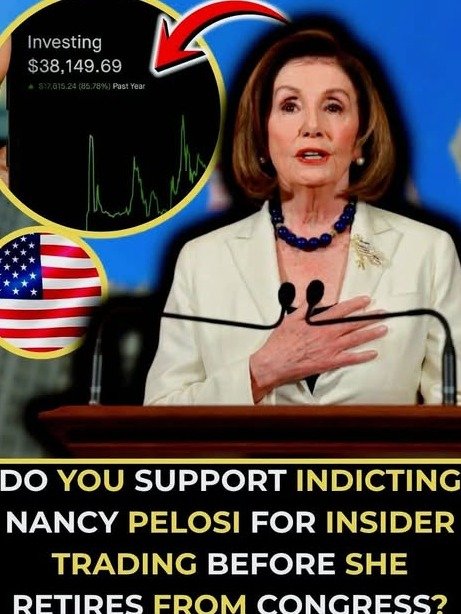
The growing controversy over stock trading by U.S. lawmakers, including high-profile figures like Nancy Pelosi, has ignited a fierce national debate, challenging the very core of ethics, transparency, and public trust in our democratic institutions.
At the heart of this contentious issue lies a fundamental question: Should individuals entrusted with shaping national policy, and privy to sensitive economic and geopolitical intelligence, be permitted to actively trade individual stocks? The perception alone, that lawmakers could be profiting from their unique access, is enough to erode public confidence.
The Shady World of Congressional Stock Trading
While the debate isn’t new, it gained significant traction with the scrutiny of trades made by the spouse of then-Speaker Nancy Pelosi. These transactions often involved companies directly impacted by legislation or government contracts, leading to widespread accusations of potential conflicts of interest and calls for stricter regulations.
The problem isn’t just about a few isolated incidents; it’s a systemic concern. Members of Congress and their immediate families are privy to an unparalleled stream of information – from impending policy changes and defense contracts to economic forecasts and regulatory shifts – all of which can significantly influence market movements.
This unique position creates an undeniable ethical minefield. Even if no explicit insider trading occurs, the appearance of impropriety can be just as damaging. It fosters a pervasive sense that the rules are different for those at the top, undermining the principle of a fair and level playing field for all Americans.
The STOCK Act: A Flawed Attempt at Transparency
In response to earlier controversies, Congress passed the Stop Trading on Congressional Knowledge (STOCK) Act in 2012. This bipartisan law aimed to combat insider trading by lawmakers and their staff by requiring timely disclosure of stock transactions.
Specifically, the STOCK Act mandates that members of Congress, their spouses, and dependent children publicly disclose any stock, bond, commodities futures, or other securities transactions exceeding $1,000 within 45 days of the trade. The idea was that public scrutiny would deter unethical behavior and allow the public to monitor their representatives’ financial dealings.
However, many critics argue the STOCK Act hasn’t gone far enough. While it provides transparency after the fact, it doesn’t prevent lawmakers from making trades that could be influenced by non-public information. Furthermore, enforcement has been inconsistent, and penalties for violations often amount to little more than a slap on the wrist, failing to act as a significant deterrent.
Why Public Trust is Eroding
The perception that politicians are using their positions to enrich themselves financially strikes at the very heart of public trust. When citizens believe their representatives are more focused on personal gain than public service, it corrodes faith in government and democratic processes, leading to widespread cynicism.
Polls consistently show overwhelming bipartisan support for banning stock trading by members of Congress. A 2022 survey by the University of Maryland and The Washington Post, for instance, found that over 75% of Americans believe lawmakers and their immediate families should be prohibited from trading individual stocks.
This widespread sentiment isn’t just about anger; it’s about a fundamental belief in fairness. If the public feels that those in power are playing by a different set of rules, it breeds cynicism and disengagement, making it harder for the government to garner support for critical national challenges.
The Arguments For and Against a Ban
The debate over a complete ban on individual stock trading by members of Congress is complex, with passionate arguments on both sides. Proponents of a ban emphasize the ethical imperative and the need to restore public confidence, while opponents raise concerns about individual liberties and practical enforcement.
Those advocating for a ban often highlight several key points:
- Eliminating Conflicts of Interest: A ban would remove the appearance, and potential reality, of lawmakers voting on legislation that could directly benefit their personal portfolios. This ensures decisions are made purely for the public good.
- Restoring Public Trust: It would signal a clear commitment to public service over personal enrichment, helping to rebuild faith in government institutions and demonstrating integrity.
- Preventing Insider Trading: While difficult to prove, a ban would eliminate the opportunity for even perceived insider trading based on privileged information, removing any shadow of doubt.
- Focus on Public Service: Lawmakers could concentrate solely on their legislative duties without the distraction of managing personal stock portfolios, allowing them to dedicate their full attention to their constituents.
Conversely, opponents of a blanket ban raise concerns about individual liberty and the practical implications. They argue that such a prohibition could be overly broad and unnecessary, potentially deterring qualified individuals from seeking public office.
Common arguments against a ban include:
- Infringement on Personal Freedom: Lawmakers, like all citizens, should have the right to invest their earnings and manage their personal finances as they see fit, without undue government interference.
- Difficulty Attracting Talent: A ban might deter highly qualified individuals, particularly those with significant financial expertise or successful careers, from seeking public office if it means sacrificing their investment opportunities.
- Overly Punitive: They argue that existing laws, like the STOCK Act, are sufficient if properly enforced, and that outright bans punish innocent behavior alongside any potential wrongdoing.
- Practical Enforcement Challenges: Monitoring and enforcing a complete ban across all family members and various investment vehicles could be complex, costly, and potentially lead to new loopholes.
Proposed Solutions and the Path Forward
Despite the differing viewpoints, there is a growing consensus that the status quo is unsustainable. Several legislative proposals have emerged, seeking to address the issue with varying degrees of strictness and aiming to find a balanced solution that satisfies public demand for ethics without overly restricting personal freedoms.
One popular suggestion is to require lawmakers to place their assets into a qualified blind trust. In such a trust, the assets are managed by an independent third party without the knowledge or control of the lawmaker, effectively removing any potential for conflict of interest and ensuring impartiality.
Other proposals go further, advocating for a complete prohibition on individual stock ownership and trading for members of Congress and their immediate families. Instead, they would be limited to investing in broadly diversified mutual funds or exchange-traded funds (ETFs), which are less susceptible to specific policy impacts and represent a general market investment rather than targeted stock picking.
Crucially, any new legislation would need robust enforcement mechanisms and significant penalties for violations. Without strict consequences, even the best-intentioned laws risk becoming mere suggestions, failing to deter unethical conduct and perpetuating the cycle of public distrust. These penalties must be substantial enough to truly discourage non-compliance.
The Imperative of Ethical Governance
The debate over congressional stock trading is more than just a legislative squabble; it’s a fundamental test of our democratic values. It forces us to confront whether public service truly means putting the public’s interest first, above all else, and whether our elected officials are truly committed to this principle.
As citizens, we have a vital role to play in holding our elected officials accountable. Demanding greater transparency and stronger ethical guidelines is not just about preventing corruption; it’s about safeguarding the integrity of our institutions and ensuring that government truly serves the people, not just a select few who benefit from their positions.
The stakes are incredibly high. Rebuilding trust in Congress requires bold action that demonstrates a clear commitment to ethical conduct and fairness. Only then can we ensure that the halls of power are truly dedicated to the common good, free from the shadow of personal financial gain and the appearance of impropriety.
About the Author




