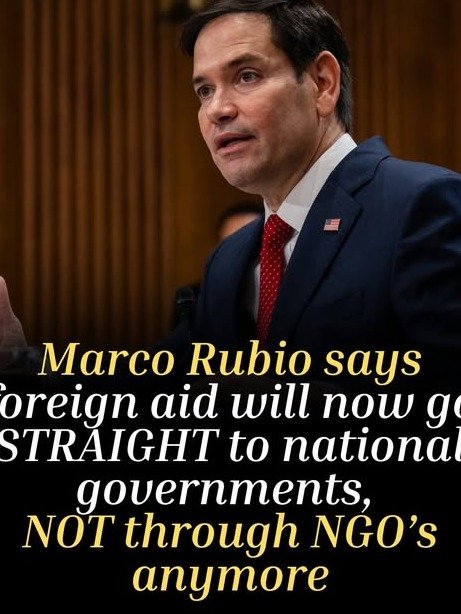
Prepare for a seismic shift in how America helps the world. Secretary of State Marco Rubio has just unveiled a monumental overhaul of U.S. foreign aid policy, a move that promises to redirect billions of dollars. This isn’t just a tweak; it’s a fundamental re-evaluation of how American generosity and strategic interests intersect on the global stage.
For decades, a significant portion of U.S. foreign assistance has flowed through non-governmental organizations (NGOs), international bodies, and various multilateral channels. Now, under Rubio’s directive, that paradigm is changing dramatically. The new policy mandates that substantial sums will be channeled directly to national governments of recipient countries, bypassing many of the traditional intermediaries.
A Bold New Direction for Global Assistance
This radical departure from established practice signals a clear intent to reshape America’s influence and ensure greater accountability, at least from the perspective of its proponents. Secretary Rubio’s announcement underscores a belief that direct government-to-government aid can foster stronger bilateral relationships and provide recipient nations with greater autonomy in managing their development priorities.
The shift is not merely administrative; it’s ideological. It reflects a growing sentiment within certain policy circles that the previous model, while well-intentioned, often lacked the direct impact and transparency necessary to achieve U.S. foreign policy objectives effectively. Critics of the NGO-centric approach have long argued for a more streamlined, sovereign-focused method.
Why the Sudden Shift? The Rationale Behind the Overhaul
The decision to pivot towards direct government funding stems from several key concerns that have plagued the foreign aid landscape for years. One primary driver is the desire for enhanced oversight and a clearer line of accountability for how U.S. taxpayer money is utilized abroad. When funds are disbursed through a complex web of NGOs, tracking their ultimate impact and ensuring they align precisely with U.S. strategic goals can become incredibly challenging.
Secretary Rubio emphasized that this new approach aims to empower national governments, fostering a sense of ownership over development projects and reducing perceived dependency on external actors. The administration believes that by strengthening governmental capacity directly, aid can be more effectively integrated into national development plans, leading to more sustainable and impactful outcomes.
“For too long, our foreign aid has been a labyrinth, with funds often diluted or diverted before reaching their intended beneficiaries,” Secretary Rubio stated in his announcement. “This new policy is about clarity, sovereignty, and strategic impact. We are putting trust in national leaders to drive their own progress, with direct support from the United States.”
The Pros: Empowering Nations and Streamlining Aid
Proponents of the new policy highlight several potential benefits. Firstly, it could significantly reduce administrative overheads. By cutting out multiple layers of intermediaries, more of the allocated funds could theoretically reach the ground, enhancing cost-effectiveness. This streamlining could also accelerate the implementation of vital projects, from infrastructure development to public health initiatives.
Secondly, direct aid can strengthen the legitimacy and capacity of recipient governments. When a nation’s own institutions are responsible for managing and distributing aid, it can bolster public trust in those institutions and encourage the development of robust governance structures. This empowerment is seen as crucial for long-term stability and self-sufficiency.
- Increased Sovereignty: Recipient nations gain more control over how aid is spent, aligning with their national priorities.
- Reduced Bureaucracy: Fewer intermediaries mean potentially faster fund disbursement and project implementation.
- Stronger Bilateral Ties: Direct engagement can foster deeper diplomatic relationships between the U.S. and recipient countries.
- Enhanced Accountability (to U.S.): Easier to track funds and hold specific government entities responsible for outcomes.
- Potential for Larger-Scale Projects: Governments may be better equipped to manage massive infrastructure or national programs.
The Cons and Concerns: Risks and Unintended Consequences
However, this dramatic policy shift is not without its critics and significant risks. The most prominent concern revolves around the potential for increased corruption. Many NGOs operate in environments where governmental corruption is rampant, and they are often lauded for their ability to bypass these corrupt channels to deliver aid directly to vulnerable populations.
Channelling billions directly to national governments, especially in countries with weak governance or high corruption indices, could inadvertently fuel graft and prevent aid from reaching those who need it most. Critics argue that NGOs often serve as crucial watchdogs, ensuring transparency and advocating for marginalized communities that governments might overlook or even oppress.
Another major apprehension is the potential impact on civil society. NGOs frequently work at the grassroots level, providing essential services, advocating for human rights, and building community resilience. A reduction in their funding could cripple these vital efforts, leaving significant gaps in humanitarian assistance and development work that national governments may not be equipped or willing to fill.
The Future for NGOs: Adaptation or Irrelevance?
For many international and local NGOs, this policy shift represents an existential threat. Their funding models are heavily reliant on grants and contracts from governments like the U.S. If those funds are redirected, organizations will be forced to adapt quickly, seek alternative funding sources, or face closure. This could lead to a significant brain drain in the development sector and a loss of invaluable on-the-ground expertise.
Some NGOs may find new roles as consultants to national governments, assisting in project design and implementation. Others might focus more heavily on advocacy, research, or private fundraising. However, the overall landscape of international development is poised for a dramatic transformation, potentially sidelining organizations that have been pillars of humanitarian aid for decades.
Strategic Alignment: What Does America Gain?
Beyond accountability and efficiency, the new policy is also deeply rooted in strategic foreign policy considerations. By providing direct aid, the U.S. can more explicitly tie assistance to its geopolitical interests, whether that involves counter-terrorism efforts, promoting democratic values, or countering the influence of rival powers. This allows for a more direct leverage of aid as a diplomatic tool.
This approach implicitly suggests a desire to strengthen the state apparatus of key partner nations, making them more reliable allies and more capable actors in regional stability. It’s a move that prioritizes governmental strength and bilateral relationships over a more diffuse, multi-stakeholder approach to global development.
Implementation Challenges and Oversight Mechanisms
The success of this new policy will heavily depend on the robustness of its implementation and oversight mechanisms. The U.S. State Department and USAID will need to develop rigorous frameworks to vet recipient governments, monitor fund utilization, and evaluate project outcomes. Without strong safeguards, the risks of mismanagement and corruption could quickly outweigh the intended benefits.
This will likely involve enhanced diplomatic engagement, on-the-ground monitoring teams, and potentially new agreements with recipient nations that stipulate strict reporting requirements and audit capabilities. The sheer scale of funds involved demands an unprecedented level of scrutiny to ensure taxpayer dollars are used wisely and effectively.
A Historical Parallel? Lessons from the Past
While this policy feels revolutionary, the debate between direct government-to-government aid and NGO-led interventions is not entirely new. History offers numerous examples where both approaches have yielded successes and failures. The Marshall Plan, for instance, was a massive government-to-government aid program that rebuilt post-war Europe, demonstrating the power of direct state-level investment.
Conversely, many humanitarian crises have been effectively addressed by agile, independent NGOs when governments were unwilling or unable to act. The challenge for Rubio’s team will be to learn from these historical precedents, adapting the new policy to the complex realities of the 21st-century global landscape, where the lines between development, diplomacy, and security are increasingly blurred.
The Road Ahead: Uncertainty and Opportunity
Secretary Rubio’s announcement marks the beginning of a potentially transformative era for U.S. foreign aid. While it promises greater governmental control, strategic alignment, and perhaps more efficient resource allocation, it also introduces significant risks regarding corruption, the marginalization of civil society, and the potential for political manipulation of aid.
The coming months and years will reveal the true impact of this bold shift. The world will be watching closely to see if this new direction leads to more effective development outcomes and stronger global partnerships, or if it inadvertently undermines the very foundations of international cooperation and humanitarian assistance built over decades. One thing is certain: the landscape of global aid will never be the same.
About the Author




