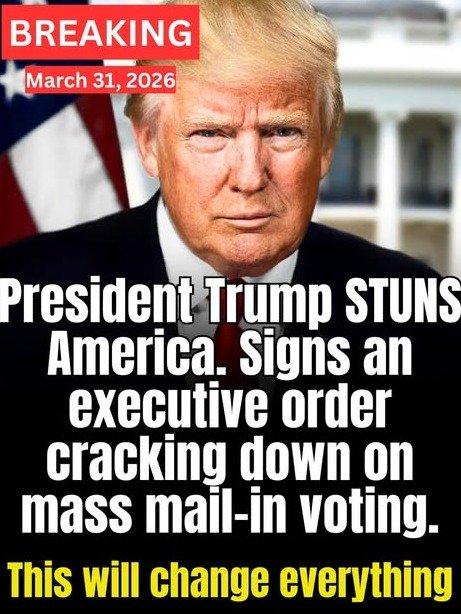
The very foundation of American democracy hinges on the integrity of its elections. But what happens when trust in that system begins to waver, particularly concerning how our votes are cast and counted? In a move that ignited immediate national debate, President Donald Trump signed a pivotal Executive Order, aiming to directly tackle the contentious issues of mail-in ballot fraud and the accuracy of voter rolls.
This wasn’t just another routine policy adjustment; it was a direct response to growing concerns, especially in the wake of an unprecedented election cycle, about the security and fairness of the voting process. With Congress often stalled on bipartisan solutions for election reform, the White House opted for executive action, throwing a spotlight on practices that many argued were ripe for exploitation.
A Presidential Mandate: Targeting Election Vulnerabilities
President Trump’s Executive Order was explicitly designed to address what his administration identified as critical vulnerabilities within the American electoral system. The primary targets were two-fold: the potential for fraud associated with expanded mail-in voting and the widespread inaccuracies plaguing state voter registration databases.
The administration asserted that these issues posed a significant threat to the public’s confidence in election outcomes. By initiating this order, the President sought to compel federal agencies to assist states in tightening their election security protocols, arguing that a robust and verifiable voting process was paramount to a functioning republic.
Why Executive Action? The Congressional Stalemate
The decision to issue an Executive Order stemmed largely from a perceived failure of legislative bodies to act decisively on election integrity concerns. For years, debates around voter identification, ballot harvesting, and the maintenance of voter rolls have been highly politicized, leading to gridlock in Congress.
Different political factions hold vastly different views on how elections should be run. While some advocate for universal access and convenience, often through expanded mail-in voting, others prioritize stringent security measures to prevent fraud, even if it means potentially impacting voter turnout. This ideological divide meant that comprehensive federal legislation was unlikely to pass, prompting the executive branch to step in.
“When Congress fails to act, and the integrity of our elections is at stake, the President must use the tools at his disposal to protect the ballot box,” stated a White House official at the time, underscoring the administration’s rationale.
The Mail-In Ballot Conundrum: Convenience vs. Security
Mail-in voting, particularly in the context of the Executive Order, became a flashpoint of contention. Proponents championed it as a vital tool for increasing voter participation, offering convenience, and ensuring accessibility, especially for those with disabilities, military personnel abroad, or during public health crises.
However, critics, including President Trump, raised serious alarms about the potential for widespread fraud. Their concerns centered on several key areas:
- Ballot Harvesting: The practice of third parties collecting and submitting absentee ballots, which is illegal in many states due to fraud risks.
- Lack of Signature Verification: Inconsistent or lax standards for verifying voter signatures on mail-in ballots across different jurisdictions.
- Undeliverable Ballots: Ballots sent to outdated addresses, potentially falling into the wrong hands.
- Coercion and Intimidation: The possibility of voters being pressured or influenced when filling out ballots outside the privacy of a polling booth.
These anxieties, whether fully substantiated by data or not, fueled the push for stricter controls and verification processes for mail-in ballots, which the Executive Order aimed to facilitate.
Cleaning Up the Rolls: A Quest for Accuracy
Beyond mail-in ballots, the Executive Order also targeted the pervasive issue of inaccurate voter rolls. Maintaining clean and current voter registration databases is a monumental task for states, and the challenges are numerous.
Outdated rolls can contain entries for:
- Deceased Voters: Individuals who have passed away but remain on the registration list.
- Moved Voters: People who have relocated to a different state or county but are still registered at their old address.
- Duplicate Registrations: Voters registered multiple times, sometimes in different states, potentially allowing for double voting.
- Fictitious Registrations: In rare cases, entirely fabricated voter entries.
These inaccuracies, regardless of whether they lead to actual fraud, erode public confidence and can be exploited. The Executive Order sought to leverage federal resources and data-sharing capabilities to help states identify and remove these problematic entries, thereby ensuring that only eligible, living residents are registered to vote.
Key Provisions and Directives of the Executive Order
While the full text of the Executive Order detailed numerous directives, its core intent was to streamline information sharing and encourage proactive measures. It mandated that federal agencies, such as the Department of Homeland Security and the United States Postal Service, cooperate more closely with state election officials.
Specific directives often included:
- Data Sharing: Encouraging federal agencies to share data relevant to voter eligibility (e.g., death records, change-of-address information) with state election authorities.
- Investigations: Directing federal law enforcement to investigate potential instances of voter fraud more rigorously.
- Recommendations: Tasking federal departments to develop recommendations for improving election security and preventing voter fraud.
- Review of Existing Laws: Calling for a comprehensive review of current federal and state laws related to election administration to identify gaps and areas for improvement.
The underlying principle was to empower states with better tools and information to manage their voter rolls and ballot security effectively, rather than imposing a federal mandate on election procedures directly.
Reactions Across the Political Spectrum
The signing of this Executive Order immediately polarized opinions across the nation. Supporters lauded it as a necessary and long-overdue step to safeguard the integrity of American elections.
“This Executive Order is a crucial step towards restoring faith in our electoral system,” commented a conservative pundit. “For too long, the vulnerabilities in mail-in voting and the neglect of voter rolls have gone unaddressed. The President is simply ensuring every legal vote counts.”
They argued that ensuring clean rolls and secure ballots was not about suppressing votes, but about upholding the principle of one person, one legal vote. They believed the order would help prevent fraud, which they contended could disenfranchise legitimate voters by diluting their vote.
Conversely, critics vehemently opposed the Executive Order, viewing it as a politically motivated attempt to suppress voter turnout, particularly among demographics more likely to vote by mail or be impacted by aggressive voter roll purges. Civil rights groups and many Democratic lawmakers expressed deep concern.
- Voter Suppression: Arguments that stricter rules and aggressive purges would disproportionately affect minority voters, low-income individuals, and students.
- Federal Overreach: Concerns that the federal government was improperly inserting itself into state-run election processes.
- Politicizing Elections: Accusations that the order was designed to cast doubt on election results for partisan gain, rather than genuinely improve security.
- Lack of Evidence: Claims that widespread mail-in ballot fraud was largely a myth and that the order was addressing a problem that didn’t exist at scale.
Legal challenges and intense public debates followed, highlighting the deep divisions within the country regarding the balance between voting access and election security.
The Broader Fight for Election Integrity: An Ongoing Dialogue
President Trump’s Executive Order, while controversial, undeniably elevated the national conversation around election integrity. It forced a deeper examination of how elections are administered, the security of different voting methods, and the crucial importance of accurate voter registration databases.
Even without the Executive Order, the issues it addressed remain central to American democracy. States continue to grapple with the complexities of maintaining fair, accessible, and secure elections. The dialogue includes not just federal actions, but also state-level legislative efforts, technological advancements in voting systems, and ongoing legal battles.
Ultimately, ensuring public trust in election outcomes is a shared responsibility, one that requires continuous vigilance, bipartisan cooperation, and a commitment to both access and security. The Executive Order served as a powerful reminder that the mechanisms of democracy, from voter rolls to ballot boxes, are constantly under scrutiny and are subjects of ongoing, vital debate.
Conclusion: A Lasting Impact on the Election Landscape
President Trump’s Executive Order on mail-in ballot fraud and voter roll accuracy was more than just a piece of paper; it was a declarative statement about the administration’s priorities regarding election integrity. While its immediate practical impact was subject to legal and political challenges, its lasting legacy is undeniable.
It solidified the debate over election security as a front-and-center issue in American politics, ensuring that concerns about mail-in voting and the cleanliness of voter rolls would continue to be intensely scrutinized. Regardless of one’s political stance, the order underscored a fundamental truth: the perceived fairness and security of elections are paramount to the health of any democratic nation, and the battle to uphold that trust is an enduring one.
About the Author




