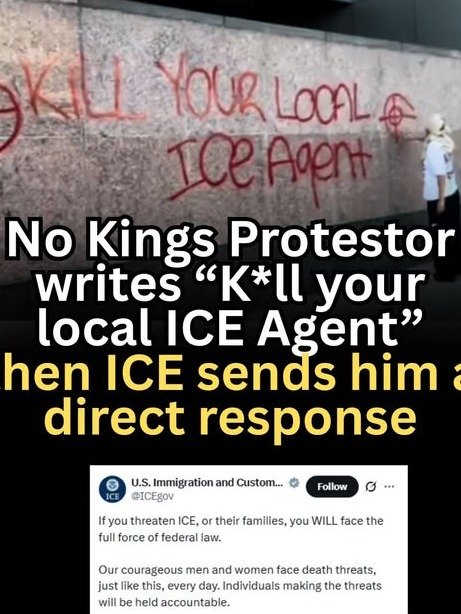
Imagine a job where death threats are a daily reality, not just for you, but for your spouse and children. This isn’t a scene from a Hollywood thriller; it’s the grim reality faced by the brave men and women of U.S. Immigration and Customs Enforcement (ICE) every single day. These dedicated federal agents, who work tirelessly to uphold our nation’s laws, are frequently targeted with menacing messages, often extending to their loved ones.
Such threats are not merely words exchanged in the heat of the moment; they are serious offenses with severe, far-reaching consequences under federal law. The message from ICE is unequivocal and stark: those who choose to threaten federal officers or their families will be met with the full, unyielding force of the justice system. This isn’t a warning to be taken lightly; it’s a promise of accountability.
The Unseen Battleground: Daily Threats Faced by Federal Agents
The men and women of ICE operate on the front lines, often in complex and emotionally charged environments. Their duties, which include enforcing immigration laws, combating human trafficking, and disrupting transnational criminal organizations, inherently place them in situations where hostility and opposition can escalate rapidly. This exposure means they frequently encounter individuals who may harbor intense resentment or anger.
As a result, federal agents regularly receive direct threats to their safety, their careers, and even their lives. These threats can come through various channels, from direct confrontations during arrests to anonymous messages online or through social media. Each threat, regardless of its perceived sincerity, must be taken seriously, consuming valuable resources and creating a constant state of vigilance for officers and their agencies.
Beyond the Badge: When Threats Target Families
What makes these threats particularly insidious is their tendency to extend beyond the individual officer to their unsuspecting families. Spouses, children, and other relatives, who are simply living their lives, can become targets of intimidation and harassment. This tactic is designed to inflict maximum emotional distress and pressure on the agent, attempting to deter them from performing their duties.
The psychological toll on an officer knowing their family is at risk is immense. It transforms a professional challenge into a deeply personal one, impacting their peace of mind both on and off duty. Protecting their families becomes an additional, unspoken burden carried by every agent, highlighting the extraordinary sacrifices made by those who serve in federal law enforcement.
The Law’s Unyielding Grip: Federal Statutes at Play
Threatening a federal officer or their family is not just morally reprehensible; it is a grave federal crime. Several statutes are specifically designed to protect federal employees and their families from such intimidation. These laws are robust and carry significant penalties, reflecting the seriousness with which the U.S. government views any attempt to obstruct justice or harm its personnel.
For instance, 18 U.S.C. § 115 makes it a federal offense to threaten to assault, kidnap, or murder a federal official or a member of their immediate family, with the intent to impede, intimidate, or interfere with such official while engaged in or on account of the performance of official duties. Violations can lead to imprisonment for up to 10 years, and even longer if a kidnapping or murder is involved or if the threat is made with a deadly weapon.
- 18 U.S.C. § 111: Assaulting, Resisting, or Impeding Certain Officers or Employees.
- 18 U.S.C. § 875: Interstate Communications, covering threats transmitted across state lines or internationally.
- 18 U.S.C. § 876: Mailing Threatening Communications.
- 18 U.S.C. § 877: Mailing Threatening Communications from Foreign Country.
These statutes demonstrate a comprehensive legal framework aimed at deterring and punishing those who seek to undermine the rule of law through intimidation. The penalties are not mere slaps on the wrist; they often involve substantial prison sentences and hefty fines, designed to serve as a strong deterrent.
Why These Threats Are Taken So Seriously
The government’s zero-tolerance policy on threats against federal agents and their families stems from several critical principles. First and foremost, it is about protecting the individuals who dedicate their lives to public service. No one should have to fear for their safety or the safety of their loved ones simply for doing their job.
Secondly, allowing such threats to go unpunished would severely undermine the authority and effectiveness of law enforcement. If agents can be intimidated, their ability to enforce laws and maintain order is compromised, leading to a breakdown in the justice system. This has direct implications for national security and the safety of all citizens.
The Investigation: How Federal Agencies Respond
When a threat against an ICE officer or their family is reported, federal agencies mobilize swiftly and decisively. These investigations are not handled by local police; they fall under the jurisdiction of federal entities such as the FBI, the Department of Justice, and ICE’s own internal security components. These agencies possess advanced investigative tools and expertise.
Investigators employ sophisticated techniques, including digital forensics, intelligence gathering, and surveillance, to identify the source of threats. Social media posts, emails, phone calls, and other forms of communication are meticulously analyzed. The anonymity of the internet offers little refuge, as federal agents are highly skilled at tracing digital footprints and bringing perpetrators to justice.
Real-World Consequences: A Glimpse into Prosecutions
The commitment to prosecuting individuals who threaten federal agents is not theoretical; it is a demonstrable reality. Numerous cases across the country illustrate that such threats are not idle words. Individuals who thought they could hide behind a keyboard or a phone have found themselves facing federal charges, leading to convictions and significant prison time.
These prosecutions serve as a stark reminder that the federal government does not bluff when it comes to protecting its personnel. Every threat is treated as a potential precursor to violence, and the investigative resources deployed are substantial. The message is clear: the consequences for threatening federal officers or their families are severe and inevitable.
The Ripple Effect: Impact on National Security and Public Safety
Beyond the immediate impact on individual officers and their families, threats against law enforcement have broader implications for national security and public safety. When agents are distracted by concerns for their personal safety or the safety of their loved ones, their ability to focus on critical duties—like interdicting narcotics, stopping human trafficking, or preventing terrorism—is diminished.
This erosion of focus and morale can have a cascading effect, potentially creating vulnerabilities that criminal organizations or hostile actors can exploit. Therefore, protecting federal law enforcement is not just about protecting individuals; it’s about safeguarding the institutions that are vital to our nation’s security and the well-being of its communities.
A Stern Warning: The Full Force of Federal Law
About the Author




