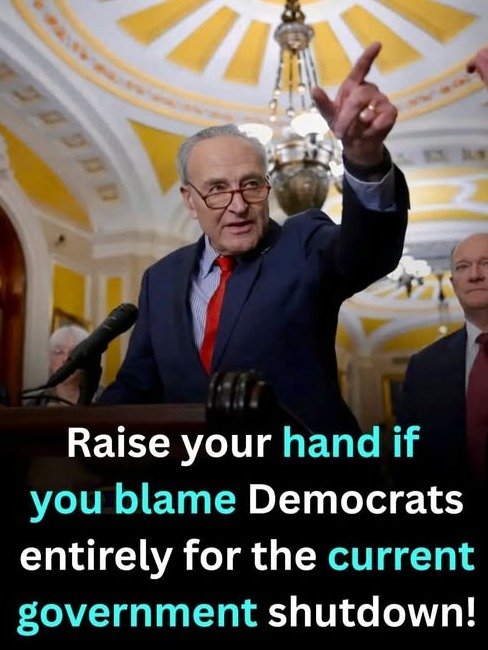
Imagine waking up to find your essential services halted, your paycheck delayed, and the very fabric of daily life unraveling – all due to a political stalemate. This isn’t a dystopian novel; it’s the stark reality facing millions during a government shutdown, a crisis far more pervasive and damaging than the headlines often suggest. For many, it’s a silent erosion of stability, a direct consequence of Washington’s gridlock.
The recent government shutdown has once again thrust the nation into a familiar, yet always unsettling, cycle of political brinkmanship and public frustration. While news anchors debate the minutiae of congressional negotiations, millions of Americans are left grappling with the tangible, often devastating, effects on their daily lives and livelihoods.
This isn’t just about abstract policy disputes; it’s about the real people who depend on federal services, the dedicated employees caught in the crossfire, and the broader economic stability of the nation. The ripple effects extend far beyond Washington D.C., touching communities and families from coast to coast.
What Exactly is a Government Shutdown?
At its core, a government shutdown occurs when Congress fails to pass appropriation bills, or funding legislation, to finance government operations for the upcoming fiscal year. Without these bills, federal agencies are legally prohibited from spending money, forcing them to cease non-essential functions and furlough a significant portion of their workforce.
It’s a drastic measure, often employed as a political tactic during intense budget negotiations or policy disagreements. The idea is to create enough pressure – through public outcry and tangible disruption – to force lawmakers to reach a compromise. However, this strategy frequently backfires, creating more division and suffering than resolution.
Historically, shutdowns have become a recurring feature of American politics, each instance leaving its own unique scar. They highlight a fundamental breakdown in the legislative process, where partisan divides often overshadow the collective responsibility to govern effectively and serve the populace.
The Human Cost: Federal Workers on the Front Lines
Perhaps no group feels the immediate and profound impact of a shutdown more acutely than federal employees. Hundreds of thousands of dedicated civil servants, from park rangers to IRS agents, are either furloughed without pay or deemed “essential” and forced to work without immediate compensation.
For those furloughed, paychecks simply stop. Imagine trying to pay rent, mortgage, groceries, or medical bills when your primary income source vanishes overnight, with no clear end in sight. The financial stress is immense, forcing many to dip into savings, take out loans, or even seek temporary employment to make ends meet.
Even “essential” workers, such as air traffic controllers, border patrol agents, and food safety inspectors, face an impossible choice: continue working critical jobs without knowing when their next paycheck will arrive, or abandon their duties and risk public safety. This creates an enormous psychological burden, impacting morale and long-term retention within the federal workforce.
“It’s not just about missing a paycheck; it’s about the dignity of work, the stability of our families, and the feeling that our service is undervalued by the very government we serve,” shared one furloughed EPA employee struggling to pay for childcare.
Essential Services Grind to a Halt
The impact of a government shutdown isn’t confined to federal employees alone; it reverberates throughout society as vital public services are disrupted or halted entirely. Citizens expecting routine government functions suddenly find themselves facing delays, closures, and outright unavailability.
Consider the everyday implications:
- National Parks and Museums: Iconic landmarks and cultural institutions often close their doors, impacting tourism, local businesses, and public access to natural and historical treasures.
- Passport and Visa Processing: Delays can throw international travel plans into chaos, affecting vacations, business trips, and even critical immigration processes.
- IRS Operations: Tax refunds can be delayed, and taxpayer assistance services become limited, creating headaches for millions during tax season.
- Food and Drug Inspections: While some critical inspections may continue, reduced staffing can lead to concerns about food safety and drug oversight, potentially putting public health at risk.
- Small Business Loans: Government-backed loans and assistance programs for small businesses can be put on hold, stifling growth and economic activity.
- Scientific Research: Federal grants and ongoing research projects can be paused, leading to lost time, wasted resources, and a slowdown in critical scientific advancements.
These disruptions aren’t minor inconveniences; they can have profound consequences for individuals, families, and businesses relying on a functioning government. From a farmer waiting on agricultural subsidies to a family planning a long-awaited trip, the uncertainty breeds widespread anxiety and economic strain.
The Economic Ripple Effect: More Than Just Missed Paychecks
Beyond the immediate human and service impacts, government shutdowns inflict significant damage on the national economy. Economists widely agree that these political impasses lead to a measurable reduction in Gross Domestic Product (GDP) and dampen overall economic confidence.
When federal workers are furloughed, their spending power diminishes, leading to reduced consumer spending in local economies. Businesses that rely on federal contracts or tourism near federal sites also suffer, leading to layoffs or reduced hours for their own employees. This creates a cascading effect, slowing economic activity across various sectors.
Furthermore, the uncertainty created by a shutdown discourages investment and long-term planning. Businesses become hesitant to expand or hire when the stability of the government, and by extension, the economy, seems precarious. This “wait and see” approach can stifle innovation and growth, costing the nation far more than just the immediate lost wages.
The Blame Game: Political Theater Over Public Service
Every government shutdown inevitably devolves into a highly charged political spectacle, with each party eager to assign blame to the other. The airwaves and social media become saturated with accusations, counter-accusations, and partisan rhetoric, often obscuring the real-world consequences.
Lawmakers, rather than focusing on constructive solutions, frequently prioritize political messaging and appeasing their base. This adversarial approach makes compromise incredibly difficult, prolonging the shutdown and exacerbating the suffering it causes. The public, watching this political theater unfold, grows increasingly cynical and frustrated.
The use of a shutdown as a bargaining chip reflects a deeper problem within the political system: a willingness to weaponize essential government functions to achieve policy goals. This strategy, while sometimes effective in forcing a hand, comes at an enormous cost to public trust and the very idea of effective governance.
Eroding Trust: A Crisis of Confidence
Perhaps one of the most insidious long-term effects of recurring government shutdowns is the erosion of public trust in government institutions. When the government itself cannot perform its basic functions due to internal squabbles, citizens begin to question its competence, reliability, and commitment to their well-being.
This decline in trust can have far-reaching implications, making it harder for government to garner support for important initiatives, respond effectively to crises, and maintain social cohesion. It fosters a sense of disillusionment and cynicism, leading many to feel that their voices aren’t heard and their needs aren’t prioritized.
The image of a paralyzed government, unable to fund itself, projects an image of weakness and dysfunction both domestically and on the international stage. It undermines America’s standing as a stable and reliable global leader, potentially impacting foreign policy and economic relations.
Learning from History: A Recurring Problem
Government shutdowns are not a new phenomenon in American politics. The country has experienced numerous shutdowns of varying lengths and impacts over the decades. Each instance serves as a stark reminder of the fragile balance between political will and the imperative of public service.
From the budget battles of the 1990s to more recent standoffs over healthcare or border security, the pattern remains largely the same: a failure to agree on spending, leading to a halt in government operations, and ultimately, a scramble to find a resolution under immense public pressure. Yet, despite the recurring nature and predictable negative outcomes, the cycle persists.
The historical record clearly demonstrates that while shutdowns might occasionally force a legislative hand, they rarely achieve their intended policy goals without significant collateral damage. They are a blunt instrument, often harming the very citizens lawmakers are sworn to protect.
Moving Forward: The Imperative for Bipartisan Solutions
Breaking the cycle of government shutdowns requires a fundamental shift in political culture and a renewed commitment to bipartisan cooperation. It necessitates a willingness from all sides to prioritize the well-being of the nation over narrow partisan interests or ideological purity.
Reforming the budget process itself could be a crucial step, perhaps by implementing stricter deadlines, automatic continuing resolutions, or mechanisms that disincentivize using shutdowns as a negotiating tactic. The goal should be to ensure that essential government functions are never held hostage to political disputes.
Ultimately, a functioning democracy depends on the ability of its elected representatives to govern effectively and responsibly. The ongoing frustration and real suffering caused by government shutdowns serve as a powerful reminder that the stakes are incredibly high, and the cost of political gridlock is borne by every American.
As citizens, our role is to remain informed, hold our representatives accountable, and demand a political process that prioritizes stability, service, and the long-term health of our nation. The silence of a shutdown speaks volumes about what’s truly at stake.
About the Author




