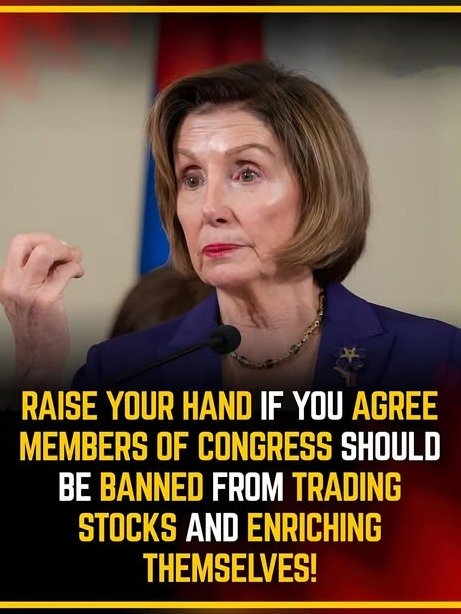
Imagine a world where the very individuals tasked with safeguarding your future are simultaneously making millions off the stock market, armed with information you could never access. This isn’t a dystopian novel; it’s the unsettling reality many Americans suspect lies behind the ongoing debate about congressional stock trading. The question isn’t just about legality, but about fundamental fairness and the integrity of our democracy.
For years, a simmering controversy has threatened to boil over: should members of Congress be allowed to buy and sell individual stocks while privy to highly sensitive, non-public information? The optics alone are terrible, fueling a deep cynicism among the public. It raises a critical question: are our elected officials truly serving the public interest, or their own portfolios?
The Unsettling Reality of Congressional Finances
Our lawmakers are in a uniquely powerful position. They write the laws, oversee federal agencies, and have direct access to classified briefings, economic forecasts, and policy decisions that can dramatically impact industries and individual companies. This includes everything from defense contracts and infrastructure spending to pharmaceutical approvals and environmental regulations.
Consider the potential for conflicts of interest. A representative might vote on a bill that directly benefits a company whose stock they just purchased. A senator could receive a briefing about an impending economic downturn or a new trade agreement, then quietly adjust their investments before the public is aware. Even without malicious intent, the sheer appearance of impropriety erodes trust in the legislative process.
This isn’t about accusing every single lawmaker of corruption. It’s about a systemic vulnerability that allows for the perception, and indeed the possibility, of unfair advantage. The public rightfully wonders if decisions made in Washington are truly for the good of the nation, or if they’re subtly influenced by personal financial gain.
A Look Back: The STOCK Act and Its Limitations
In 2012, in response to growing public outcry and a “60 Minutes” report, Congress passed the Stop Trading on Congressional Knowledge (STOCK) Act. This landmark legislation was intended to combat insider trading by members of Congress and their staff, explicitly stating that they are not exempt from insider trading laws.
The STOCK Act mandated that lawmakers and high-ranking staff disclose their stock trades within 45 days of a transaction, making these disclosures publicly available. The goal was to increase transparency and deter the use of non-public information for personal profit. It was hailed as a step forward, a way to hold elected officials to stricter ethical standards.
However, the Act has faced significant criticism for its perceived shortcomings and weak enforcement. Many argue that the 45-day disclosure window is too long, allowing ample time for lawmakers to profit before the public can react or scrutinize their trades. Furthermore, the penalties for violations have often been seen as insufficient, leading to a sense that the law lacks real teeth.
“While the STOCK Act was a noble effort, it ultimately proved to be more of a speed bump than a roadblock for those looking to leverage their positions for financial gain. The loopholes and lack of robust enforcement have left many citizens feeling betrayed.”
Critics also point to instances where lawmakers or their spouses have made timely trades in sectors directly impacted by legislative actions or global events, raising serious questions about whether non-public information was indeed a factor. These incidents, even if technically compliant with the STOCK Act’s disclosure rules, continue to fuel the debate.
Why the Public Demands Stricter Rules
The call for a full ban on individual stock trading by members of Congress is gaining momentum, driven by a powerful desire to restore faith in government institutions. For many, this isn’t just an ethical nicety; it’s a fundamental requirement for a healthy democracy.
The argument is straightforward: public service should be about just that – serving the public. When lawmakers are actively engaged in the stock market, particularly in individual stocks, their focus can easily become divided. The temptation to prioritize personal financial gain over the common good, even subconsciously, is simply too great to ignore.
Furthermore, a ban would help to level the playing field. The average American investor does not have access to the same level of information as a member of Congress. Allowing lawmakers to trade individual stocks creates an unfair advantage, reinforcing the perception that the system is rigged against ordinary citizens.
- Erosion of Public Trust: The most significant consequence of current policies is the deep mistrust it fosters.
- Perception of Corruption: Even if legal, trades based on privileged information appear corrupt.
- Unfair Advantage: Lawmakers possess unique, non-public insights into market-moving events.
- Distraction from Public Duty: Managing personal stock portfolios can divert focus from legislative responsibilities.
- Ethical Consistency: Many high-level corporate executives face similar restrictions; why not lawmakers?
The Counterarguments: A Complex Debate
While the arguments for a ban are compelling, there are also counterarguments that highlight the complexities of the issue. Some argue that a blanket ban infringes on the personal financial freedom of elected officials, treating them differently from other private citizens.
They contend that lawmakers, like anyone else, have a right to invest their earnings and plan for their retirement. Imposing overly strict financial restrictions, some believe, could deter talented and experienced individuals from seeking public office, ultimately harming the quality of governance.
Another point raised is the existing framework of transparency. Proponents of the current system often cite the STOCK Act’s disclosure requirements as sufficient. They argue that public disclosure allows for scrutiny and holds lawmakers accountable, enabling citizens and watchdog groups to identify and flag suspicious trading patterns.
Furthermore, some suggest that the issue is not with the right to trade, but with enforcement. If the STOCK Act were more rigorously enforced, with stronger penalties for violations and faster disclosure timelines, the existing framework could be made more effective without resorting to a full ban.
Proposed Solutions: Beyond the Status Quo
The debate isn’t just about whether to ban or not to ban; it’s about finding the most effective way to ensure ethical conduct and restore public confidence. Several solutions have been proposed, each with its own merits and challenges.
One widely discussed option is the mandatory use of blind trusts. Under this arrangement, a lawmaker’s assets would be managed by an independent third party without the lawmaker’s knowledge or control over individual investment decisions. This would theoretically eliminate the potential for using insider information, as the lawmaker would be unaware of what specific stocks they own.
The most stringent proposal is a full ban on individual stock trading. This would mean lawmakers could only invest in broadly diversified mutual funds or exchange-traded funds (ETFs) that track an entire market, rather than specific companies. This approach would remove the incentive to use privileged information for targeted gains, as individual company performance would have minimal impact on their overall portfolio.
Another alternative is to allow investments only in broadly diversified funds, but with stricter enforcement and penalties for any violations. This includes significantly reducing the disclosure window, perhaps to 24-48 hours, and imposing substantial fines or even criminal charges for non-compliance or proven insider trading.
Some also suggest creating a non-partisan, independent body with the authority to review and approve all congressional stock transactions, or at least to conduct real-time audits. This would add an additional layer of oversight beyond the current ethics committees, which are often criticized for their perceived lack of independence.
The Stakes: Restoring Faith in Governance
The controversy surrounding congressional stock trading is more than just a political talking point; it strikes at the heart of public trust in democratic institutions. When citizens believe their elected representatives are primarily motivated by personal enrichment rather than public service, it breeds cynicism and disengagement.
This erosion of trust can have far-reaching consequences, making it harder for lawmakers to garner support for crucial policies, regardless of their merit. It fuels the perception that the system is rigged, benefiting only a select few at the expense of the many. In a time of increasing political polarization, maintaining the integrity of our governance is paramount.
Ultimately, the debate is about the core values we expect from those who hold public office. Should they be held to a higher ethical standard? Can we truly expect unbiased decision-making when personal financial interests are so closely intertwined with legislative power? For a healthy democracy to thrive, the answer must lean towards unwavering integrity.
What You Can Do: Driving Change
The power to influence this debate ultimately rests with the public. By staying informed, engaging with the issue, and demanding accountability from your representatives, you can help drive meaningful change. Public pressure has historically been a powerful catalyst for ethical reforms in Washington.
Contact your senators and representatives. Share articles and information that highlight the concerns. Let your voice be heard that you expect your elected officials to prioritize public service above personal profit. The future of ethical governance depends on an engaged and vigilant citizenry.
About the Author




