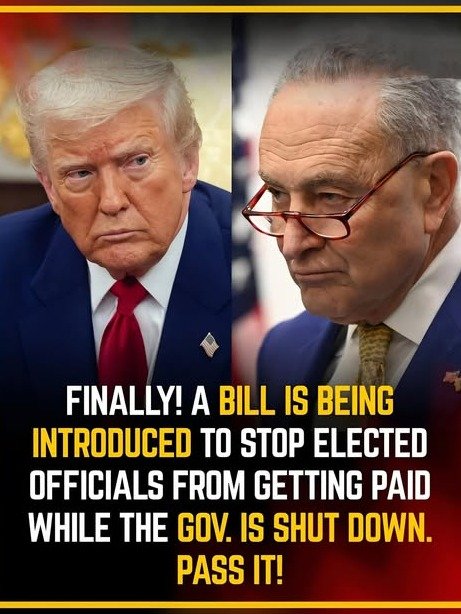
Imagine your paycheck suddenly vanishing because of political gridlock in Washington. For millions of federal employees, this isn’t a hypothetical nightmare; it’s a stark reality during every government shutdown. But what if the very lawmakers responsible for those shutdowns had to share that financial burden?
A groundbreaking proposal is currently making waves in Congress, threatening to do just that. This isn’t just another piece of legislation; it’s a direct challenge to the status quo, aiming to ensure that elected officials experience the same financial pinch as the constituents they serve.
The Groundbreaking Proposal: A Shift in Accountability
At the heart of this legislative push is a bill designed to pause the pay of elected officials – specifically members of Congress – during any government shutdown. This isn’t about punishing lawmakers, but rather about fostering a shared sense of urgency and accountability when partisan disputes bring federal operations to a halt.
Introduced by Senator John Kennedy, this bill seeks to eliminate the current disconnect where essential federal workers face furloughs or work without pay, while the salaries of the very people who failed to pass a budget continue uninterrupted. It’s a move that many believe is long overdue, addressing a fundamental issue of fairness.
The current system often sees federal employees, from park rangers to IRS agents, facing immense financial stress, unable to pay mortgages or feed their families, all while congressional salaries remain untouched. This proposed legislation aims to bridge that gap, creating a more equitable experience for all involved in government.
Why This Bill Matters: Bridging the Divide
The sentiment behind this bill resonates deeply with the American public, who frequently express frustration over political stalemates and the ensuing consequences. When a shutdown occurs, the impact ripples across the nation, affecting everything from national parks to scientific research, and most acutely, the livelihoods of federal workers.
By directly linking congressional pay to the operational status of the government, the bill introduces a powerful incentive for lawmakers to find common ground and avoid future shutdowns. It transforms the abstract concept of ‘political consequences’ into a very tangible, personal financial one for those in power.
“It’s time for Congress to feel the same economic pressure as the federal workers and American families who suffer during a government shutdown. This isn’t about politics; it’s about basic fairness and accountability.”
This isn’t merely a symbolic gesture. It represents a significant shift in how accountability is perceived and enforced within the legislative branch. If passed, it could fundamentally alter the dynamics of budget negotiations and crisis management in Washington.
The Mechanics of Withholding Pay: How It Works
The proposed legislation outlines a clear mechanism for pausing congressional salaries. In the event of a government shutdown, the U.S. Treasury would be directed to withhold the paychecks of all members of the House of Representatives and the Senate.
This withholding would continue for the duration of the shutdown. Once a funding agreement is reached and the government reopens, congressional pay would resume. Crucially, the bill specifies that the withheld pay would not be retroactively disbursed, meaning lawmakers would permanently lose the income for the shutdown period.
- Immediate Impact: Paychecks stop the moment a shutdown begins.
- No Back Pay: Lawmakers would not receive compensation for the time the government was closed.
- Applies to All: The measure would apply to every elected member of Congress, regardless of party affiliation.
This ‘no back pay’ clause is particularly potent, as it ensures a genuine financial consequence, rather than just a temporary inconvenience. It’s designed to create a strong, tangible motivation to prevent future shutdowns.
A History of Shutdowns: The Cost to America
Government shutdowns are not a new phenomenon in American politics. Over the past few decades, the nation has witnessed numerous instances where partisan disagreements have led to the cessation of non-essential government services. Each shutdown carries a significant cost, both economic and human.
The longest shutdown in U.S. history stretched for 35 days from late 2018 into early 2019, impacting approximately 800,000 federal employees. Many were furloughed without pay, while others were forced to work in critical roles without receiving their wages on time.
The economic toll of such events is immense. Studies have shown that shutdowns can cost billions of dollars in lost economic activity, delayed services, and decreased consumer confidence. More importantly, they inflict severe emotional and financial distress on federal workers and their families, many of whom live paycheck to paycheck.
This recurring cycle of crisis and resolution, often at the expense of ordinary citizens, has fueled public cynicism and calls for greater accountability from elected officials. The current bill directly addresses this pervasive frustration.
The Fairness Argument: Why It Resonates
The core appeal of Senator Kennedy’s bill lies in its straightforward argument for fairness. When a private sector company faces financial difficulties or operational halts due to internal disputes, leadership often shares in the belt-tightening measures, sometimes even taking pay cuts.
Yet, in the federal government, the consequences of political inaction have historically fallen disproportionately on the shoulders of the workforce, not the decision-makers. This creates a perception of privilege and detachment among the public.
Why should federal employees bear the brunt of political gridlock while the very individuals responsible continue to draw a full salary? This question underpins the widespread public support for measures like the proposed pay pause. It’s about leveling the playing field and ensuring that those who hold the power also share in the consequences of their actions.
This isn’t just about money; it’s about restoring faith in the system and demonstrating that elected officials are truly committed to serving the public interest, even if it means personal sacrifice.
Potential Hurdles and the Road Ahead
While the concept of pausing congressional pay during a shutdown enjoys broad public support, the path to becoming law is rarely straightforward. Such a bill would likely face various political and procedural hurdles within Congress itself.
Some lawmakers might argue against it, citing concerns about its constitutionality (though legal scholars generally agree Congress has the power to adjust its own pay prospectively), or suggesting it could be seen as political grandstanding. Others might worry it sets a precedent that could be exploited for other political maneuvers.
However, the growing public outcry for accountability and the increasing frequency of shutdown threats make this bill a powerful statement. Its proponents will likely emphasize its role in promoting fiscal responsibility and encouraging legislative compromise.
The bill’s journey through committees, potential amendments, and votes in both chambers will be closely watched. Its passage would send a clear message: the days of Congress being immune to the financial fallout of its own gridlock may finally be numbered.
What This Means for the Future of Governance
Should this bill become law, its implications could be far-reaching. Beyond the immediate financial impact on individual members of Congress, it could usher in a new era of heightened accountability for legislative actions.
The prospect of personally losing income might compel lawmakers to engage in more sincere and urgent negotiations to prevent shutdowns. It could foster a greater sense of shared responsibility and a stronger incentive to prioritize compromise over partisan posturing.
This bill represents a potential turning point in the relationship between Congress and the American people. It’s a move towards greater transparency and a more equitable distribution of the consequences when the government fails to function as intended.
Ultimately, the success of this proposal hinges on the willingness of elected officials to embrace a principle of shared sacrifice. It’s a test of whether they are prepared to put the stability of the nation and the welfare of its citizens ahead of their own financial comfort. The nation is watching.
About the Author




