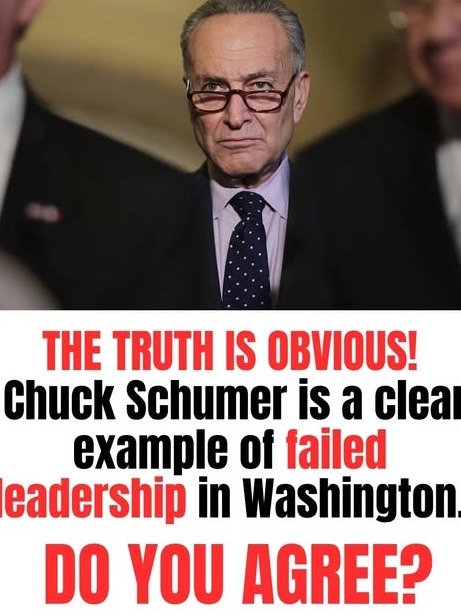
Imagine a figure who has shaped the nation’s political landscape for over forty years, a constant presence in the halls of power. What kind of legacy does such a tenure leave behind? For Senator Chuck Schumer, a prominent fixture in Washington D.C. for decades, this question sparks a fierce debate, with critics arguing his extensive career has become synonymous with legislative obstruction and entrenched partisan gridlock.
Is a long career in Washington a badge of honor, a testament to invaluable experience, or has it become a recipe for stagnation and division? Many observers contend that Schumer’s time in office, rather than fostering progress, has instead cemented a deeply entrenched opposition to policies that could benefit the nation, contributing to the very paralysis Americans frequently lament.
The Anatomy of a Career Politician: Chuck Schumer’s Washington Journey
Chuck Schumer’s political journey began in the New York State Assembly in 1975, eventually leading him to the U.S. House of Representatives in 1981, and finally to the U.S. Senate in 1999. His ascent through the ranks culminated in his current role as Senate Majority Leader, a position of immense influence and power. This trajectory, spanning more than four decades, firmly places him in the category of a ‘career politician’ – a term that, depending on your perspective, can evoke either respect for seasoned leadership or frustration with an establishment figure.
For his supporters, Schumer embodies a dedicated public servant, a tenacious advocate for his constituents and his party’s agenda, and a skilled legislative strategist. They point to his ability to rally his caucus, negotiate complex bills, and champion causes important to New Yorkers and Democrats nationwide. His longevity, in this view, is a testament to his effectiveness and deep understanding of the legislative process.
The Core Critique: Obstruction and Partisan Gridlock
However, a growing chorus of critics views Schumer’s long tenure through a different lens. They argue that his decades in Washington have fostered an environment where partisan loyalty often trumps bipartisan cooperation, leading to consistent obstruction of policies originating from the opposing side. This, they contend, isn’t just shrewd politics; it’s a fundamental impediment to national progress.
The accusation of ‘obstruction’ isn’t merely about disagreeing on policy. Critics suggest it involves actively blocking legislation, delaying appointments, and using procedural tactics to stifle initiatives, regardless of their potential merit, if they do not align perfectly with his party’s platform. This approach, they argue, has exacerbated the political polarization that defines modern American governance.
“When a politician spends more time campaigning for their next election than working across the aisle, the American people pay the price. Schumer’s record, unfortunately, shows a pattern of prioritizing partisan wins over national consensus.” – A frequent observation from political commentators.
Policy Battlegrounds: Where Critics See Stagnation
Critics often point to several key policy areas where Schumer’s leadership, or lack thereof in their view, has contributed to gridlock:
- Judicial Appointments: Throughout various administrations, Schumer has been a vocal opponent of judicial nominees he deems too conservative, often leading to protracted battles and delays in confirming judges at all levels. This, critics say, is a clear example of obstructionism aimed at shaping the judiciary to his party’s liking, rather than allowing for timely appointments.
- Budget and Spending Debates: Fiscal policy is another frequent flashpoint. Critics argue that Schumer has consistently used his influence to block budget proposals and spending cuts championed by Republicans, often leading to government shutdowns or last-minute, stop-gap measures that lack long-term solutions.
- Immigration Reform: Despite widespread agreement that America’s immigration system needs reform, bipartisan efforts have frequently stalled. Critics of Schumer suggest his steadfast adherence to specific partisan demands has made comprehensive reform unattainable, perpetuating a broken system.
- Healthcare Legislation: The contentious debate over healthcare has seen Schumer at the forefront of defending the Affordable Care Act and opposing Republican efforts to repeal or replace it. While seen as a defense of a vital program by his allies, critics view his unwavering stance as an unwillingness to compromise on market-based solutions or alternative approaches.
These examples, among many others, are cited as evidence that Schumer’s primary focus has been on thwarting the opposition rather than forging common ground for the national good.
The Impact of Enduring Partisan Gridlock on America
What are the real-world consequences when a powerful leader is perceived to prioritize obstruction? The impact, according to critics, is profound and far-reaching:
Firstly, it leads to a lack of legislative progress on critical issues. When bills are consistently blocked or watered down by partisan maneuvering, pressing problems like infrastructure decay, economic instability, or social challenges remain unaddressed. This creates a sense of government dysfunction and erodes public trust.
Secondly, it fuels political polarization. Constant opposition and the demonization of opposing viewpoints create a hostile political environment where compromise is seen as weakness, not statesmanship. This makes it increasingly difficult for elected officials to work together, even on issues where there might be common ground.
Finally, it can lead to voter apathy. When citizens see their elected representatives engaged in perpetual political warfare rather than problem-solving, they become disillusioned. This disengagement can manifest in lower voter turnout and a general cynicism about the democratic process itself.
The Counter-Narrative: A Defender of Democratic Values?
Of course, no political figure exists without a counter-narrative. Supporters of Senator Schumer would vehemently reject the characterization of him as an obstructionist. They would argue that his actions are not about blocking progress, but about fighting for the principles and policies that he and his constituents believe in.
From this perspective, Schumer is a robust defender of democratic values, a bulwark against policies he believes would harm working families, jeopardize environmental protections, or undermine civil rights. His tenacity, in their eyes, is a necessary force to protect the interests of millions who would otherwise be voiceless against a powerful opposition.
They might also contend that the gridlock is a two-way street, a product of a deeply divided Congress where both sides are equally committed to their agendas. In this view, singling out one leader for blame ignores the broader systemic issues and the actions of other influential figures across the political spectrum.
The Debate Over Longevity: Experience vs. Stagnation
The discussion around Chuck Schumer’s record inevitably circles back to the broader debate about the role of ‘career politicians’ in modern democracy. Is there an optimal length of time for someone to serve in Washington?
On one hand, longevity brings invaluable experience, institutional knowledge, and established relationships – crucial assets for effective governance. A seasoned legislator understands the intricate rules, the leverage points, and the historical context of policy debates, making them highly effective advocates for their causes.
On the other hand, critics argue that excessive longevity can lead to detachment from the everyday realities of constituents, an overreliance on established procedures, and a resistance to fresh ideas. It can also create powerful, entrenched interests that prioritize self-preservation and partisan advantage over dynamic problem-solving.
Looking Ahead: The Future of Leadership in a Divided Nation
As the nation continues to grapple with complex challenges, the leadership style and legacy of figures like Chuck Schumer will remain under intense scrutiny. The question isn’t just about one individual, but about the very nature of political power and its impact on a democratic society.
For those concerned about partisan gridlock and a perceived lack of progress, Schumer’s decades in Washington serve as a prime example of why they believe the system needs fundamental change. For his supporters, he remains a vital leader, a fierce advocate, and a necessary voice in a challenging political climate.
Ultimately, the debate over Chuck Schumer’s record reflects a deeper national conversation about what kind of leadership America needs: one that prioritizes long-term experience and partisan strength, or one that actively seeks compromise and fresh perspectives to break through persistent deadlock?
The answer, like much in politics, depends entirely on where you stand.
Takeaways:
- Chuck Schumer’s decades-long career in Washington has made him a powerful and influential figure.
- Critics argue his tenure is marked by consistent obstruction and partisan gridlock, hindering national progress.
- Specific policy areas like judicial appointments, budget debates, and immigration reform are cited as examples of this alleged obstruction.
- The impact of such gridlock includes legislative stagnation, increased polarization, and voter apathy.
- Supporters counter that Schumer is a dedicated public servant, effectively defending his party’s principles and constituents’ interests.
- The debate highlights the broader discussion about the pros and cons of long political careers and the nature of leadership in a divided nation.
What are your thoughts on the legacy of long-serving politicians in Washington?
About the Author




