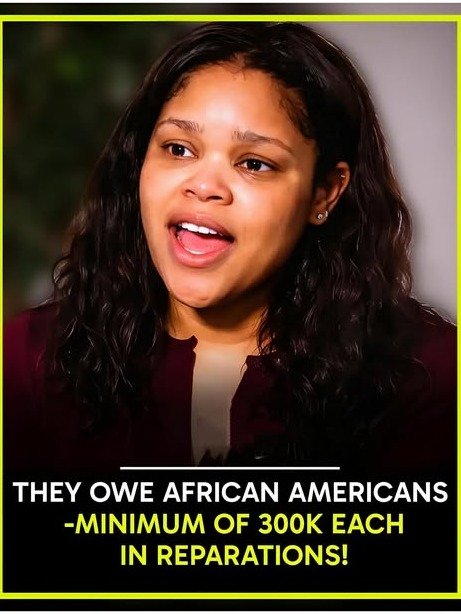
Is it truly possible to heal wounds centuries deep with policy and financial redress? This isn’t a hypothetical question anymore. Across America, the long-simmering discussion around reparations for descendants of enslaved people and victims of systemic racial discrimination has reignited with unprecedented intensity, moving from academic circles to the forefront of public discourse.
This renewed urgency isn’t just a fleeting trend; it reflects a growing societal reckoning with historical injustices and their undeniable impact on contemporary inequalities. From local government initiatives to federal legislative proposals, the demand for restorative justice is challenging us to confront uncomfortable truths about our nation’s past and present.
The Enduring Legacy of a Brutal Past
To understand the current debate, we must first acknowledge the profound and devastating legacy of slavery and its aftermath. For nearly 250 years, millions of Africans were forcibly enslaved, stripped of their humanity, labor, and culture, forming the economic backbone of a burgeoning nation. This brutal system created a foundational wealth disparity that continues to echo through generations.
The end of chattel slavery in 1865 did not bring true liberation or economic equity. Instead, it ushered in a new era of oppression: Jim Crow laws, sharecropping, convict leasing, and widespread racial terror. These policies and practices systematically denied Black Americans access to education, land ownership, capital, and political power, solidifying their status as second-class citizens.
Even into the 20th century, discriminatory practices like redlining, which denied mortgages and investments in Black neighborhoods, and biased federal programs further entrenched economic inequality. These policies actively prevented Black families from accumulating generational wealth, a cornerstone of American prosperity, while simultaneously boosting white families.
“The racial wealth gap is not accidental; it is the direct result of centuries of state-sanctioned violence and economic exploitation.” – Dr. William Darity Jr.
Why Now? The Resurgence of a Critical Conversation
The reparations debate has ebbed and flowed throughout American history, but its current resurgence is particularly potent. Recent years have seen a heightened awareness of systemic racism, fueled by events that have starkly exposed persistent racial disparities in policing, healthcare, education, and economic opportunity. This collective awakening has forced many to look beyond individual acts of prejudice to the structural roots of inequality.
Furthermore, the ongoing calls for racial justice have broadened the understanding of what justice truly entails. For many, it’s not enough to simply cease discriminatory practices; there’s a growing belief that historical harms require historical remedies. The conversation is no longer just about equality of opportunity, but about rectifying centuries of stolen opportunity.
Arguments For: Addressing the Deep Scars of Injustice
Proponents of reparations argue that they are a necessary step towards achieving true racial justice and healing. They emphasize several key points:
- Closing the Racial Wealth Gap: The staggering disparity in wealth between Black and white Americans is often cited as a direct consequence of historical oppression. Reparations, in various forms, aim to directly address this economic chasm.
- Moral Imperative: Many believe there is a moral duty to atone for the immense suffering and deprivation inflicted upon enslaved people and their descendants. It’s about acknowledging a profound wrong and seeking to make amends.
- Restorative Justice: Reparations are seen as a form of restorative justice, aiming to repair the harm caused by past injustices, not just punish wrongdoers. This includes not only financial restitution but also investments in communities.
- Healing and Reconciliation: Advocates contend that a formal reckoning with the past, including an apology and tangible reparations, could foster national reconciliation and help heal deep-seated societal wounds.
- Economic Benefits: Some economists argue that investing in historically marginalized communities through reparations could stimulate economic growth and reduce societal costs associated with inequality.
The argument is clear: the United States benefited enormously from the unpaid labor and exploitation of Black people, and that benefit continues to accrue to the descendants of those who profited, while the descendants of those who suffered continue to bear the burden.
The Complexities and Counterarguments: A Difficult Path Forward
While the moral arguments for reparations are compelling to many, the practical implementation and philosophical objections present significant challenges. Critics and skeptics raise several important questions:
- Who Pays and Who Receives? Defining eligibility is a contentious issue. Should reparations be limited to direct descendants of enslaved people, or extended to all Black Americans affected by systemic racism? And how would eligibility be proven?
- Practical Implementation: The logistics of a large-scale reparations program, whether financial or otherwise, are daunting. How would the cost be calculated? How would it be funded?
- Intergenerational Guilt: Some argue that current generations should not be held responsible for the actions of their ancestors, particularly if they had no direct involvement in slavery or Jim Crow.
- Focus on Present-Day Issues: Critics often suggest that resources would be better spent addressing current inequalities through universal programs, targeted investments in education, healthcare, and infrastructure, rather than looking backward.
- Divisiveness: There are concerns that a reparations program could further divide the nation along racial lines, creating resentment and backlash rather than fostering unity.
These are not easy questions, and they highlight the profound societal shift that any reparations program would entail. The debate is not just about money, but about national identity, historical accountability, and the very definition of justice.
Exploring Forms of Reparations: Beyond Direct Payments
The conversation around reparations is not solely focused on direct financial payments, although that remains a significant component. Advocates propose a range of approaches, often suggesting a multi-faceted strategy:
- Direct Financial Payments: This is the most commonly understood form of reparations, involving direct monetary compensation to eligible individuals.
- Land Redistribution: Recalling the broken promise of “40 acres and a mule,” some propose programs for land grants or support for Black land ownership.
- Educational Programs and Scholarships: Targeted investments in educational institutions serving Black communities, or scholarships for descendants of enslaved people, could help address educational disparities.
- Investment in Black Communities: This could include significant federal and state funding for infrastructure, healthcare facilities, housing, and small business development in historically marginalized Black neighborhoods.
- Apologies and Symbolic Gestures: While not tangible, formal apologies from government bodies and institutions for historical injustices are seen as crucial for acknowledging harm and beginning the healing process.
- Cultural and Historical Preservation: Funding for museums, memorials, and educational curricula that accurately portray the history and contributions of Black Americans.
Many believe that a comprehensive reparations program would likely involve a combination of these elements, tailored to address various forms of historical harm.
The Road Ahead: Local Initiatives and Federal Efforts
While a federal reparations program remains a topic of intense debate, action is already being taken at local and state levels. Cities like Evanston, Illinois, have implemented local reparations programs, using cannabis tax revenue to fund housing assistance for Black residents who experienced historical housing discrimination.
California has also established a state-level task force to study and develop reparations proposals. These localized efforts are providing blueprints and demonstrating the feasibility of various reparations models, even as the national discussion continues to unfold.
On the federal front, H.R. 40, a bill to establish a commission to study and develop reparations proposals, has gained significant traction. While not a reparations bill itself, its passage would be a monumental step towards a national reckoning, initiating a formal process to investigate the legacy of slavery and discrimination and recommend appropriate remedies.
A Defining Moment for America
The resurfacing of the reparations debate is more than just a political hot potato; it’s a defining moment for America. It forces us to confront uncomfortable truths about our nation’s founding, its economic development, and the enduring structures of inequality that persist today.
Regardless of where one stands on the issue, the conversation itself is crucial. It demands a deeper understanding of history, a critical examination of wealth and power disparities, and an honest assessment of what justice truly means in a society still grappling with the ghosts of its past. The path forward will be complex and challenging, but ignoring this fundamental discussion is no longer an option.
Join the Conversation
This debate touches upon the very fabric of American society. It asks us to consider not just what we owe, but who we are as a nation. Engaging thoughtfully, with an open mind and a commitment to understanding, is essential as we navigate this critical juncture in our collective history. The outcome of this discussion will undoubtedly shape America’s future for generations to come.
About the Author




