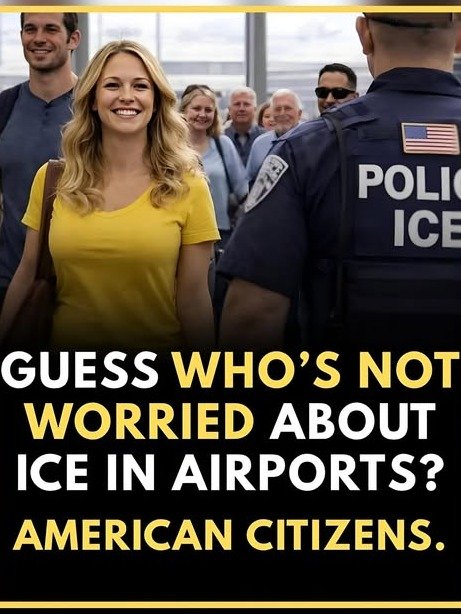
Every time you scroll through social media or catch a news segment, you might hear about the ‘widespread frustration’ with airport security. The endless lines, the invasive scans, the occasional pat-down – surely, everyone must be fed up, right? But what if this narrative is missing a crucial piece of the puzzle, a silent majority that actually isn’t complaining? Prepare to challenge everything you thought you knew about public sentiment towards air travel safety.
For years, a common perception has circulated: airport security is a universal pain point, a necessary evil that travelers begrudgingly endure. This article dives deep into that very assumption, revealing a surprising truth that might just make you rethink the entire debate. We’re uncovering who is really voicing dissatisfaction, and why the vast majority of American citizens are not, in fact, among them.
The Perceived Outcry vs. The Quiet Reality
It’s easy to get caught in the echo chamber of online complaints and media reports highlighting individual grievances. These anecdotes, while valid for the people experiencing them, can often create a skewed perception of overall public sentiment. When we hear a few loud voices, it can feel like everyone is speaking up, even if that’s far from the truth.
However, surveys and public opinion polls consistently paint a different picture, one where a significant majority of Americans express a general acceptance, and sometimes even appreciation, for stringent airport security measures. It seems the perceived outcry is often amplified by a specific segment of the population, leaving the quiet majority’s perspective largely unheard.
A Nation Forged in Crisis: The Post-9/11 Mindset
To understand why American citizens largely accept current security protocols, we must look back at a pivotal moment in history: September 11, 2001. The devastating attacks forever altered the national psyche, embedding a profound understanding of the vulnerabilities inherent in air travel. This collective trauma forged a new consensus.
In the wake of 9/11, the American public largely embraced the idea that increased security, even with its inconveniences, was a non-negotiable necessity. The trade-off between privacy and safety became a widely accepted compromise, driven by a deep-seated desire to prevent future tragedies. This historical context is fundamental to understanding today’s public acceptance.
The Unsung Acceptance: Why Americans Endure (and Even Appreciate) It
So, why are most Americans not complaining? The reasons are multifaceted. Firstly, there’s a fundamental understanding of the threat landscape. Travelers recognize that the world is complex, and sophisticated security measures are a critical deterrent against those who would do harm. This isn’t just about personal safety, but national security.
Secondly, there’s a strong sense of trust, however imperfect, in the Transportation Security Administration (TSA) and other security agencies to keep the skies safe. While individual interactions might occasionally be frustrating, the overarching mission is widely supported. Americans largely believe that the system, for all its flaws, is working to protect them.
Furthermore, many travelers view the security checkpoint as an unavoidable part of modern air travel, similar to checking a bag or boarding a plane. It’s simply part of the process, and grumbling about it doesn’t change the reality. This pragmatic approach leads to a quiet endurance rather than vocal dissent.
Balancing Act: Security, Convenience, and Civil Liberties
It’s crucial to acknowledge that acceptance doesn’t equate to absolute love for every single security procedure. Concerns about efficiency, consistency, and the extent of privacy invasion are legitimate and frequently discussed. Civil liberties advocates, in particular, raise important questions about the long-term implications of certain technologies and protocols.
The TSA itself operates under immense pressure, tasked with balancing the need for robust security against the desire for seamless travel. This is an incredibly challenging tightrope walk, where every decision can impact millions of travelers and potentially national safety. Their efforts, though often critiqued, are aimed at achieving this delicate balance.
Despite these valid points of contention, the overall sentiment among American citizens remains firmly on the side of security. The peace of mind that comes with knowing rigorous checks are in place often outweighs the temporary discomforts or perceived intrusions. They prioritize arriving safely over absolute convenience.
Who *Is* Voicing Dissatisfaction? Unpacking the Niche Complaints
If not the broad spectrum of American citizens, then who are the voices behind the dissatisfaction? It turns out, the complaints often stem from specific groups with particular experiences or philosophical stances. Understanding these distinct segments helps clarify the true landscape of public opinion.
Frequent Business Travelers: These individuals often experience the inconsistencies and delays most acutely. Their schedules are tight, and even minor holdups can have significant professional repercussions. For them, efficiency and predictability are paramount, and any deviation can be a source of intense frustration.
“For the road warrior, time is money, and every minute spent in an unpredictable security line is a minute lost. Their complaints often focus on process optimization, not the fundamental need for security itself.”
International Travelers: Visitors from other countries may find American security procedures more stringent or culturally different from what they are accustomed to. Unfamiliarity with the rules, language barriers, and differing expectations can lead to confusion and dissatisfaction.
Civil Liberties Advocates: Groups and individuals concerned with privacy rights and government overreach often voice strong objections to technologies like full-body scanners or certain data collection practices. Their dissatisfaction is rooted in constitutional principles and the potential erosion of individual freedoms, rather than a lack of desire for safety.
- Travelers with Specific Needs: Individuals with medical conditions, disabilities, or those adhering to specific religious attire may encounter challenges that lead to dissatisfaction. While the TSA has protocols for these situations, perceived insensitivity or inadequate accommodation can spark complaints.
- The “Loud Minority”: Some individuals are simply more prone to public complaining, especially on social media. Their voices, though perhaps not representative of a larger group, can be amplified by algorithms and generate a false sense of widespread discontent.
The Evolution of Airport Security: Adapting to New Threats
Airport security is not static; it’s a constantly evolving field. Since 9/11, measures have adapted to address new threats, technologies, and intelligence. From shoe removal to liquid restrictions, and from advanced imaging technology to enhanced pat-downs, each change has been a response to an identified vulnerability.
This continuous adaptation is a testament to the ongoing vigilance required to protect air travel. While each new measure might initially cause some grumbling, the rationale behind these changes—to counter ever-evolving threats—is generally understood and accepted by the American public. It’s a cat-and-mouse game where security must always strive to be one step ahead.
The Economic and Psychological Impact of Perceived Safety
Robust airport security doesn’t just prevent attacks; it underpins the entire air travel ecosystem. A sense of safety is crucial for both leisure and business travel. Without it, passenger confidence would plummet, leading to a significant downturn in the aviation industry, impacting jobs, tourism, and global commerce.
Psychologically, knowing that thorough checks are in place provides a crucial layer of reassurance for travelers. Even if they find the process tedious, the underlying feeling of being protected allows them to board their flights with greater peace of mind. This emotional benefit is a powerful, often unspoken, reason for public acceptance.
Moving Forward: Striking the Right Balance
The challenge for airport security agencies will always be to strike an optimal balance between effectiveness, efficiency, and respecting individual rights. Innovation in screening technology, smarter intelligence gathering, and improved training for security personnel are all pathways to achieving this equilibrium.
Ultimately, the narrative around airport security needs to be more nuanced. While valid criticisms and concerns exist, it’s a disservice to paint a picture of universal American discontent. The reality is far more complex, revealing a populace that, by and large, understands the stakes and accepts the measures necessary to keep their skies safe.
So, the next time you hear about “widespread” dissatisfaction with airport security, remember this: the loudest voices often don’t speak for the majority. Most American citizens are not just tolerating these measures; they are quietly, but firmly, endorsing them as a fundamental component of safe travel in a complex world. The myth of universal outrage is just that – a myth.
About the Author




