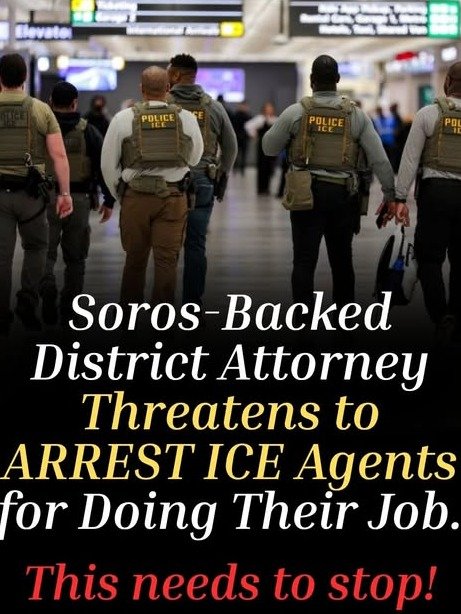
Imagine a city where the top prosecutor is openly challenging federal agents, sparking a firestorm of debate that reaches far beyond local headlines. This isn’t just a hypothetical scenario; it’s the reality unfolding in Philadelphia, where District Attorney Larry Krasner, a figure widely known for his progressive policies and backing from George Soros-linked funding, has ignited a fierce controversy over his warnings to ICE agents. The implications are staggering, and you won’t want to miss the full story behind this unprecedented showdown.
The tension between traditional law enforcement and a new wave of progressive prosecutors is at an all-time high, and Krasner stands at the epicenter. His recent warnings to Immigration and Customs Enforcement (ICE) officials have not only drawn sharp criticism but also exposed the deep ideological chasm that defines modern criminal justice reform. Is this a necessary evolution of justice, or a dangerous overreach of political ideology into the legal system? Let’s dive into the core of this complex issue.
The Rise of a Progressive DA: Who is Larry Krasner?
Larry Krasner isn’t your typical District Attorney. Before his election in 2017, he spent decades as a civil rights lawyer, defending activists, whistleblowers, and even suing the Philadelphia Police Department over 75 times. His campaign was built on a platform of radical reform: ending cash bail, reducing incarceration rates, challenging mandatory minimum sentences, and holding police accountable.
His victory was seen by many as a powerful mandate for change, a clear signal from Philadelphia voters that they were ready to move away from tough-on-crime policies that had disproportionately affected minority communities. Krasner promised a justice system focused on rehabilitation, restorative justice, and addressing the root causes of crime, rather than simply punishment.
The Soros Connection: Unpacking the Funding Debate
A significant aspect of the narrative surrounding Larry Krasner involves the financial backing his campaign received, particularly from entities linked to billionaire philanthropist George Soros. While Soros himself did not directly fund Krasner’s campaign, a Super PAC called the Philadelphia Justice & Public Safety PAC, which received $1.45 million from Soros, spent heavily to support Krasner’s candidacy.
This funding has become a lightning rod for critics, who argue that it represents an outside influence attempting to reshape local justice systems across the country. They contend that such significant financial contributions from a single source can skew electoral outcomes and push a specific ideological agenda, rather than reflecting the will of local voters. Proponents, however, see it as legitimate political spending aimed at promoting much-needed criminal justice reform.
“The involvement of national money in local elections, particularly for critical positions like District Attorney, raises legitimate questions about local control and accountability,” commented one political analyst, highlighting the ongoing debate.
The debate isn’t just about the money itself, but what it represents: a national movement to elect progressive prosecutors who are committed to dismantling what they view as an unjust and overly punitive criminal justice system. Krasner is often seen as a flagship figure in this broader movement, with Soros-linked funding supporting similar candidates in cities nationwide.
The ICE Controversy: A Warning Ignites a Firestorm
The most recent flashpoint in Krasner’s tenure stems from his office’s policies regarding Immigration and Customs Enforcement (ICE) agents. Krasner has issued warnings and implemented policies that limit cooperation with ICE, particularly concerning the transfer of undocumented immigrants from local custody to federal immigration authorities.
Specifically, Krasner’s office has been criticized for declining to pursue certain charges against undocumented immigrants that could lead to their deportation, and for advising defendants of potential immigration consequences. His stance essentially prioritizes local criminal justice reform and due process over federal immigration enforcement, creating a direct conflict with ICE’s mission.
The Backlash: Who’s Against Krasner’s Stance?
The backlash against Krasner’s ICE policies has been swift and severe. Critics include federal law enforcement officials, state and national Republican politicians, and even some members of the local police force. They argue that Krasner’s policies undermine public safety by allowing potentially dangerous individuals to remain in the community rather than being deported.
ICE officials themselves have vocally condemned Krasner’s approach, stating that it creates a sanctuary for criminals and makes their job of enforcing immigration laws significantly harder. They point to instances where individuals with criminal records, who might have been deported under previous policies, remain at large due to the DA’s non-cooperation. This creates an undeniable tension between federal and local authorities.
Law Versus Politics: The Core of the Conflict
At its heart, the conflict surrounding Larry Krasner encapsulates the ongoing battle between law and politics. Krasner views his actions as a matter of legal principle and justice reform, arguing that mass incarceration and aggressive immigration enforcement disproportionately harm marginalized communities and do not make cities safer in the long run.
His opponents, however, see his policies as politically motivated and dangerous, asserting that they prioritize a progressive agenda over the rule of law and public safety. They argue that a District Attorney’s primary role is to prosecute crime and cooperate with all levels of law enforcement, not to set immigration policy or undermine federal agencies.
Krasner’s Perspective: Focus on systemic injustice, reducing incarceration, protecting immigrant communities, and challenging aggressive federal overreach.
Critics’ Perspective: Upholding the rule of law, ensuring public safety, cooperating with federal agencies, and preventing a