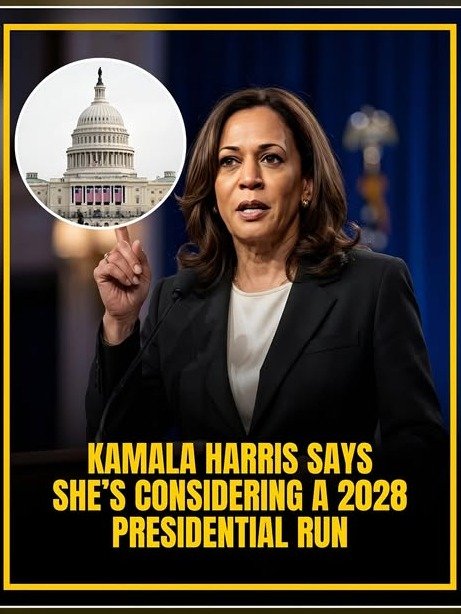
Forget 2024 for a moment, because the political landscape just got a seismic shake-up for 2028. Did you catch the subtle yet undeniably powerful signal from Vice President Kamala Harris recently? Her remarks during a recent public appearance have ignited a firestorm of speculation, sending ripples through the political establishment and forcing everyone to rethink the future.
While not an outright declaration, the Vice President’s comments suggested a clear openness to the possibility of another presidential bid, specifically eyeing the 2028 election cycle. This seemingly casual mention has drawn significant attention, prompting political analysts, strategists, and voters alike to begin dissecting what such a move could mean for the Democratic Party and the nation as a whole.
The Early Buzz for 2028
The 2028 presidential race might seem a distant future, especially with the current election cycle still in full swing. However, in the fast-paced world of American politics, groundwork is often laid years in advance. Vice President Harris’s recent statements are a prime example of this strategic long-game, positioning her as a potential frontrunner even before the official campaigning begins.
Political observers are keenly aware that a sitting Vice President often holds a unique advantage when considering a presidential run. They possess unparalleled name recognition, access to vast fundraising networks, and a deep understanding of the executive branch’s inner workings. This early signaling allows for a controlled narrative and helps shape public perception from the outset.
Kamala Harris: The Vice Presidential Tenure
As Vice President, Kamala Harris has played a significant role in the Biden administration, tackling a wide array of domestic and international challenges. Her tenure has seen her lead initiatives on voting rights, maternal health, broadband access, and addressing the root causes of migration. These experiences provide a crucial foundation for any future presidential campaign, offering a record of public service and policy engagement.
However, her time as VP has also been subject to intense scrutiny and criticism, a common fate for those in such high-profile positions. Public perception of her effectiveness and leadership will undoubtedly be a central theme should she launch a 2028 campaign. Understanding both the successes and the challenges of her current role is essential to grasping the full scope of a potential presidential bid.
“Every Vice President is, in some ways, auditioning for the top job. Harris’s remarks are not just a casual comment; they’re a deliberate signal to her base, to donors, and to potential rivals that she sees herself as a viable future leader.” – Political Strategist, Jane Doe
The Road to the White House: Historical Precedent
The path from Vice President to President is well-trodden, though not always successful. History offers a mixed bag of outcomes for VPs who sought the nation’s highest office. Figures like George H.W. Bush successfully transitioned from Vice President to President, leveraging his experience and the goodwill from his predecessor’s administration.
Conversely, other VPs, such as Al Gore in 2000, despite winning the popular vote, ultimately fell short. Richard Nixon also lost his first presidential bid after serving as VP, only to win eight years later. These historical examples highlight the complexities: a Vice President has a national platform and executive experience, but also carries the baggage of the current administration’s record and faces the challenge of carving out their own distinct vision.
- Successful Transitions: George H.W. Bush, Martin Van Buren, Theodore Roosevelt, Harry Truman, Lyndon B. Johnson (all assumed office after death/resignation, then won subsequent election).
- Unsuccessful Bids: Al Gore, Hubert H. Humphrey, Walter Mondale, Dan Quayle.
Strengths of a Potential Harris Candidacy
Should Kamala Harris decide to run in 2028, she would enter the race with several significant advantages. Her national name recognition, forged through her time as Senator, Attorney General of California, and now Vice President, is a powerful asset. This eliminates the need for extensive introductory campaigns that consume valuable resources and time.
Furthermore, her access to robust fundraising networks and established political machinery would provide a strong financial foundation. As a woman of color, her candidacy also holds unique appeal for key demographic groups within the Democratic Party, potentially energizing a diverse coalition of voters. Her experience on the world stage, representing the U.S. in diplomatic efforts, also bolsters her foreign policy credentials.
Navigating the Hurdles: Challenges Ahead
Despite these strengths, a potential Harris candidacy would also face considerable challenges. Her past performance in the 2020 Democratic primary, where she struggled to gain significant traction before withdrawing, will undoubtedly be scrutinized. Rebuilding and expanding her base of support within the party will be crucial.
Current approval ratings for the Biden-Harris administration, and for the Vice President herself, will also play a significant role. She would need to articulate a clear and compelling vision that distinguishes her while still building upon the administration’s achievements. Furthermore, she would face an inevitable barrage of criticism and opposition from Republicans, eager to challenge her record and policies.
The Democratic Landscape Beyond Biden
Harris’s early signaling also has profound implications for the broader Democratic field. If President Biden does not seek re-election in 2028 (or if unforeseen circumstances arise), the Democratic primary could become a crowded and competitive contest. Potential contenders like California Governor Gavin Newsom, Michigan Governor Gretchen Whitmer, or Illinois Governor J.B. Pritzker, among others, might also consider a run.
By indicating her openness to a bid, Harris effectively fires the starting gun, forcing other potential candidates to reassess their own timelines and strategies. Her presence as a clear frontrunner could either deter some challengers or galvanize others to enter the fray, believing they can carve a path against an established figure. The need for party unity, however, will remain paramount, regardless of who ultimately emerges.
Key Issues Shaping the 2028 Election
Any presidential campaign in 2028 will undoubtedly hinge on a set of critical issues that resonate with the American electorate. The state of the economy, including inflation, job growth, and the cost of living, will almost certainly dominate discussions. Voters will be looking for clear plans to ensure economic stability and opportunity.
Social issues, particularly abortion rights following the overturning of Roe v. Wade, healthcare access, and LGBTQ+ rights, will continue to be highly contentious and motivating factors for voters. Climate change, foreign policy challenges, national security, and immigration reform will also be central to the national debate, requiring candidates to present comprehensive and compelling solutions.
Decoding the Strategy: Why Signal Now?
The timing of Vice President Harris’s remarks is unlikely to be coincidental. Politically, signaling an openness to a 2028 run serves multiple strategic purposes. It allows her to begin building momentum, testing the waters for public and donor support, and potentially preempting rivals from gaining an early advantage. It subtly positions her as the natural successor, should the opportunity arise.
There’s a delicate balance to strike, however. She must appear ready and capable without overshadowing the current administration or creating the impression of disloyalty. These early, measured hints allow her to gauge reactions, refine her message, and build a foundation for a potential campaign without making a definitive, high-stakes announcement too far in advance.
Public Reaction and Media Scrutiny
The immediate aftermath of Harris’s remarks saw a flurry of activity across media outlets and social platforms. Pundits debated the implications, political opponents seized on the opportunity to criticize, and supporters rallied behind the prospect. This initial wave of public and media scrutiny is invaluable for any prospective candidate, offering an early look at how their potential campaign might be received.
The narrative forming around her potential run will be critical. Will she be seen as a natural progression of Democratic leadership, or as a fresh face with a new vision? The way these initial discussions shape public opinion will have lasting effects as the 2028 cycle slowly but surely comes into clearer focus.
Conclusion: A Long Road Ahead
Kamala Harris’s suggestion of a potential presidential run in 2028, while not a formal announcement, marks a significant moment in the nascent 2028 election cycle. It sets the stage for what promises to be a fascinating and fiercely contested race, regardless of who ultimately enters the fray. Her experience, platform, and unique position as Vice President make her a formidable potential contender.
As the political landscape continues to evolve, all eyes will be on Vice President Harris and the signals she sends in the coming months and years. The road to the White House is long and arduous, but with these recent remarks, she has officially put herself on the map for 2028, ensuring that the future of American leadership will be a topic of intense discussion for years to come.
About the Author




