Forget what you think you know about political polls. A recent Fox News survey just sent shockwaves through the political landscape, unveiling a stark reality about former President Donald Trump’s current standing with the American public. The numbers are in, and they paint a picture of deep division that continues to define the nation’s political pulse.
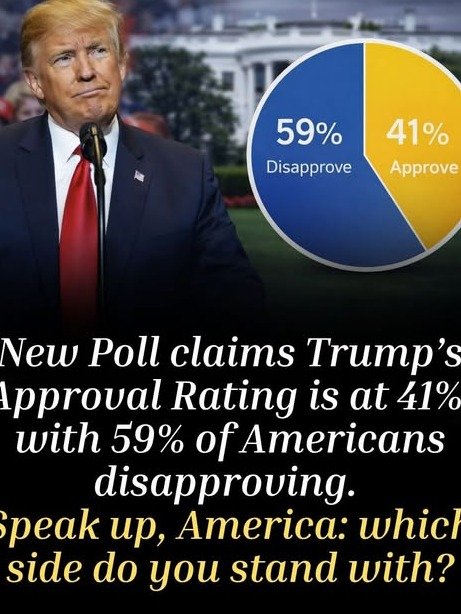
This fresh poll highlights that President Trump currently holds an approval rating of 41%, while a significant 59% express their disapproval. These figures, while perhaps not entirely surprising to seasoned political observers, underscore the enduring polarization that has become a hallmark of modern American politics.
Unpacking the Numbers: A Nation Divided
The headline figures — 41% approval and 59% disapproval — are more than just statistics; they represent a fundamental schism in how Americans view one of the most polarizing figures in recent history. For supporters, the 41% might signal a resilient base, a core of dedicated followers who remain steadfast despite ongoing challenges. For critics, the 59% disapproval reflects widespread concern and opposition.
What’s truly remarkable about these numbers is their consistency over time. Despite numerous political events, legal challenges, and shifting national conversations, Trump’s approval ratings often hover within a relatively narrow band. This suggests a deeply entrenched set of opinions, rather than fleeting sentiments, among the electorate.
The Unwavering Republican Base: A Pillar of Support
The survey’s most striking revelation, perhaps not surprisingly, lies in the dramatic partisan chasm it exposes. While Republicans continue to show overwhelming support for the former president, rallying behind him with a steadfast loyalty that has become a defining characteristic of his political movement, the narrative shifts dramatically when looking at other demographics.
This unwavering backing from his base has long been a cornerstone of Trump’s political power, allowing him to weather controversies and maintain a formidable presence despite broader disapproval. It’s a phenomenon that analysts have grappled with for years, and this latest poll reinforces its enduring strength. For many Republicans, Trump embodies a fight against perceived establishment failures and a champion for conservative values.
“The loyalty of Trump’s base isn’t just about policy; it’s about identity, a sense of belonging, and a shared frustration with the status quo,” notes one political analyst. “These numbers reflect that deep-seated connection.”
Beyond Party Lines: Where the Disapproval Lies
Conversely, the 59% disapproval rating is largely driven by Democrats and a significant portion of independent voters. For these groups, concerns often revolve around a range of issues, from his conduct and rhetoric to specific policy decisions and the perceived impact on democratic institutions. This broad opposition highlights the deep ideological and cultural divides that permeate American society.
While the Fox News poll specifically calls out party lines, typical polling data often reveals further divisions:
- Age: Younger voters tend to show less approval, while older voters often lean more favorably.
- Education: College-educated voters frequently express lower approval compared to those with less formal education.
- Geography: Urban and suburban areas often show stronger disapproval, contrasting with more favorable views in rural regions.
- Race and Gender: Significant disparities often emerge across racial and gender lines, reflecting diverse experiences and political priorities.
These demographic patterns contribute to the overall picture of a highly fractured electorate, making consensus on many national issues increasingly difficult to achieve.
The Trump Effect: Enduring Polarization
The consistency of these approval numbers isn’t just about President Trump himself; it’s a profound commentary on the state of American politics. His presidency, and indeed his post-presidency, has cemented a level of partisan polarization that many fear is becoming permanent. Voters are not just disagreeing on policy; they are often operating from fundamentally different sets of facts and values.
This environment makes it challenging for either side to gain significant ground with the opposing camp. Instead, political battles increasingly become about mobilizing one’s own base and driving turnout, rather than persuading undecided voters in the middle. The 41% approval, therefore, represents a powerful, mobilized segment of the population, while the 59% disapproval represents an equally determined counterforce.
What Do These Numbers Mean for the Future?
As the nation looks towards future electoral cycles, these poll numbers carry immense weight. For President Trump and his allies, maintaining the fervent support of that 41% is paramount. It’s a base that has proven resilient and highly motivated, capable of swinging elections when fully engaged.
For his opponents, the challenge is twofold: to maintain the broad coalition that makes up the 59% disapproval, and crucially, to translate that disapproval into active engagement and votes. The gap between disapproval and active opposition is where many elections are won or lost, especially among independent voters who may express dissatisfaction but not necessarily align with one party.
The Role of Media and Information Consumption
It’s also worth considering the role of media consumption in shaping these sharp divides. In an era of fragmented media landscapes, where individuals often curate their news sources to reinforce existing beliefs, the feedback loop of information can further entrench partisan views. A Fox News poll, while conducted by an independent polling unit, is released into an environment where its findings might be interpreted differently depending on the viewer’s existing political leanings.
This phenomenon contributes to the difficulty of bridging the divide. When different segments of the population are exposed to vastly different narratives and interpretations of events, finding common ground becomes an arduous task. The poll’s stark numbers are a symptom of this broader challenge facing American democracy.
Conclusion: A Snapshot of an Enduring Divide
The latest Fox News survey offers a compelling snapshot of a nation deeply, and perhaps irrevocably, divided in its political sentiments. President Trump’s 41% approval and 59% disapproval ratings are not merely statistics; they are a reflection of the powerful ideological currents shaping American society.
These numbers signal an enduring era of political polarization, where loyalty and opposition are deeply entrenched. As the political landscape continues to evolve, understanding these divisions will be crucial for anyone seeking to navigate the complexities of American public opinion and the future of its leadership. The chasm is wide, and for now, it shows no signs of narrowing.
About the Author




