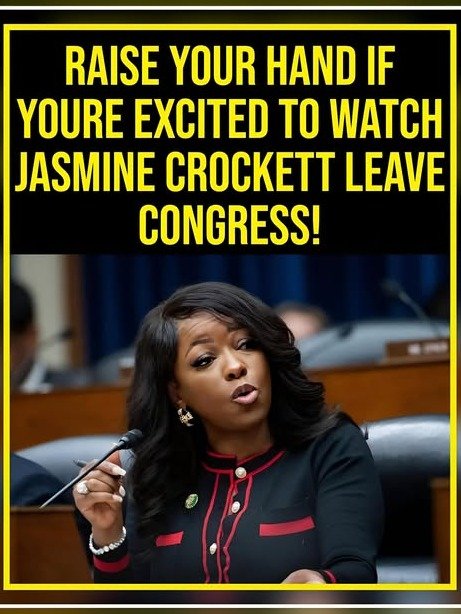
In the tumultuous world of Washington D.C., few voices cut through the noise quite like Rep. Jasmine Crockett’s. Her sharp wit and uncompromising stance have propelled her into the national spotlight, making her a recognizable figure in political discourse. Yet, while her outspoken style garners significant attention, a quiet but potent question is brewing back home in her district: Is her approach truly serving the best interests of her constituents, or is it creating an unforeseen disconnect?
This isn’t just about political style; it’s about the fundamental role of a representative. As the national media focuses on viral moments and heated debates, a growing chorus of local voices is reportedly expressing a desire for a different kind of leadership—one they feel is more directly aligned with their daily struggles and community aspirations. The tension between a national profile and local impact is a delicate balance, and for some, Rep. Crockett’s current trajectory is raising eyebrows.
The Rise of a National Figure: A Double-Edged Sword
Rep. Jasmine Crockett burst onto the national scene with an undeniable presence. Her articulate, often fiery, rebuttals in congressional hearings and her candid commentary on cable news have resonated deeply with a segment of the electorate, particularly those who feel their progressive values are under constant attack. She is seen by many as a fearless advocate, unwilling to back down from a fight, and a powerful voice for accountability.
Her supporters often praise her for her courage and her ability to articulate complex issues in an accessible way. They view her as a necessary counterpoint to what they perceive as political obstruction and injustice, believing that a strong, unyielding voice is precisely what’s needed in the current political climate. For these constituents, her national visibility is a source of pride, signaling that their district has a champion who isn’t afraid to stand up for what’s right on a grand stage.
However, this very national prominence can be a double-edged sword. While it elevates her profile and the issues she champions, it also raises questions about the allocation of her time and focus. Is the energy expended on national debates and media appearances detracting from the more granular, often less glamorous, work of addressing specific local concerns and building consensus within her district?
Constituent Voices: The Unspoken Divide
Within her district, the sentiment surrounding Rep. Crockett’s performance is far from monolithic. There are undoubtedly many who enthusiastically support her, seeing her as a vital and effective representative. They believe her strong advocacy on national issues ultimately benefits their community by pushing for broader systemic changes that impact everyone.
“She’s exactly what we need right now,” one supporter commented anonymously. “Someone who isn’t afraid to speak truth to power. Her voice on the national stage brings attention to our struggles and fights for the changes that matter.”
This perspective emphasizes the importance of a representative who can effectively challenge the status quo and articulate a clear ideological position. They see her as a fighter, and in a political landscape often characterized by gridlock, a fighter is precisely what they believe is required.
The Undercurrent of Concern: Beyond the Headlines
Despite this strong base of support, an undercurrent of concern is reportedly growing among other constituents. These individuals, while perhaps not actively seeking her removal, are questioning whether her highly visible, often confrontational, approach is truly translating into tangible benefits and effective representation for their local community. Their concerns often revolve around several key areas:
- Focus on National vs. Local Issues: Is the balance right? Are district-specific needs, such as infrastructure improvements, local economic development, or community-based initiatives, receiving adequate attention amidst the national spotlight?
- Legislative Effectiveness: Beyond impactful rhetoric, what legislative victories or significant policy shifts has her approach directly achieved for the district? Are constituents seeing concrete results from her time in Congress?
- Collaborative Spirit: In a deeply divided Congress, is her style conducive to building the cross-party alliances often necessary to pass legislation that could benefit her constituents? Some argue that a more conciliatory approach, even while maintaining core principles, might yield more practical outcomes.
- Accessibility and Engagement: Do constituents feel adequately heard and represented on matters that directly affect their daily lives? Are there sufficient channels for local feedback that translate into action, or is the focus primarily on broader political narratives?
These are not necessarily criticisms of her character or her political leanings, but rather a strategic assessment of her methodology. For some, the effectiveness of a representative is measured less by their ability to generate headlines and more by their capacity to deliver specific, measurable improvements to their district.
The Call for “New Leadership”: What Does It Mean?
The sentiment that “it’s time for new leadership” doesn’t always imply a desire for a complete ideological shift. More often, it reflects a yearning for a different *approach* to representation. Constituents expressing this view might be looking for a representative who:
- Prioritizes Local Engagement: Someone deeply embedded in the community, with a visible presence at local events, town halls, and constituent service initiatives.
- Fosters Collaboration: A leader who, while firm in their convictions, is also adept at navigating the complexities of legislative compromise to achieve practical gains.
- Demonstrates Tangible Results: A representative whose record clearly shows legislative wins, funding secured, or policy changes enacted that directly benefit the district.
- Emphasizes Unity: A figure who can bridge divides within the community and present a unified front on issues critical to the district’s well-being, rather than focusing on national political skirmishes.
This perspective often comes from a place of pragmatism, where the day-to-day needs of the district take precedence over national political theater. They want a representative who can effectively translate their voice into action, even if that action isn’t always headline-grabbing.
Balancing Act: Representation in the Modern Era
The challenge for any modern representative, especially one with a strong national profile like Rep. Crockett, is to master the delicate balancing act between national advocacy and local efficacy. In an era of constant media scrutiny and social media virality, the temptation to engage in national debates is immense. These platforms offer an unparalleled opportunity to shape narratives and mobilize support for broader causes.
However, the core responsibility of a representative remains rooted in their district. The constituents who elect them expect their voices to be heard, their problems to be addressed, and their communities to be championed. When the balance shifts too far towards the national, the connection to the local can fray, leading to questions about priorities and effectiveness.
The Road Ahead: Voters’ Choices and Expectations
As the next election cycle approaches, these growing concerns will undoubtedly play a significant role in the political landscape of Rep. Crockett’s district. Voters will be weighing a range of factors, from her national visibility and ideological alignment to her perceived effectiveness in delivering for the local community.
The debate isn’t just about who represents them, but *how* they are represented. Is a strong, national voice the most effective way to secure progress for their district, or is a more measured, locally focused approach what’s truly needed? The answers to these questions will ultimately shape the political future of the district and Rep. Crockett’s role within it.
Conclusion: A District at a Crossroads
Rep. Jasmine Crockett stands as a powerful and undeniable force in American politics, admired by many for her unwavering commitment to her principles. Yet, the reported concerns from some constituents highlight the complex and often contradictory expectations placed upon elected officials. The desire for a strong national voice must always be weighed against the imperative of effective local representation.
Her district finds itself at a crossroads, grappling with the question of what kind of leadership best serves its unique needs in a rapidly changing political landscape. Whether the current approach will continue to resonate, or if a shift in strategy is warranted, remains a central and evolving debate within the very community she serves.
About the Author




