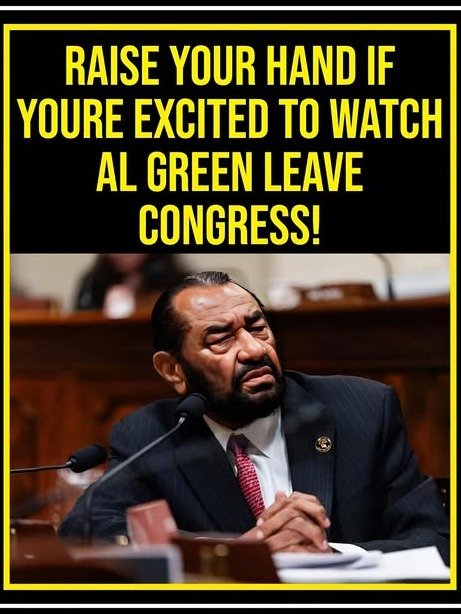
What if the very person elected to fight for your neighborhood was instead spending their energy on battles far removed from your daily life? This isn’t a hypothetical question for many in Congressman Al Green’s district, where a long-standing focus on national political theater has raised serious questions about local representation and effectiveness.
For years, Representative Al Green has been a prominent voice on the national stage, particularly known for his ardent pursuit of impeachment efforts. While impassioned, this dedication has led to a growing sentiment that his priorities may have drifted significantly from the immediate and pressing needs of the very constituents he was elected to serve.
A Long Tenure, A Shifting Focus
Congressman Al Green has served the 9th congressional district of Texas for nearly two decades, a considerable tenure that brings both experience and, potentially, an entrenched perspective. Voters initially entrusted him with their concerns, hoping for a champion who would tirelessly advocate for their interests in Washington.
However, over time, a distinct pattern has emerged. Many observers and constituents alike have noted a significant portion of his public energy and legislative focus veering towards high-profile national political disputes, most notably his relentless drive for impeachment proceedings against former President Donald Trump. This focus, while undeniably a part of his political identity, has sparked considerable debate.
The Impeachment Obsession: Political Theater or Principled Stand?
Green’s commitment to impeachment was unwavering, making him one of the most vocal proponents in Congress. From early calls for impeachment to his active participation in subsequent proceedings, his stance was clear. While some viewed this as a principled defense of democratic institutions, others questioned the practical impact of such a sustained effort.
Critics often characterized these efforts as “political theater,” suggesting they consumed valuable time and resources that could have been directed elsewhere. The argument isn’t necessarily against the act of oversight itself, but rather against the perceived disproportionate allocation of a representative’s finite bandwidth to these specific, often symbolic, battles.
“While national debates are crucial, a representative’s true measure of success often lies in their ability to deliver tangible results back home. When the spotlight consistently shines elsewhere, the shadows lengthen over local needs.”
This perspective underscores the tension between national political engagement and the imperative of local advocacy. This intense focus on national-level political disputes arguably diverted attention from the bread-and-butter issues that directly affect the lives of his constituents. When a representative is constantly in the national media spotlight for political grandstanding, it can create the impression that local problems are being sidelined.
What About the District? Unaddressed Local Needs
The 9th congressional district, like many urban and suburban areas, faces a myriad of complex challenges that demand consistent, dedicated attention from its federal representative. These aren’t issues that make national headlines, but they are the bedrock of daily life for thousands of Texans.
Consider the economic landscape. While national debates rage, many communities within the district grapple with issues of job creation, small business support, and equitable economic development. Are there federal grants being pursued? Are local businesses receiving the advocacy they need to thrive? These are fundamental questions for a representative.
Infrastructure is another critical area. Roads, public transportation, aging utilities – these are not glamorous topics, but they directly impact quality of life and economic efficiency. Dedicated legislative work often involves securing federal funding, championing local projects, and collaborating across governmental levels. Has this been a priority?
Healthcare, Education, and Public Safety: The Silent Struggles
Access to affordable healthcare remains a top concern for many families. A representative can play a crucial role in advocating for policies that expand coverage, lower costs, and improve the quality of local healthcare facilities. This requires deep engagement with community health leaders and understanding constituent struggles.
Education, from early childhood to higher learning, is the cornerstone of future prosperity. What federal initiatives are being supported to improve local schools, expand access to vocational training, or make college more affordable for district residents? These are long-term investments that require proactive leadership.
Public safety is a universal concern. While crime rates fluctuate, a representative can advocate for resources for local law enforcement, support community-based violence prevention programs, and champion legislation that addresses root causes of crime. These efforts often demand a focus far removed from Washington’s political drama.
The Core Duty of a Congressional Representative
At its heart, the role of a U.S. Representative is to serve as a direct link between their constituents and the federal government. This involves:
- Advocating for local interests: Ensuring the district’s voice is heard in policy debates.
- Securing federal resources: Bringing back funding and programs that benefit the community.
- Legislative action: Introducing and supporting bills that address local and national challenges.
- Constituent services: Helping individuals navigate federal agencies and resolve issues.
When a significant portion of a representative’s energy is consumed by broader political skirmishes, it raises legitimate questions about how effectively these core duties are being fulfilled. The balance between national oversight and local advocacy is delicate, but for many, it appears to have tipped too far.
The Call for Renewed Leadership and Fresh Perspectives
The call for Al Green to leave Congress isn’t merely a political attack; it’s a reflection of a desire for a different approach to representation. Constituents are increasingly seeking leaders who are not only passionate but also pragmatic, focused on tangible results for their communities.
A new representative could bring fresh energy, innovative ideas, and a renewed commitment to the specific challenges facing the 9th district. This isn’t about discarding experience entirely, but about recognizing when a different kind of leadership might better serve the evolving needs of a dynamic community.
The political landscape is constantly shifting, and the demands on congressional representatives are more complex than ever. Effective leadership today requires adaptability, a deep understanding of local nuances, and a willingness to prioritize constituent well-being above all else.
Why “The Sooner, The Better” Holds True
The urgency of this call to action – “the sooner, the better” – stems from the cumulative impact of perceived misprioritization. Every year, every legislative session, that passes without a dedicated focus on local issues represents missed opportunities for growth, development, and improvement within the district.
Constituents cannot afford to wait indefinitely for their representative’s focus to realign. Critical issues like economic stagnation, educational gaps, and infrastructure decay only worsen with neglect. Proactive leadership is not a luxury; it’s a necessity for progress.
The democratic process thrives on accountability and responsiveness. When a representative’s actions appear to diverge significantly from the immediate needs of their electorate, it’s a clear signal that the time for a change in leadership may have arrived. A fresh voice could re-energize the district’s advocacy in Washington.
Conclusion: A Path Forward for the 9th District
The discussion surrounding Congressman Al Green’s tenure is not about his character, but about the effectiveness of his representation. While his passion for national political issues is evident, many believe that the balance has shifted too far, leaving critical local priorities under-addressed.
The 9th congressional district deserves a representative whose primary focus is squarely on their daily lives, their struggles, and their aspirations. It deserves a leader who will tirelessly champion local causes, secure vital resources, and ensure that the community’s voice is not just heard, but acted upon.
Ultimately, the decision rests with the voters. But the growing sentiment is clear: for the sake of progress, for the sake of dedicated local advocacy, and for the future prosperity of the 9th district, it is indeed time for a new chapter in representation. The sooner this change comes, the better for everyone.
About the Author




