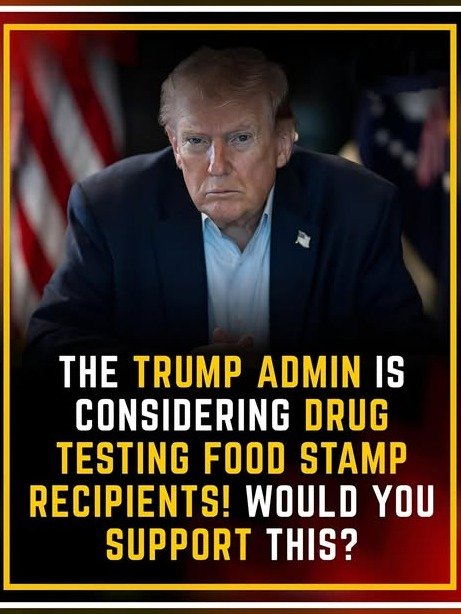
Imagine needing help to put food on the table for your family, only to be told you might have to pass a drug test first. This isn’t a hypothetical scenario from a dystopian novel; it was a very real, contentious proposal considered by the Trump administration, reigniting a fierce national debate about welfare, personal responsibility, and civil liberties.
Reports indicated that the administration was actively exploring legislation related to drug testing for individuals receiving benefits from the Supplemental Nutrition Assistance Program (SNAP), more commonly known as food stamps. This highly controversial idea centered around bills like H.R. 372, the “Drug Testing for Welfare Recipients Act of 2017,” and sparked a firestorm of discussion across the country, with strong opinions on both sides.
Understanding the Proposal: H.R. 372 and SNAP
At the heart of this debate was H.R. 372, introduced in the House of Representatives by Rep. Andy Biggs (R-AZ) during the 115th Congress. This bill aimed to empower states to implement mandatory drug testing for applicants seeking federal welfare benefits, including both SNAP and Temporary Assistance for Needy Families (TANF). The core idea was to ensure that taxpayer dollars were not inadvertently supporting drug habits, promoting fiscal responsibility and a sense of accountability among beneficiaries.
The Supplemental Nutrition Assistance Program (SNAP) is a federal program that provides food assistance to low-income individuals and families. It’s designed to alleviate hunger and improve nutrition, serving millions of Americans each month. The notion of adding drug testing requirements to a program so fundamental to basic survival immediately raised profound ethical, legal, and practical questions.
The Arguments For Drug Testing
Proponents of drug testing for SNAP recipients often articulate their stance from several key perspectives. One primary argument centers on fiscal responsibility and taxpayer accountability. They contend that public funds, derived from taxpayers, should not be used to subsidate illicit drug use. By implementing drug tests, they believe states can ensure that benefits are directed toward their intended purpose: providing food for those truly in need, rather than enabling substance abuse.
Another common argument is that drug testing could serve as a deterrent to drug use among beneficiaries. The idea is that knowing a drug test is a prerequisite for receiving aid might encourage individuals to abstain from drugs or seek treatment. This perspective often aligns with broader calls for welfare reform that emphasize personal responsibility and self-sufficiency.
“If you’re receiving taxpayer money, you should be held to a certain standard. This isn’t about shaming, it’s about ensuring public funds are used wisely and encouraging healthier choices.” — A common sentiment among proponents.
Furthermore, some advocates believe that such policies could indirectly encourage individuals to address underlying addiction issues. If failing a drug test leads to a denial of benefits but offers a pathway to treatment, it could be seen as a way to push individuals towards recovery, ultimately benefiting both the individual and society.
The Arguments Against Drug Testing
Despite the appeals to fiscal responsibility, the proposal faced significant opposition from a wide array of groups, including civil liberties advocates, anti-poverty organizations, and public health experts. A major contention is the cost-effectiveness of such programs. Numerous studies and real-world implementations of drug testing for TANF recipients in various states have shown them to be prohibitively expensive with very low rates of positive drug tests.
For example, states like Florida implemented drug testing for TANF and found that the administrative costs of testing often far outweighed any savings from denying benefits. The number of failed tests was typically very low, suggesting that the vast majority of welfare recipients are not drug users, and the policy served more to stigmatize than to solve a problem.
Civil Liberties and Discrimination Concerns
Another powerful argument against drug testing centers on civil liberties and constitutional rights. Opponents argue that requiring a drug test for a public benefit could constitute an unreasonable search under the Fourth Amendment, especially without individualized suspicion. They question whether merely applying for assistance provides sufficient probable cause for such an intrusive measure.
There are also significant concerns about potential discrimination. Critics worry that such policies could disproportionately target specific demographics, particularly low-income communities and minority groups, perpetuating harmful stereotypes about poverty and drug use. The policy could be seen as an invasion of privacy, treating beneficiaries as inherently suspect rather than as citizens in need of support.
“Drug testing people for food is not only ineffective and costly, it’s demeaning and dehumanizing. It implies that poverty is a moral failing, not a systemic issue.” — An anti-poverty advocate.
Furthermore, opponents highlight the humanitarian impact, particularly on children. If a parent fails a drug test and loses SNAP benefits, it’s often the children in the household who suffer the most, potentially facing food insecurity through no fault of their own. This raises ethical questions about punishing entire families for the actions of one individual.
A Look at State Precedents and Legal Challenges
While H.R. 372 specifically targeted federal programs, the idea of drug testing welfare recipients is not new. Several states have implemented drug testing for TANF applicants or beneficiaries over the years. These state-level efforts have often been met with legal challenges, with some courts ruling against the policies on constitutional grounds, citing Fourth Amendment violations.
- Florida’s Experience: In 2011, Florida enacted a law requiring drug tests for all TANF applicants. A federal court later struck down the law, finding it violated the Fourth Amendment’s protection against unreasonable searches. The court noted that the state failed to demonstrate a
About the Author




