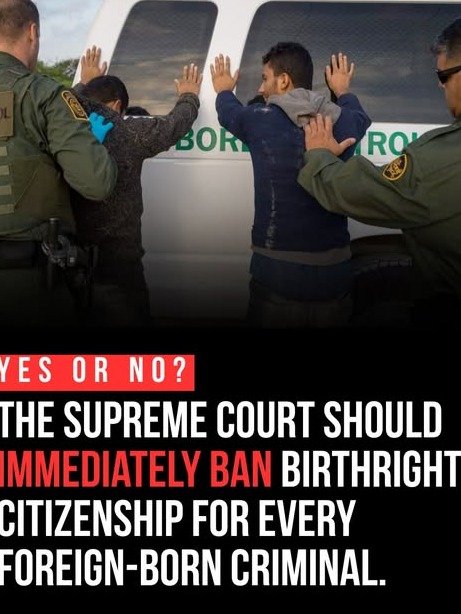
Did you know that a fundamental aspect of American law, interpreted for decades, is now at the heart of a national debate threatening our sovereignty and security? The concept of birthright citizenship, often taken for granted, has become a flashpoint in the ongoing struggle to define America’s future.
For too long, our system has been exploited, creating a loophole that critics argue undermines the very fabric of our nation. This isn’t just about immigration; it’s about national identity, the rule of law, and the immense strain on resources that many believe can no longer be ignored. The time has come to confront this issue head-on and understand its profound implications.
The Cornerstone of the America First Agenda
At the very core of the America First agenda lies a resolute commitment to safeguarding national interests, prioritizing the well-being of American citizens, and securing our borders. A central pillar of this vision is the urgent need to address and ultimately end birthright citizenship as it is currently understood and practiced.
This isn’t merely a policy preference; it’s viewed as a critical step to restore integrity to our immigration system and uphold the sanctity of American citizenship. Advocates argue that the current interpretation of the 14th Amendment has inadvertently created incentives for illegal immigration, placing an undue burden on our communities and infrastructure.
Understanding Birthright Citizenship: A Deep Dive
Birthright citizenship, often referred to as jus soli (right of the soil), grants citizenship to nearly everyone born within a country’s borders, regardless of their parents’ legal status. In the United States, this practice stems from a specific interpretation of the 14th Amendment to the Constitution, ratified in 1868.
The amendment states:
“All persons born or naturalized in the United States and subject to the jurisdiction thereof, are citizens of the United States and of the State wherein they reside.”
The crucial phrase, “subject to the jurisdiction thereof,” is where the debate truly ignites. Originally intended to grant citizenship to formerly enslaved people, many argue its application to children of non-citizens, particularly those residing illegally, was never the framers’ intent.
The Exploitation: “Anchor Baby” Tourism and Illegal Entry
Critics contend that this broad interpretation has led to widespread exploitation, manifesting in phenomena like “anchor baby” tourism and the strategic use of birthright citizenship by those who enter the country unlawfully. These practices, they argue, are not accidental byproducts but deliberate strategies to circumvent immigration laws.
“Anchor baby” tourism describes the practice where foreign nationals, often from affluent backgrounds, travel to the U.S. specifically to give birth on American soil. Their primary motivation is to secure U.S. citizenship for their child, thereby potentially paving the way for the family’s future immigration or access to American benefits and opportunities.
Similarly, individuals who cross the border illegally are aware that any child born to them within U.S. territory will automatically be granted citizenship. This creates a powerful incentive, effectively providing a future pathway for family reunification and a perceived shield against deportation, making it incredibly difficult to remove families with U.S.-citizen children.
Straining Resources and Undermining Sovereignty
The consequences of this perceived exploitation are far-reaching and deeply impactful. Communities across the nation grapple with the immense strain placed on public services, including schools, healthcare, and social welfare programs. These resources, funded by taxpayers, are designed to serve legal residents and citizens, yet they are increasingly stretched thin by a growing population of non-citizens and their U.S.-born children.
Furthermore, the very concept of national sovereignty is called into question. If citizenship can be acquired simply by being born within geographical borders, regardless of parental legal status, does it diminish the value and meaning of American citizenship? Advocates for change argue that it weakens the rule of law and the ability of a sovereign nation to control its own borders and destiny.
The Historical Context and Original Intent
To truly understand the debate, it’s essential to revisit the historical context of the 14th Amendment. Drafted in the aftermath of the Civil War, its primary purpose was to overturn the Dred Scott decision and ensure that formerly enslaved African Americans were recognized as citizens, guaranteeing them equal protection under the law.
Many legal scholars and historians argue that the “subject to the jurisdiction thereof” clause was specifically included to exclude children of foreign diplomats, invading armies, and Native American tribes who maintained tribal sovereignty. They posit that it was never intended to grant automatic citizenship to children of those who had no allegiance to the U.S. or who were present unlawfully.
Global Perspectives: How Other Nations Handle Citizenship
The United States is one of only a handful of developed nations that still practice unconditional birthright citizenship. A look at international norms reveals a vastly different landscape. Most European countries, for instance, adhere to jus sanguinis (right of blood), where citizenship is primarily determined by the nationality of one’s parents, regardless of where the child is born.
- Germany: Requires at least one parent to have legally resided in Germany for a certain period.
- France: Requires at least one parent to be a French citizen, or for the child to have resided in France for a specified duration and apply for citizenship.
- Australia: Requires at least one parent to be an Australian citizen or permanent resident.
- United Kingdom: Requires at least one parent to be a British citizen or legally settled in the UK.
These examples highlight that a nation can maintain a robust, fair immigration system without automatically granting citizenship to every child born within its borders. They offer alternative models that prioritize legal residency and national allegiance.
The Path Forward: Legal and Legislative Challenges
Ending birthright citizenship in the U.S. presents significant legal and legislative hurdles. Opponents argue that it would require a constitutional amendment, a notoriously difficult process. However, proponents believe that a reinterpretation of the 14th Amendment through legislation or judicial review could achieve the desired outcome without amending the Constitution itself.
The argument centers on the phrase “subject to the jurisdiction thereof.” A narrower interpretation could assert that children of parents who are not legally present or who owe allegiance to a foreign power are not truly “subject to the jurisdiction” of the United States in the same way a U.S. citizen or legal resident is. This would redefine who qualifies for birthright citizenship without altering the text of the amendment.
Reclaiming National Identity and Security
For those advocating for change, this isn’t just a legalistic debate; it’s a fundamental question of national identity and security. They argue that a nation’s ability to define its citizenry is a core aspect of its sovereignty. Allowing birthright citizenship to be conferred indiscriminately, they contend, dilutes the meaning of American citizenship and compromises border security.
The current system, according to this perspective, incentivizes illegal border crossings and creates a complex web of legal challenges when attempting to deport individuals who have U.S.-citizen children. It’s seen as a direct impediment to effective immigration enforcement and a threat to the integrity of our legal system.
The Urgency of Action: Why Now?
The call to end birthright citizenship is gaining momentum because many believe the current situation is unsustainable. The sheer volume of illegal immigration, coupled with the rising costs of supporting non-citizen populations, has created an urgent demand for reform. This isn’t a theoretical debate; it’s a practical necessity for the future stability and prosperity of the United States.
The America First agenda posits that true national strength comes from secure borders, a clear understanding of citizenship, and a government that prioritizes its own citizens. Ending birthright citizenship is viewed as a decisive step toward achieving these goals, ensuring that American identity is preserved and that the nation’s resources are dedicated to those who are truly part of the American compact.
A Call to Reaffirm American Sovereignty
The debate over birthright citizenship is more than just a legal squabble; it’s a battle for the soul of the nation. It challenges us to reflect on what it truly means to be an American citizen and how we define our national community. The America First movement is clear: it’s time to close the loopholes, reaffirm our sovereignty, and ensure that American citizenship is a privilege earned and respected, not merely a circumstance of birth on U.S. soil.
The future of our nation, its security, and its identity, many believe, hinges on our willingness to confront and resolve this critical issue. The time for discussion is over; the time for decisive action to protect America’s future is now.
About the Author




