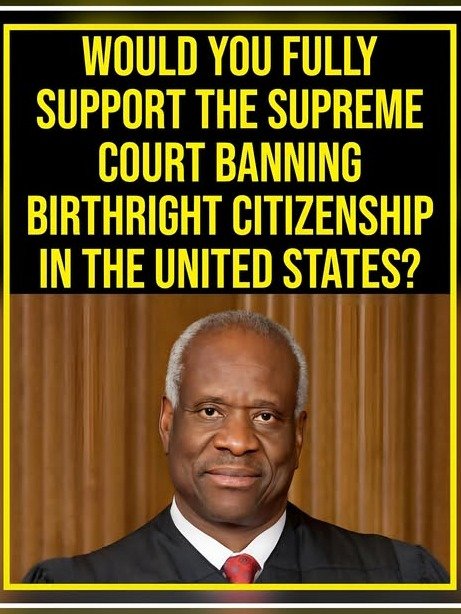
Imagine being born on American soil, taking your first breath under the Stars and Stripes, only for your automatic right to citizenship to become the center of a raging national firestorm. This isn’t a hypothetical scenario; it’s the heart of one of America’s most contentious and often misunderstood debates: birthright citizenship.
For generations, it has been widely understood that anyone born within the territorial limits of the United States is automatically a U.S. citizen, regardless of their parents’ immigration status. This principle, known as jus soli or ‘right of soil,’ is rooted in a specific clause of the 14th Amendment to the U.S. Constitution. However, a growing chorus of voices is now challenging this long-held interpretation, arguing for a fundamental shift in who qualifies as an American citizen.
Understanding the 14th Amendment’s Foundation
The concept of birthright citizenship isn’t just a modern policy; it’s enshrined in the very fabric of American constitutional law. The 14th Amendment, ratified in 1868, famously states:
“All persons born or naturalized in the United States and subject to the jurisdiction thereof, are citizens of the United States and of the State wherein they reside.”
This amendment was primarily adopted in the aftermath of the Civil War to grant citizenship to formerly enslaved African Americans, ensuring they could not be denied basic rights. The language was clear: if you were born on U.S. soil and subject to its laws, you were a citizen. For over a century and a half, this clause has been interpreted by the Supreme Court and legal scholars alike to include virtually everyone born within the nation’s borders, with very limited exceptions for children of foreign diplomats or invading forces.
The Landmark Case: United States v. Wong Kim Ark
The most significant legal precedent affirming birthright citizenship for children of non-citizens came in the 1898 Supreme Court case, United States v. Wong Kim Ark. Wong Kim Ark was born in San Francisco to parents who were Chinese immigrants and not eligible for U.S. citizenship under the Chinese Exclusion Act. After a trip to China, he was denied re-entry to the U.S. on the grounds that he was not a citizen.
The Supreme Court ruled definitively that Wong Kim Ark was indeed a U.S. citizen by virtue of his birth in the United States. The Court held that the phrase ‘subject to the jurisdiction thereof’ meant subject to the complete jurisdiction of the United States, which applies to nearly all individuals born on U.S. soil, regardless of their parents’ nationality or immigration status. This ruling has been the bedrock of birthright citizenship ever since, establishing a clear legal standard.
The Arguments Against Automatic Citizenship
Despite the long-standing legal precedent, the debate is far from settled for many. Critics argue that the original intent of the 14th Amendment did not foresee or intend to grant citizenship to children of parents who are not legally present in the country. They contend that the phrase ‘subject to the jurisdiction thereof’ should be interpreted more narrowly, excluding individuals whose parents owe allegiance to another sovereign nation.
A common concern revolves around the idea of ‘anchor babies’ – a controversial term used by some to describe children born in the U.S. to undocumented parents, suggesting these children are used to help their families gain legal status. Opponents argue that this policy acts as a powerful incentive for illegal immigration, encouraging individuals to enter the country unlawfully with the expectation that their children will secure a pathway to residency or other benefits for the family.
- Sovereignty Concerns: Some believe that allowing birthright citizenship to children of non-citizens undermines national sovereignty and the control a nation has over its borders and citizenry.
- Economic Strain: Arguments are often made about the perceived strain on public services, such as healthcare, education, and social welfare programs, that these families and their citizen children may utilize.
- Original Intent: Critics assert that the framers of the 14th Amendment, primarily concerned with the rights of newly freed slaves, never intended for the clause to apply to the children of foreign nationals, especially those who entered the country without authorization.
The Case for Maintaining Birthright Citizenship
Advocates for the current interpretation of birthright citizenship emphasize its profound benefits for American society, stability, and human rights. They argue that changing this fundamental principle would have far-reaching and potentially catastrophic consequences.
One of the strongest arguments is the administrative simplicity and clarity it provides. Imagine the logistical nightmare of determining the citizenship status of every child born in the U.S. based on their parents’ complex and often changing immigration situations. It would create a massive bureaucratic burden and lead to endless legal challenges.
Furthermore, denying birthright citizenship would create a permanent underclass of individuals living within the United States who are not citizens of any country, or are citizens of a country they have never known. This could lead to:
- Statelessness: Children born in the U.S. whose parents are from countries that do not grant citizenship based on parental nationality (jus sanguinis) could become stateless, lacking legal rights or protections anywhere.
- Social Instability: A large population of non-citizen residents, denied basic rights and opportunities, could foster resentment, social unrest, and exacerbate existing inequalities.
- Integration Challenges: Birthright citizenship promotes integration into American society, as these children grow up identifying as Americans, attending U.S. schools, and contributing to the economy. Denying it could create a marginalized group with limited pathways to full participation.
Global Perspectives: Jus Soli vs. Jus Sanguinis
It’s important to note that the United States is not alone in its practice of birthright citizenship, though it is among a minority of developed nations that grant it unconditionally. Many countries around the world operate under jus sanguinis, or ‘right of blood,’ where citizenship is derived from the nationality of one’s parents, regardless of where the child is born.
Countries like Germany and Ireland, which historically relied solely on jus sanguinis, have adopted modified forms of jus soli in recent decades to address issues of integration and statelessness. Conversely, some nations, particularly in Europe, have tightened their citizenship laws, requiring parents to meet certain residency requirements or legal status for their children to gain citizenship by birth on their soil. This global variation highlights the complex policy choices involved and the diverse approaches nations take to defining their citizenry.
The Path Forward: Reinterpretation or Amendment?
The debate over birthright citizenship often boils down to two main avenues for change: reinterpretation of the 14th Amendment by the Supreme Court or a constitutional amendment. Reinterpreting the amendment would be a significant legal challenge, requiring the Supreme Court to overturn decades of precedent, including Wong Kim Ark.
A constitutional amendment, while a more direct route, is an incredibly difficult process, requiring a two-thirds vote in both the House and Senate, followed by ratification by three-fourths of the states. Such a monumental undertaking reflects the deep divisions and high stakes involved in redefining who can be an American citizen. Short of these, some executive actions or legislative efforts have been proposed to clarify or limit the scope, though their constitutionality would undoubtedly face immediate legal challenges.
This isn’t merely a legalistic debate; it’s a deeply human one with profound implications for millions of individuals and the very identity of the United States. It forces us to confront fundamental questions about national identity, immigration policy, and the meaning of citizenship in a diverse and interconnected world. As this debate continues to unfold, understanding its historical roots, legal complexities, and societal consequences is more crucial than ever.
About the Author




