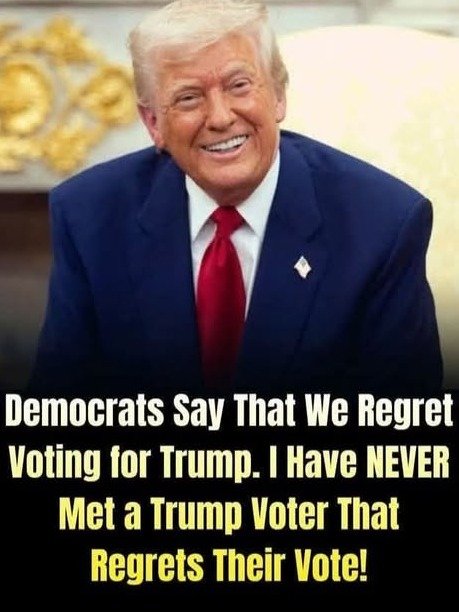
It’s a narrative pushed relentlessly by mainstream media and political pundits: the idea that those who voted for Donald Trump are now riddled with buyer’s remorse. Everywhere you look, headlines and talking heads insist that regret is setting in, that supporters are quietly peeling away, disillusioned with their choice. Yet, stepping outside the echo chambers of cable news and social media, a vastly different picture emerges.
In communities across the country, among friends, family, and colleagues, the sentiment often contradicts this widely broadcast narrative. The reality on the ground suggests that the loyalty of many Trump voters remains remarkably strong, if not solidified. This disconnect between media portrayal and lived experience is not just a minor oversight; it represents a fundamental misunderstanding of a significant portion of the American electorate.
The Persistent Narrative of Regret
For years, the mainstream media has amplified voices claiming that Trump voters are experiencing a profound sense of regret. Pundits dissect polls, highlight critical comments, and parade former supporters who have supposedly changed their minds. The underlying message is clear: these voters made a mistake, and they are slowly but surely realizing it.
This narrative serves a particular purpose, often aiming to delegitimize the votes and motivations of millions. It suggests that support for Donald Trump was an anomaly, a temporary aberration driven by fleeting emotions, rather than deeply held convictions or a calculated political choice. However, this perspective often overlooks the complex reasons behind their initial support and the continued rationale for their allegiance.
Beyond the Headlines: A Different Reality
When you engage with people in their daily lives — at local diners, community events, or even just casual conversations — the notion of widespread Trump voter regret often feels entirely fabricated. Instead, you encounter individuals who are not only unrepentant about their past votes but are often more fervent in their support than ever before.
This steadfastness isn’t born out of stubbornness; it often stems from a continued belief in the principles, policies, and persona that initially drew them to Trump. They see a leader who, despite all the criticism, delivered on certain promises or at least fought for issues they cared about. This lived experience often carries more weight than any media report or pundit’s analysis.
Why the Loyalty Endures: Core Principles and Policies
One of the primary reasons for enduring support among Trump voters lies in their focus on specific policies and outcomes. Many point to what they perceive as tangible successes during his administration. This includes a robust economy pre-pandemic, significant deregulation, and the appointment of conservative judges at all levels of the judiciary.
- Economic Performance: Many supporters credit Trump with a booming economy, low unemployment rates, and policies they believed fostered business growth, even if economists offer nuanced explanations.
- Judicial Appointments: The appointment of conservative judges, particularly to the Supreme Court, is a point of pride for many, seen as a fulfillment of a promise to shape the nation’s legal future.
- Deregulation: Voters in industries impacted by regulations often lauded his efforts to reduce government oversight, believing it stimulated growth and reduced burdens on businesses.
These achievements, from their perspective, are not minor details but fundamental shifts that directly impacted their lives and values. For them, these outcomes validate their initial decision, making regret an unlikely emotion.
The “Anti-Establishment” Appeal
Beyond specific policies, a significant driver of Trump’s enduring appeal is his perceived role as an anti-establishment figure. Many of his supporters feel deeply alienated by traditional politics, believing that both major parties have failed them and that Washington D.C. is out of touch with ordinary Americans.
“He talks like us, he fights for us, and he isn’t afraid to take on the political elite,” is a sentiment often heard among his base. This feeling of being represented by an outsider, someone who challenges the norms and isn’t beholden to special interests, is incredibly powerful.
This anti-establishment stance resonates with voters who feel ignored, patronized, or even disdained by the political and cultural elites. For them, Trump is not just a politician; he is a symbol of resistance against a system they believe has failed them.
Cultural Warfare and Identity Politics
Another crucial factor is the ongoing cultural divide in America. Many Trump voters feel that their values, traditions, and way of life are under attack from progressive ideologies. They see Trump as a defender of these values, a leader willing to push back against what they perceive as political correctness run amok or an erosion of traditional American identity.
From debates over free speech to discussions about national identity, these cultural battles are deeply personal for many. When they see Trump standing firm on these issues, it reinforces their belief that he is fighting for them on a deeper, more existential level. This emotional connection makes the idea of regret almost impossible, as it would mean regretting their own identity and values.
Media’s Blind Spot: Echo Chambers and Misrepresentation
The persistent narrative of Trump voter regret often stems from a significant blind spot within much of the mainstream media itself. Many newsrooms and pundit circles operate within their own echo chambers, where perspectives that deviate from their own are rarely encountered or truly understood.
This can lead to a fundamental misreading of voter sentiment. When journalists and commentators primarily interact with individuals who share similar political views, it becomes easy to assume that those views are universally held, or that opposing views are based on ignorance or a lack of information. This intellectual isolation makes it difficult to grasp the genuine, deeply rooted reasons behind ongoing Trump support.
The “Silent Majority” Speaks (or Doesn’t)
The concept of a “silent majority” — a significant portion of the population whose views are often underrepresented or mischaracterized in mainstream discourse — is particularly relevant here. Many Trump supporters feel that their voices are not heard, or worse, are actively ridiculed by the media and political establishment.
This feeling of being dismissed or demonized can actually strengthen their resolve. When they see their chosen leader constantly attacked, they often view it as further proof that he is indeed an outsider fighting against a corrupt system. This siege mentality can foster even greater loyalty, making them less likely to express regret and more likely to dig in their heels.
The Power of Opposition: Unifying Against a Common Foe
Finally, the perceived alternative plays a massive role. For many Trump voters, their support is not just about Trump himself, but also about their strong opposition to the Democratic Party and its policies. They may view the Democratic agenda as antithetical to their economic interests, social values, or vision for the country.
In this context, voting for Trump is seen as a strategic necessity, a defensive move against what they believe would be even worse outcomes under Democratic leadership. When faced with a choice between two perceived evils, the one they chose might still be seen as the lesser, or the one that at least fights for their side. This ‘us vs. them’ mentality leaves little room for regret over their decision.
Looking Ahead: Implications for Future Elections
The persistent misreading of Trump voter sentiment has significant implications for future elections and the broader political landscape. If media and political strategists continue to operate under the assumption of widespread regret, they risk misjudging the strength and motivations of a crucial voting bloc.
Understanding that many Trump voters remain steadfast in their support, and *why* they do, is essential for anyone seeking to engage with or influence American politics. Dismissing their convictions as mere regret is not only inaccurate but also counterproductive, deepening divides and hindering genuine dialogue. It’s time to move beyond simplistic narratives and truly listen to the diverse voices that make up the electorate.
Conclusion: Understanding, Not Dismissing
The narrative of widespread Trump voter regret, while convenient for some, simply doesn’t align with the reality observed in many communities across America. For millions, their support for Donald Trump was, and continues to be, rooted in deeply held beliefs about policy, leadership, and cultural identity.
To truly understand the current political climate, we must look beyond the headlines and engage with the complex motivations of voters. To assume regret where none exists is to miss a fundamental truth about a significant segment of the electorate, and to perpetuate a cycle of misunderstanding that ultimately harms our collective ability to move forward.
About the Author




