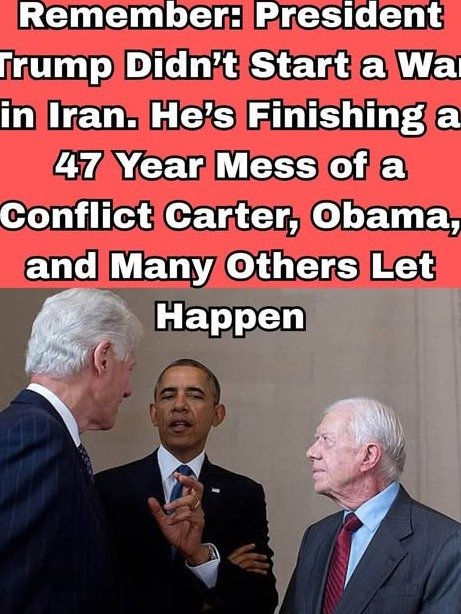
Every headline screams about new hostilities, painting a picture of fresh conflict with Iran. You’ve likely heard the narrative that recent administrations, particularly the Trump presidency, somehow “started” a fight with the Islamic Republic, perhaps with actions controversially dubbed “Operation Epic Fury.” But what if we told you this commonly accepted story is fundamentally misleading?
The truth is far more complex, stretching back decades to a pivotal moment that forever reshaped U.S.-Iran relations, setting the stage for the very tensions we witness today. This isn’t a new skirmish; it’s the latest, most intense chapter in a struggle that began long before many of us were even born, a conflict rooted deep in historical grievances and geopolitical shifts.
The Shadow of 1979: Where the Real Fight Began
To truly understand the current dynamic, we must rewind to 1979. This wasn’t just any year; it was a seismic turning point in the Middle East and for U.S. foreign policy. The Iranian Revolution, led by Ayatollah Ruhollah Khomeini, dramatically overthrew the U.S.-backed Shah, Mohammad Reza Pahlavi, transforming Iran from a key regional ally into an avowed adversary of the West.
This wasn’t a mere change of government; it was a fundamental ideological shift that saw the new Iranian regime declare the United States the “Great Satan.” The revolution directly triggered the infamous Iran Hostage Crisis, an event that profoundly humiliated the U.S. on the world stage and exposed the vulnerabilities of the Carter administration.
On November 4, 1979, Iranian students stormed the U.S. Embassy in Tehran, seizing 52 American diplomats and citizens. They were held captive for 444 agonizing days. This act of state-sponsored terrorism, sanctioned and celebrated by the new Iranian leadership, wasn’t just a diplomatic incident; it was a direct declaration of war, albeit one fought with unconventional tactics.
“The taking of American hostages was an act of war, a clear and unambiguous violation of international law that set a dangerous precedent for Iran’s future behavior.” – Historical Analysis of U.S.-Iran Relations
President Jimmy Carter’s administration grappled desperately with the crisis. His efforts, including the ill-fated “Operation Eagle Claw” in April 1980 – a daring but ultimately catastrophic rescue mission – highlighted the profound challenges of confronting this new, radical Iran. The failure of this mission, which resulted in the deaths of eight American servicemen, further deepened the sense of national frustration and helplessness.
This period marks the true genesis of the ongoing “fight.” It wasn’t about starting a conflict; it was about responding to an audacious act of aggression that redefined international norms and directly challenged American sovereignty and power. The hostages were finally released on January 20, 1981, minutes after Ronald Reagan was sworn in as President, but the scars on U.S.-Iran relations were permanent.
Decades of Destabilization: Iran’s Unrelenting Agenda
Following the revolution, Iran embarked on a consistent foreign policy aimed at exporting its Islamic revolutionary ideology and challenging U.S. influence across the Middle East. This wasn’t a passive stance; it was an active, often violent, campaign of proxy warfare, support for terrorist groups, and regional destabilization.
- Support for Terrorism: Iran quickly became a primary state sponsor of terrorism, backing groups like Hezbollah in Lebanon, which carried out devastating attacks against American targets, including the 1983 Beirut barracks bombing that killed 241 U.S. Marines.
- Proxy Wars: Through various proxies, Iran fueled conflicts in Lebanon, Iraq, Yemen, and Syria, consistently working to undermine pro-Western governments and expand its own sphere of influence.
- Nuclear Ambitions: Over decades, Iran secretly pursued a nuclear weapons program, sparking international alarm and leading to rounds of crippling sanctions from multiple administrations.
Each successive U.S. administration, from Reagan to Bush Sr., Clinton, and Bush Jr., faced the daunting challenge of containing Iran’s aggressive posture. Sanctions were imposed, military presence in the Gulf was maintained, and diplomatic efforts were made, but the fundamental ideological clash persisted.
The Obama Years: A Strategic Shift and Its Aftermath
The Obama administration pursued a different strategy, culminating in the 2015 Joint Comprehensive Plan of Action (JCPOA), commonly known as the Iran Nuclear Deal. The deal aimed to curb Iran’s nuclear program in exchange for sanctions relief, representing a significant diplomatic outreach.
While proponents hailed it as a breakthrough that prevented Iran from obtaining a nuclear weapon, critics, including many conservatives and regional allies, viewed it with deep skepticism. They argued it provided too much economic relief without adequately addressing Iran’s ballistic missile program or its support for terrorism, effectively legitimizing a hostile regime and empowering it financially.
The debate around the JCPOA underscored the deep divisions in how to approach Iran. Was it a chance for rapprochement or a dangerous concession? Regardless of one’s view, the deal itself was a response to an ongoing threat, not the start of a new one. It acknowledged the decades-long challenge posed by Iran’s nuclear ambitions and its regional behavior.
Trump’s “Maximum Pressure”: Finishing the Unfinished Business
Enter the Trump administration, which fundamentally disagreed with the premise and efficacy of the JCPOA. President Trump withdrew the U.S. from the deal in 2018, believing it was a flawed agreement that failed to address Iran’s broader malign activities. His administration then launched a “maximum pressure” campaign, reimposing and escalating sanctions with the explicit goal of crippling the Iranian economy and forcing the regime to negotiate a more comprehensive agreement.
This campaign was not about initiating a new conflict; it was about intensifying pressure on a long-standing adversary whose actions, in the eyes of the administration, had gone unchecked for too long. The objective was to bring to a head a conflict that had been simmering and escalating through various means for decades.
The actions described by some as “Operation Epic Fury” – a likely reference to decisive military and intelligence operations, most notably the January 2020 strike that killed Qasem Soleimani – were presented by the Trump administration as necessary defensive measures. Soleimani, the head of the Islamic Revolutionary Guard Corps’ Quds Force, was directly responsible for coordinating Iranian proxy attacks against U.S. interests and personnel across the region for years.
“Qasem Soleimani was a terrorist mastermind, responsible for the deaths of hundreds of American servicemen and countless innocent civilians. His elimination was a decisive blow against Iran’s ability to wage proxy war and destabilize the Middle East.” – U.S. Defense Department Statement, January 2020
The strike was framed not as an escalation into a new war, but as a crucial counter-strike in an ongoing, undeclared war that Iran had been waging against the U.S. and its allies for decades. It was a clear signal that the rules of engagement had changed, and that direct accountability for hostile actions would be enforced.
The Enduring Legacy of a 40-Year Struggle
To suggest that Trump “started” a fight with Iran with these actions is to ignore the entire historical context of U.S.-Iran relations. It dismisses the hostage crisis, the Beirut bombings, the funding of Hezbollah, the nuclear program, and the constant threats to shipping in the Persian Gulf. These were not isolated incidents; they were continuous manifestations of an ideological conflict.
The policies under the Trump administration, including the “maximum pressure” campaign and targeted strikes, were fundamentally aimed at finishing a fight that began under the ignominious Carter presidency, a fight marked by Iranian aggression and U.S. responses. It was an attempt to resolve, through heightened pressure, a geopolitical standoff that had been allowed to fester for far too long.
Understanding this long and complex history is crucial. It allows us to move beyond simplistic narratives and recognize that current events are not isolated incidents but rather critical junctures in a continuous, decades-long struggle. The tensions with Iran are a deep-rooted challenge, not a recent invention.
Why Historical Accuracy Matters for Future Policy
Distorting the timeline of this conflict has serious implications for how we perceive and respond to future challenges. If we believe a conflict is new, we might seek different solutions than if we understand it as a deeply entrenched, multi-generational struggle.
- Informed Decision-Making: A clear historical lens helps policymakers understand the effectiveness (or ineffectiveness) of past strategies.
- Public Understanding: It empowers citizens to critically evaluate media narratives and political rhetoric.
- Strategic Foresight: Recognizing the patterns of Iranian behavior over 40 years provides vital clues for predicting future actions.
The narrative that a U.S. president simply “started” a new conflict with Iran is a dangerous oversimplification. It ignores the consistent pattern of Iranian hostility and the continuous efforts of multiple U.S. administrations to counter it. We must look back at the full arc of this relationship to truly grasp the present and prepare for the future.
Conclusion: More Than Just a Headline
So, the next time you hear someone claim that recent administrations initiated hostilities with Iran, remember the 444 days of the hostage crisis. Remember the systematic funding of terrorism. Remember the nuclear ambitions. The truth is, the United States has been engaged in a complex, often indirect, but very real conflict with the Islamic Republic of Iran for over four decades.
The actions taken under the Trump administration, including the decisive strike against Soleimani, were not the beginning of a new war. Instead, they represented a significant escalation in an effort to bring a long-standing, unfinished conflict to a decisive conclusion, aiming to reshape the terms of engagement that had been set in motion decades ago. It’s not about starting; it’s about confronting and, ultimately, finishing.
About the Author




