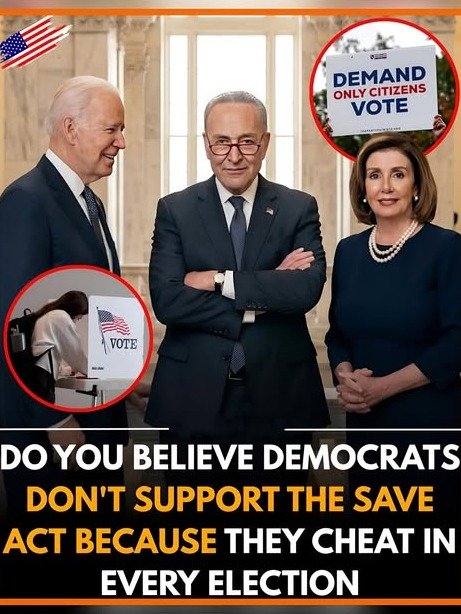
Imagine a future where casting your vote, a fundamental right and the bedrock of democracy, suddenly feels like navigating a minefield. That future might be closer than you think, as a new piece of legislation, the Safeguard American Voter Eligibility (SAVE) Act, ignites a fierce national debate.
This proposed law isn’t just another bill; it’s a direct challenge to how Americans participate in their own governance, sparking a critical conversation about election integrity versus voter access. At its core, the SAVE Act aims to fortify election security, but critics warn its provisions could inadvertently — or intentionally — disenfranchise millions of eligible citizens.
What Exactly is the SAVE Act? Unpacking the Proposed Legislation
The Safeguard American Voter Eligibility (SAVE) Act is a legislative proposal designed to overhaul federal election standards, primarily focusing on proving citizenship and identity before casting a ballot. Proponents argue it’s a necessary step to prevent non-citizens from voting and to enhance overall confidence in election outcomes.
At the heart of the Act are several key provisions. First, it would mandate that all voters provide proof of U.S. citizenship when registering to vote and again when casting a ballot. This could include documents like a birth certificate, passport, or naturalization papers, going beyond current state-level requirements in many places.
Secondly, the SAVE Act proposes stricter voter identification requirements at the polls. While many states already have some form of voter ID, this Act would likely standardize and elevate these requirements, potentially demanding photo identification across the board, without necessarily accommodating common alternatives like utility bills or signed affidavits.
The Fierce Debate: Security vs. Access
The very name, ‘Safeguard American Voter Eligibility,’ speaks to the core intention of its supporters: to ensure that only eligible citizens participate in elections. They contend that the integrity of the democratic process is paramount, and without stringent measures, the system is vulnerable to fraud.
Advocates for the SAVE Act often point to hypothetical or anecdotal instances of non-citizens voting or other forms of electoral malfeasance as justification for these stricter rules. They believe that robust security measures, even if they add an extra layer of bureaucracy, are a small price to pay for preventing fraud and restoring public trust in election results.
“We must ensure every vote cast is legal and legitimate. The SAVE Act is about protecting the sanctity of our elections, not about suppressing anyone’s right to vote,” argue its proponents.
However, critics paint a very different picture. They argue that while the goal of secure elections is universally shared, the methods proposed by the SAVE Act could erect significant barriers for millions of eligible Americans. Their central concern is that the Act prioritizes an often-exaggerated threat of voter fraud over the fundamental right to vote.
Opponents highlight that instances of non-citizen voting and in-person voter impersonation are exceedingly rare, statistically insignificant in the context of national elections. They worry that the proposed solutions are disproportionate to the actual problem and could lead to widespread disenfranchisement.
Who Could Be Left Out? The Disenfranchisement Concerns
The potential impact of the SAVE Act on various demographics is a central point of contention. For many Americans, particularly those in marginalized communities, obtaining specific forms of identification or proof of citizenship can be a daunting and costly endeavor.
- Elderly Voters: Many senior citizens, especially those born at home or in rural areas decades ago, may not possess birth certificates or may have outdated forms of ID. The process of acquiring new documents can be physically challenging and expensive.
- Low-Income Individuals: Obtaining state-issued IDs often requires fees, transportation to government offices, and the ability to take time off work. These seemingly small hurdles can be insurmountable for those living paycheck to paycheck.
- Students: Young voters often move for college, and their current addresses on IDs might not match their voting residence, creating confusion and potential obstacles.
- Minority Groups: Historically, stricter voting laws have disproportionately affected minority communities, who may face systemic barriers in accessing required documents or navigating complex bureaucratic processes.
- People with Disabilities: Individuals with certain disabilities may find it difficult to travel to government offices or complete the necessary paperwork without assistance, which might not always be readily available.
These are not just theoretical concerns; they are real-world challenges that could translate into millions of eligible citizens being unable to register or cast their ballots, simply because they lack specific, narrowly defined documents.
The Proof of Citizenship Mandate: A Deeper Dive
One of the most contentious elements of the SAVE Act is its demand for tangible proof of U.S. citizenship. While all voters must affirm their citizenship when registering, the Act proposes requiring physical documentation.
This provision could present significant challenges. Imagine a naturalized citizen who has lost their naturalization papers, or a U.S. citizen born to American parents overseas who might not have a standard birth certificate. The process of replacing these documents can be lengthy, expensive, and complex, involving federal agencies and potentially international record requests.
Critics argue that placing the burden of proving citizenship with specific documents on every voter is an unnecessary and overreaching measure. They contend that existing penalties for falsely claiming citizenship are sufficient and that the vast majority of non-citizens do not attempt to vote.
Federal Database Checks and Their Accuracy
Beyond individual documentation, the SAVE Act also contemplates enhanced federal database checks to verify voter eligibility. While this sounds efficient in theory, the accuracy and comprehensiveness of such databases are often questioned.
Government databases are notorious for containing errors, outdated information, or incomplete records. A mismatch in a federal database, even if incorrect, could flag an eligible voter, leading to provisional ballots, lengthy verification processes, or even outright denial of the right to vote. This could create a bureaucratic nightmare for both voters and election officials.
The Historical Shadow: Voting Rights in America
The debate around the SAVE Act isn’t happening in a vacuum; it’s set against a rich and often contentious history of voting rights in the United States. From the fight for universal male suffrage, to the women’s suffrage movement, to the Civil Rights Movement and the Voting Rights Act of 1965, the expansion of voting access has been a hard-won battle.
Opponents of the SAVE Act often frame it within this historical context, warning that measures that disproportionately impact certain groups echo past attempts at voter suppression. They argue that while the language may be different, the outcome – fewer people voting – could be similar.
“Every step backward on voter access is a stain on our democratic principles. We fought too long and too hard to expand the ballot; we cannot allow it to be restricted under the guise of security,” remarked one voting rights advocate.
Proponents, however, counter that this is not about restricting rights but about ensuring that those who *do* vote are legally entitled to do so. They see it as upholding the integrity that previous generations fought to establish, rather than undermining it.
The Political Divide: A Deeply Partisan Issue
Unsurprisingly, the SAVE Act has emerged as a deeply partisan issue. It largely garners support from one side of the political spectrum, typically those who emphasize election security and express concerns about the potential for fraud.
On the other side, the legislation faces strong opposition from those who prioritize voter access and argue that such measures are thinly veiled attempts at voter suppression, designed to benefit certain political outcomes. This partisan split further complicates the debate, often making it difficult to find common ground or compromise.
What Happens Next? Potential Ramifications
Should the SAVE Act pass, its implementation would undoubtedly trigger a cascade of changes across the nation. States would be forced to adapt their election procedures, potentially leading to significant logistical challenges, increased costs, and widespread confusion among voters.
Litigation would almost certainly follow, as civil rights organizations and advocacy groups challenge the constitutionality and discriminatory impact of the new requirements. This could lead to years of legal battles, further destabilizing public confidence in elections.
Conversely, if the Act fails to pass, the debate over election security versus voter access will undoubtedly continue. It highlights a fundamental tension within American democracy that will likely persist, influencing future legislative efforts and electoral reforms at both federal and state levels.
Your Voice Matters: Engaging with the Debate
The SAVE Act is more than just a legislative proposal; it’s a pivotal moment in the ongoing discussion about the future of American democracy. It forces us to confront fundamental questions: How do we balance the imperative of secure elections with the foundational right to vote?
Understanding the nuances of this debate is crucial for every citizen. Whether you lean towards prioritizing stringent security measures or championing expansive voter access, staying informed and engaging in respectful dialogue is essential. Your vote is your power, and how that power is safeguarded and accessed is a conversation that impacts us all.
This isn’t just about a single bill; it’s about the very fabric of our democratic participation. Make sure you know what’s at stake.
About the Author




