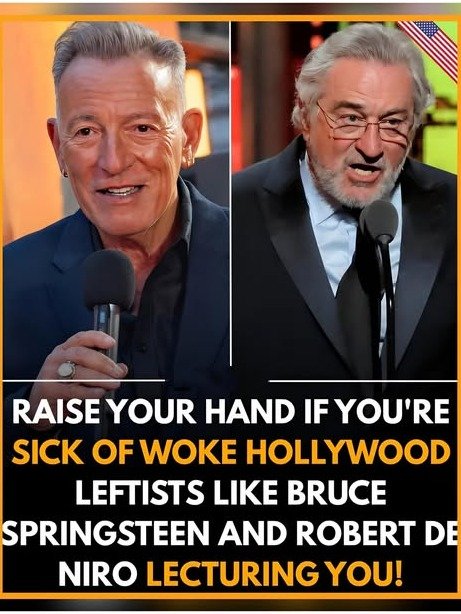
Ever scroll through your social media feed and feel a familiar sigh escape? That growing sense of disconnect when a famous face starts weighing in on the world’s most complex political and social issues? It’s a phenomenon sweeping across America, a quiet but powerful shift: millions of everyday citizens are actively tuning out the political and social commentary from celebrities.
This isn’t about silencing voices; it’s about a deep, underlying frustration that has reached a boiling point. Many Americans, often referred to as ‘Main Street,’ feel increasingly alienated by the opinions of public figures whose daily realities couldn’t be further from their own. The chasm between the gilded cages of celebrity life and the everyday struggles of working families has never felt wider, leading to a profound sense of exasperation.
The Rise of the A-List Activist: A Double-Edged Sword
In an age dominated by social media, the lines between entertainer and political pundit have become increasingly blurred. Celebrities, with their immense platforms and instant access to millions, have found powerful new avenues to share their views on everything from climate change to economic policy. While many are driven by genuine passion and a desire for positive change, their pronouncements often land differently with an audience grappling with very different concerns.
For years, a public figure’s endorsement or condemnation could sway public opinion or even election results. However, a significant shift is underway. What was once seen as influential is now, for a growing segment of the population, perceived as out-of-touch, privileged, or even hypocritical. This isn’t a blanket dismissal of all celebrity involvement, but rather a critical re-evaluation of its relevance and authenticity.
The Growing Chasm: Main Street vs. Mansion Views
The core of this growing disillusionment lies in the stark contrast between the lives of celebrities and those of average Americans. When a multi-millionaire actor lectures on economic inequality from their sprawling estate, or a pop star preaches environmentalism while flying on private jets, the message can feel hollow, even insulting, to someone struggling to pay rent or fill their gas tank.
Main Street’s concerns are tangible and immediate: rising inflation, job security, healthcare costs, quality education for their children, and simply making ends meet. These are not abstract concepts but daily battles. When celebrities weigh in on these topics, often without acknowledging their own immense privilege or the practical realities faced by most, it creates a palpable sense of alienation.
“It’s hard to take someone seriously about the cost of living when their biggest ‘struggle’ is choosing which vacation home to visit next. We’re worried about groceries, they’re worried about ‘optics,'” remarked a small business owner in Ohio. This sentiment echoes across countless communities, highlighting the perceived disconnect.
More Than Just Opinions: The Problem with Performative Politics
Beyond the economic disparity, many Americans are growing wary of what they perceive as performative activism. This is the act of publicly supporting a cause, often through social media posts or grand statements, without necessarily engaging in meaningful, sustained action or understanding the nuances of the issue at hand. It can feel like a trend, a way to maintain a public image, rather than a deep commitment to systemic change.
The rapid-fire nature of social media often encourages simplified, emotionally charged statements over thoughtful discourse. Celebrities, sometimes advised by PR teams, may jump on trending topics without fully grasping the historical context or the diverse perspectives involved. This can lead to superficial engagement that does little to advance genuine understanding or solutions, further frustrating those seeking real dialogue.
Furthermore, the echo chambers within celebrity circles can exacerbate this issue. Surrounded by like-minded individuals and insulated from dissenting opinions, some public figures may develop a distorted view of public sentiment. This can lead to pronouncements that feel less like an attempt to connect and more like a lecture to a perceived audience of lesser-informed citizens, fueling resentment rather than fostering unity.
The Real Stakes: Why Main Street Can’t Afford to Just “Speak Out”
For everyday Americans, speaking out on controversial political or social issues carries very real risks. Expressing an unpopular opinion at work or on social media can lead to job loss, social ostracization, or damage to personal relationships. The stakes are incredibly high, and the consequences can be life-altering.
Celebrities, on the other hand, often operate with a safety net of wealth, influence, and PR teams. While they may face public backlash or boycotts, their fundamental livelihoods are rarely threatened in the same way. This disparity in consequences makes their calls for “speaking truth to power” or “taking a stand” feel less courageous and more tone-deaf to those who stand to lose everything.
The ability to freely express opinions without fear of severe personal or professional repercussions is a luxury that most Americans do not possess. This stark difference contributes significantly to the feeling that celebrity commentary is not just irrelevant, but sometimes even actively harmful, as it can inadvertently pressure ordinary individuals to take risks they cannot afford.
The Search for Authenticity: What People Are Really Craving
So, if not from celebrities, where are people looking for guidance and authentic voices? The answer lies closer to home: in their communities, from local leaders, small business owners, educators, and even their neighbors. People are craving authenticity, relatability, and a sense of shared experience.
They want to hear from individuals who understand the nuances of their daily lives, who have faced similar challenges, and who offer practical insights rather than grand, abstract pronouncements. There’s a profound desire for genuine connection, for leaders and influencers who demonstrate empathy and a willingness to listen, rather than just speak.
This shift isn’t about rejecting all public figures, but about demanding more from them. It’s about a yearning for voices that reflect the true diversity of American experience, voices that are grounded in reality and resonate with the struggles and aspirations of everyday people. The focus is moving from celebrity endorsements to grassroots movements, from global pronouncements to local solutions.
The Impact of the Great Unplugging
The “Great Unplugging” from celebrity commentary has significant implications for public discourse. On one hand, it represents a healthy skepticism and a demand for more credible, relatable sources of information and opinion. It could encourage a more localized, community-driven approach to problem-solving and political engagement.
On the other hand, it risks further fracturing public attention and trust. If people are tuning out mainstream figures, where are they turning instead? This could lead to increased reliance on echo chambers of their own making, or to a complete disengagement from important national conversations. The challenge is to channel this frustration into constructive dialogue rather than further polarization.
This phenomenon highlights a broader societal longing for genuine leadership and connection. It’s a powerful signal that the old models of influence are faltering, and that a new era is dawning where authenticity, empathy, and shared experience will be the true currencies of trust and persuasion.
Rebuilding Bridges: A Call for Empathy and Understanding
Bridging this growing divide requires more than just silence from celebrities; it demands a fundamental shift in how public discourse is approached. For those in the public eye, it means cultivating a deeper understanding of diverse perspectives, listening more than speaking, and demonstrating a genuine commitment to causes beyond mere words.
For Main Street, it means continuing to seek out and elevate authentic voices within their communities, fostering local engagement, and demanding substance over spectacle. The silent revolt isn’t about apathy; it’s about a yearning for meaningful connection and a refusal to be lectured by those who seem to live in a different world.
Ultimately, this ‘Great Unplugging’ is a powerful indicator that the American public is searching for something more profound than celebrity opinions. They are searching for their own voices, their own solutions, and a truly representative dialogue that reflects the complex, diverse, and often challenging realities of life on Main Street. Your voice, grounded in your reality, holds more power than you might imagine.
About the Author




