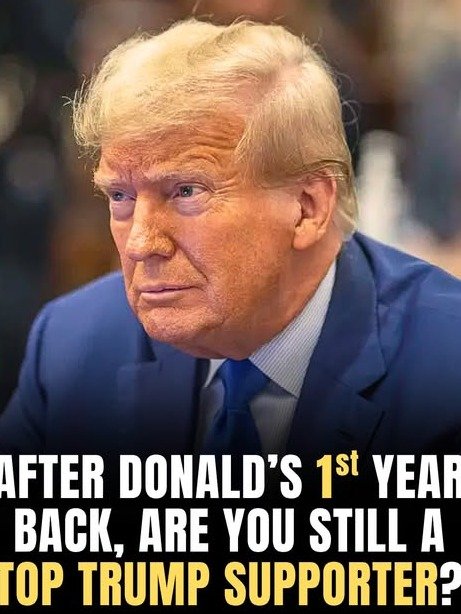
Imagine waking up today, exactly one year into a second Donald Trump presidency. For many, the initial shockwaves have settled, replaced by a clearer, perhaps unsettling, picture of a nation profoundly reshaped. The rhetoric has solidified into policy, and the hypothetical has become the undeniable reality.
This isn’t just about headlines anymore; it’s about the tangible shifts in daily life, the economy, global standing, and the very fabric of American governance. A year into this hypothetical second term, the country has had ample time to witness the full scope of his agenda in action, offering an unfiltered look at the United States under a renewed ‘America First’ doctrine.
Reshaping the Executive Branch: A More Assertive Presidency
One of the most striking transformations observed a year into this second term is the consolidation of executive power. Building on previous experiences, the administration has moved decisively to assert presidential authority, particularly through strategic appointments and a re-evaluation of the federal bureaucracy. The aim appears to be a more streamlined, loyal, and efficient government apparatus aligned directly with the president’s vision.
Reports indicate a significant overhaul in key departments, with many long-serving civil servants replaced by individuals more closely aligned with the administration’s political philosophy. This has led to both increased speed in policy implementation and concerns about the erosion of institutional memory and independent expertise within the government.
“The executive branch has become a more direct extension of the Oval Office, with fewer internal checks and balances than previously observed,” noted one political analyst. “This allows for rapid policy shifts but also concentrates immense power.”
The controversial ‘Schedule F’ concept, which reclassifies thousands of federal employees, has reportedly been implemented or expanded, granting the president greater authority to hire and fire at will. This move, if fully realized, fundamentally alters the relationship between the executive branch and the civil service, prioritizing loyalty and responsiveness over traditional merit-based protections.
Economic Shake-Up and Intensified Trade Wars
Economically, the first year of a hypothetical second Trump term has been characterized by a continuation, and in some cases intensification, of policies seen during his first administration. Tax cuts, particularly for corporations, have been either extended or made permanent, with the argument that this stimulates investment and job growth.
However, the global trade landscape has seen significant turbulence. Tariffs on goods from China and other major trading partners have been not only maintained but potentially expanded, leading to retaliatory measures. While proponents argue this protects American industries, critics point to increased costs for consumers and supply chain disruptions.
- Tax Policy: Continued focus on deregulation and tax incentives for domestic businesses.
- Trade: Aggressive posture towards international trade agreements, prioritizing bilateral deals over multilateral ones.
- Inflation: Mixed reports on inflation, with some sectors experiencing price increases due to tariffs and supply chain adjustments.
The administration’s approach to energy policy has also been clear: prioritize domestic fossil fuel production and deregulation. Environmental protections have been further rolled back in favor of energy independence, leading to debates about long-term climate impact versus short-term economic gains.
Border Control and Immigration Overhaul
Perhaps no area has seen more immediate and dramatic changes than immigration. A year into a second term, the administration’s promises of enhanced border security and reduced illegal immigration have been rigorously pursued. The border wall project, if not fully completed, has seen significant expansion, coupled with a surge in border patrol personnel and advanced surveillance technologies.
Mass deportations have reportedly increased, targeting not only recent arrivals but also long-term undocumented residents with criminal records or those deemed a burden on public resources. This has sparked widespread humanitarian concerns and intense legal battles, while simultaneously being lauded by supporters as a necessary measure for national sovereignty.
New restrictions on legal immigration have also taken hold, with stricter vetting processes and a potential reduction in overall immigration quotas. The focus has shifted heavily towards skills-based immigration, potentially altering the demographic landscape of future immigrant populations.
A New Era in Foreign Policy: ‘America First’ Redefined
Globally, the ‘America First’ doctrine has been applied with renewed vigor. A year into this second term, the United States’ relationships with traditional allies have continued to evolve, with an emphasis on burden-sharing and a transactional approach to international partnerships. NATO, for instance, has faced ongoing pressure for member states to meet higher defense spending targets.
Engagement with adversaries has taken on a more confrontational tone in some instances, while surprisingly pragmatic in others. The administration has shown a willingness to engage in direct, high-stakes negotiations, often bypassing established diplomatic protocols. This has led to both unpredictable outcomes and moments of perceived breakthrough.
“The world stage feels more volatile, yet also more direct,” observed a former ambassador. “Alliances are tested, and adversaries are kept guessing. It’s a high-stakes poker game.”
Trade disputes with China have intensified, becoming a central pillar of foreign policy. The administration has sought to decouple certain economic ties and challenge China’s growing global influence across multiple fronts, from technology to military expansion. Meanwhile, relations with Russia have remained complex, characterized by a mix of diplomatic engagement and continued geopolitical rivalry.
Domestic Policy Shifts: Healthcare, Energy, and More
Domestically, the push to dismantle the Affordable Care Act (ACA) has likely seen renewed efforts. While a full repeal and replace has proven challenging, a year into a second term would likely see significant executive actions and legislative attempts to weaken or fundamentally alter the existing healthcare system. New proposals might focus on market-based solutions, state-led initiatives, and expanded health savings accounts.
In education, the administration has emphasized school choice and vocational training, potentially redirecting federal funding to support these initiatives. Cultural debates, particularly around issues of free speech, identity, and national heritage, have continued to dominate public discourse, often amplified by presidential statements and actions.
- Healthcare: Aggressive attempts to repeal and replace ACA, favoring market-driven solutions.
- Energy: Further deregulation and promotion of fossil fuel industries, emphasizing energy independence.
- Education: Increased support for school choice and vocational programs.
The judiciary has also been a major focus. With additional vacancies likely arising, a second term would undoubtedly see more conservative judicial appointments across federal courts, including the Supreme Court. These appointments would further solidify a conservative legal philosophy for decades to come, impacting decisions on everything from abortion rights to environmental regulations and executive power.
The Judiciary and Constitutional Debates
The impact on the federal judiciary has been profound. A year into a second term, the landscape of the Supreme Court and appellate courts would undoubtedly reflect a further shift towards conservative interpretations of the Constitution. This has implications for a vast array of legal and social issues, potentially solidifying the legal framework around certain cultural priorities.
Constitutional debates, particularly concerning the scope of executive power and the balance between federal and state authority, have gained renewed prominence. The administration’s willingness to push the boundaries of presidential action has led to numerous legal challenges, shaping the interpretation of fundamental laws.
Social Fabric and National Discourse
The social and cultural landscape a year into this hypothetical presidency remains deeply polarized, yet perhaps also more accustomed to the ‘new normal.’ The intensity of political debate continues, often fueled by direct presidential communication via social media and rallies, which bypass traditional media filters.
Media organizations have faced ongoing scrutiny and challenges to their legitimacy, while alternative media sources have seen increased prominence. The national discourse has become even more fragmented, with citizens often consuming news and information from ideologically aligned outlets, reinforcing existing beliefs.
Despite the divisions, there’s also a sense of adaptation. Supporters feel vindicated and empowered, seeing their values and priorities reflected in national policy. Opponents, while often dismayed, have organized and mobilized, indicating a robust, albeit often contentious, civic engagement.
The Unmistakable Picture
A year into a second Trump presidency, the initial ambiguity has faded. The country now has a much clearer, more defined picture of the direction taken. It is a picture painted with bold strokes of executive action, a reassertion of national sovereignty in foreign affairs, and a domestic agenda focused on deregulation and conservative principles.
This isn’t a future that pleases everyone, nor does it surprise all. But it is a future that has moved from the realm of speculation to tangible reality, demanding that every American grapple with its implications for their lives, their communities, and the nation’s place in the world. The question is no longer ‘what if,’ but ‘what now?’
About the Author




