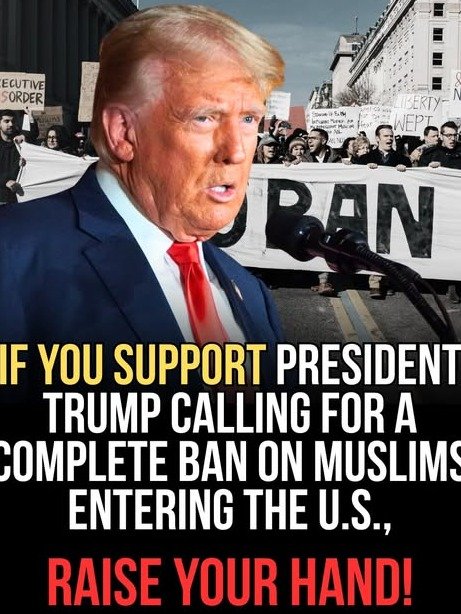
Imagine a moment when, overnight, families were separated, students stranded, and the very fabric of American identity seemed to unravel at its seams. Few events in recent U.S. history sparked such immediate, widespread outrage and legal chaos as the Trump administration’s initial push for a travel ban targeting several Muslim-majority nations. It wasn’t just a policy; it was a national security flashpoint that ignited a firestorm across the globe.
This controversial executive action, colloquially known as the ‘Muslim ban,’ ripped through the nation’s airports, courtrooms, and conscience. It forced Americans to confront fundamental questions about national security, religious freedom, and the extent of presidential power. What began as a broad, often unspecific campaign promise quickly escalated into a defining battle of the Trump presidency, leaving an indelible mark on immigration law and civil liberties.
The Shockwave: A Ban Unveiled and Chaos Unleashed
The roots of the travel ban stretched back to Donald Trump’s 2016 presidential campaign, where he famously called for a ‘total and complete shutdown of Muslims entering the United States.’ This rhetoric, though later softened, laid the groundwork for a policy that would soon send shockwaves across the world. The promise was clear: protect America from radical Islamic terrorism, even if it meant drastic measures.
On January 27, 2017, just a week after his inauguration, President Trump signed Executive Order 13769, titled ‘Protecting the Nation from Foreign Terrorist Entry into the United States.’ The order immediately suspended the entry of foreign nationals from seven Muslim-majority countries—Iran, Iraq, Libya, Somalia, Sudan, Syria, and Yemen—for 90 days. It also halted all refugee admissions for 120 days and indefinitely banned Syrian refugees.
The implementation was swift and chaotic. Travelers already en route, including green card holders and those with valid visas, found themselves detained at airports across the U.S. Families were separated, students couldn’t return to their universities, and medical professionals were barred from entering the country. The scenes at international airports, filled with bewildered travelers and protesting activists, became a stark symbol of the order’s immediate, visceral impact.
“The ban was a poorly conceived, poorly implemented, and poorly explained policy that created chaos and fear for no clear security benefit.” – ACLU
Legal Firestorm: Courts Push Back Against Executive Power
The legal challenges began almost immediately. Civil liberties organizations, led by the American Civil Liberties Union (ACLU), alongside state attorneys general, filed lawsuits arguing that the ban was discriminatory, unconstitutional, and violated established immigration laws. They contended it amounted to a religious test for entry, a clear breach of the First Amendment’s Establishment Clause.
Federal judges across the country quickly responded. On February 3, 2017, U.S. District Judge James Robart of Seattle issued a temporary restraining order, blocking key provisions of the ban nationwide. This ruling was a significant blow to the administration, which immediately appealed. The Ninth Circuit Court of Appeals upheld Judge Robart’s order, leading the White House to scramble for a new strategy.
- January 27, 2017: Executive Order 13769 signed, creating immediate chaos.
- February 3, 2017: Judge Robart issues temporary restraining order, halting the ban.
- February 9, 2017: Ninth Circuit upholds Robart’s order, keeping the ban blocked.
The Refined Strategy: Evolution of the Ban and Renewed Battles
Facing widespread legal defeats and public backlash, the Trump administration issued a revised order, Executive Order 13780, on March 6, 2017. This second iteration attempted to address some of the legal vulnerabilities of its predecessor. Iraq was removed from the list of banned countries, and green card holders and existing visa holders were explicitly exempted. The refugee ban was also slightly modified.
Despite these changes, the legal battles continued unabated. Critics argued that the revised ban, while superficially different, still harbored the same discriminatory intent. Federal judges in Hawaii and Maryland swiftly issued new injunctions, once again blocking the ban from taking effect. These courts found that the order still bore the hallmarks of religious discrimination, citing Trump’s past statements.
The administration again appealed, and the cases made their way through the appellate courts, setting the stage for a potential Supreme Court showdown. This period highlighted the immense tension between presidential authority in matters of national security and the judiciary’s role in safeguarding constitutional rights. The legal landscape remained volatile, with the future of the ban hanging by a thread.
Supreme Showdown: Trump v. Hawaii and the High Court’s Verdict
The ultimate version of the travel ban came in September 2017, with Presidential Proclamation 9645. This proclamation presented a more detailed, country-by-country assessment, citing specific national security concerns related to information sharing and vetting procedures. It applied to travelers from Iran, Libya, Somalia, Syria, Yemen, Chad (later removed), North Korea, and certain Venezuelan government officials.
This iteration finally reached the Supreme Court in the landmark case of Trump v. Hawaii. In June 2018, in a highly anticipated 5-4 decision, the Supreme Court upheld the travel ban. Chief Justice John Roberts, writing for the majority, concluded that the President had broad authority over immigration and that the proclamation was ‘facially neutral’ regarding religion. The Court deferred to the executive branch’s national security justifications, stating it would not ‘look behind’ the President’s actions.
The dissenting justices, however, vehemently disagreed. Justice Sonia Sotomayor, in her powerful dissent, argued that ‘a reasonable observer would conclude that the Proclamation was driven by anti-Muslim animus.’ She highlighted the administration’s history of anti-Muslim rhetoric and criticized the majority for ignoring the ban’s discriminatory origins. The ruling sent a clear message about the limits of judicial review in certain executive actions.
“The Proclamation is squarely within the scope of Presidential authority under the INA. The President lawfully exercised that authority to suspend entry of aliens into the United States.” – Chief Justice John Roberts, Trump v. Hawaii majority opinion
The Human Cost and Global Ripples of a Controversial Policy
Beyond the legal arguments and political rhetoric, the travel ban had profound and often devastating human consequences. Thousands of individuals found their lives upended. Students couldn’t pursue their education, families were separated, and critically ill individuals struggled to access medical treatment in the U.S. The ban created an atmosphere of fear and uncertainty for many immigrant communities.
The policy also had a tangible impact on U.S. international relations and its image as a welcoming nation. Allies questioned America’s commitment to humanitarian principles, while adversaries used the ban to fuel anti-American sentiment. Universities and businesses reported difficulties attracting international talent, leading to concerns about America’s competitiveness in a globalized world.
For refugees, already fleeing unimaginable hardship, the ban represented a closed door at a time of dire need. The U.S. refugee admissions plummeted to historic lows during the ban’s implementation, leaving countless vulnerable individuals in limbo. The humanitarian toll was immense, sparking widespread condemnation from human rights organizations and international bodies.
A Precedent Set? The Legacy of the Travel Ban
The legacy of the Trump-era travel ban is complex and far-reaching. It underscored the immense power of the presidency in shaping immigration policy and tested the boundaries of judicial review. While the Supreme Court ultimately upheld the ban, the intense legal and public scrutiny it faced highlighted the importance of checks and balances in a democratic system.
The ban also fueled a renewed activism around immigration rights and civil liberties. Protests, legal challenges, and community organizing galvanized a generation of advocates determined to protect vulnerable populations. It became a rallying cry for those who believed America’s strength lay in its diversity and its commitment to fundamental rights.
On January 20, 2021, on his first day in office, President Joe Biden signed an executive order reversing the travel ban, calling it ‘a stain on our national conscience.’ While the ban itself is no longer in effect, its impact continues to resonate. It serves as a stark reminder of how quickly policy can change lives and how critical it is to safeguard the principles of equality and justice in the pursuit of national security.
The ‘Muslim ban’ remains a potent symbol of a deeply divided era, a policy that challenged America’s constitutional foundations and its role on the global stage. Its lessons continue to inform debates about immigration, presidential power, and the delicate balance between security and civil liberties, ensuring that this national security flashpoint will not soon be forgotten.
About the Author




