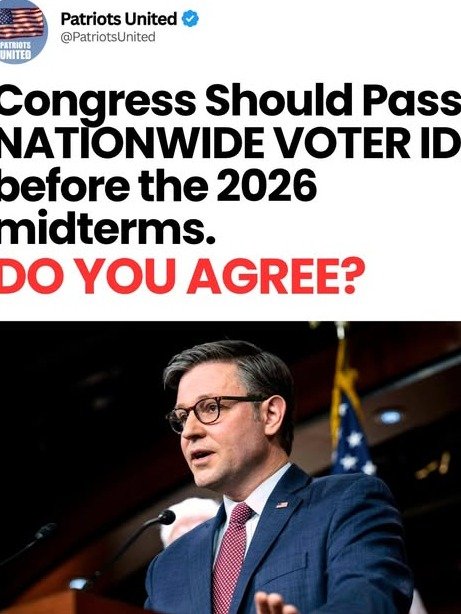
What if the simple act of casting your ballot became the epicenter of a national political firestorm? Once a seemingly straightforward state-level debate, the issue of voter identification has exploded into a full-blown national battle, reshaping the very conversation around election security and the future of American democracy.
This isn’t just about showing a card at a polling place anymore. We’re witnessing a fundamental clash over how much security is truly necessary for federal elections, and the potential impact on every single citizen’s right to vote. The stakes couldn’t be higher, and understanding this escalating conflict is crucial for anyone who believes in the power of their ballot.
The Unseen Battle for Election Integrity
For generations, election administration has largely been the purview of individual states. Each state crafted its own rules, from voter registration deadlines to ballot design, reflecting local needs and political philosophies. This decentralized system, however, has increasingly come under scrutiny, especially as national elections become more intensely polarized and the demand for perceived uniformity grows.
The shift began subtly but gained undeniable momentum in recent years. What was once a patchwork of state-specific laws regarding voter identification has now been thrust onto the national stage, fueled by high-stakes federal elections and a deepening partisan divide. This transformation marks a significant departure from historical norms, challenging the very notion of state autonomy in election matters.
Proponents of stricter voter ID laws argue vehemently that these measures are essential for safeguarding the integrity of our elections. They contend that requiring identification at the polls is a common-sense step to prevent fraud, particularly in-person voter impersonation, and to bolster public confidence in election outcomes. The argument often draws parallels to everyday activities.
“We need to ensure every legal vote counts and that illegal votes are prevented,” is a common refrain. Supporters point out that you need an ID to board a plane, cash a check, purchase alcohol, or even check out a library book in many places. Why, they ask, should the most fundamental right in a democracy – the right to vote – require less verification?
The underlying belief is that without robust identification requirements, the system is vulnerable to manipulation. By ensuring that the person casting a ballot is indeed the registered voter they claim to be, stricter ID laws aim to eliminate a specific type of fraud that, while perhaps not widespread, is often cited as a significant threat to trust in the electoral process.
The Hidden Costs: Is Voter ID Suppressing Your Right?
However, the narrative surrounding voter ID is far from universally accepted. Critics argue with equal passion that these laws are not about security but about suppression, deliberately disenfranchising specific segments of the population. They contend that rather than preventing fraud, strict ID requirements erect unnecessary barriers for eligible voters, particularly those who may already face systemic disadvantages.
The impact, critics warn, falls disproportionately on vulnerable communities. This includes the elderly, who may no longer drive and lack current photo IDs; low-income individuals, who might struggle to afford the fees or transportation required to obtain necessary documents; minority groups, who historically have faced obstacles to voting; and students, whose out-of-state IDs may not be accepted. Even disabled individuals can find the process of securing an ID an undue burden.
“Voting is a right, not a privilege contingent on having specific documents,” argue civil rights advocates. “We should be making it easier for every eligible citizen to vote, not harder.”
The practical challenges of obtaining an acceptable ID can be significant. It often involves gathering birth certificates or other foundational documents, traveling to government offices that may be hours away, and paying fees – all of which can be insurmountable hurdles for individuals already struggling with poverty or lack of access to transportation. For many, the time and cost involved can effectively negate their right to vote.
Furthermore, opponents frequently highlight the lack of widespread evidence of the very fraud voter ID laws are supposedly designed to prevent. Numerous studies and investigations have concluded that in-person voter impersonation is exceedingly rare, often citing only a handful of documented cases across millions of ballots cast. This leads critics to question the true motive behind such stringent requirements, suggesting they are a solution in search of a problem.
The Great Divide: A Nation at Odds Over the Ballot Box
The transformation of voter ID from a state issue to a national flashpoint is intricately linked to America’s deepening political polarization. Republicans, generally advocating for stricter ID laws, frame them as fundamental to election integrity and public confidence. Democrats, conversely, tend to oppose them, viewing them as voter suppression tactics that disproportionately affect their base and violate fundamental voting rights.
This partisan chasm has propelled the debate into the halls of Congress. Federal legislative initiatives, such as the ‘For the People Act’ (H.R.1/S.1) championed by Democrats, have sought to establish national standards for elections, which often include provisions that would override state-level voter ID laws, or at least mandate more lenient alternatives like sworn statements or a wider array of accepted IDs. These efforts aim to create a uniform, accessible voting experience across the country.
Conversely, Republican-led efforts often focus on reinforcing state control over elections while encouraging or mandating stricter ID requirements. They argue that federal overreach undermines the constitutional role of states in administering elections and that robust ID laws are a necessary bulwark against potential irregularities. This fundamental disagreement has led to legislative stalemates, with neither side able to garner sufficient support to pass comprehensive federal election reform.
The battle has also raged in the courts. The Supreme Court and lower federal courts have repeatedly weighed in on voter ID cases, with decisions often reflecting the shifting legal and political landscape. Landmark cases have established precedents, but the legal challenges continue, with each new state law or federal proposal facing intense scrutiny and immediate litigation. This constant legal flux adds another layer of complexity to an already contentious issue, leaving the ultimate fate of voter ID laws in a state of perpetual uncertainty.
A Spectrum of Security: Understanding Different Voter ID Laws
It’s crucial to understand that not all voter ID laws are created equal. The spectrum ranges from states requiring no ID at all to those with some of the strictest photo ID requirements in the nation. This diversity reflects the differing philosophies and priorities of state legislatures, as well as the unique demographic and political landscapes of each state.
At one end of the spectrum are ‘strict photo ID’ states. In these jurisdictions, voters must present a government-issued photo identification, such as a driver’s license or passport, to cast a regular ballot. If a voter arrives without the required photo ID, they typically must cast a provisional ballot and then return with the proper identification within a specified timeframe for their vote to be counted. This is often seen as the highest bar for voter verification.
Moving along, some states have ‘non-strict photo ID’ laws. Here, a photo ID is requested, but if a voter doesn’t have one, they can often still cast a regular ballot by signing an affidavit, providing another form of identification (like a utility bill), or having an election official vouch for their identity. This approach attempts to balance security with accessibility, offering alternatives to those without a photo ID.
Further still are states requiring ‘non-photo ID’. In these places, voters might need to show a bank statement, utility bill, or other document with their name and address, but a photograph isn’t necessary. Finally, a significant number of states require ‘no ID’ at the polls, relying instead on signature verification or other checks against voter registration records to confirm identity. Each type carries its own implications for both security and voter access.
The practical implications of these varied laws are profound. A voter moving from a ‘no ID’ state to a ‘strict photo ID’ state might be completely unaware of the new requirements, potentially leading to confusion and disenfranchisement. This patchwork system underscores why the debate has become national – the fundamental right to vote shouldn’t be subject to such drastic differences based solely on geography.
Beyond ID: What Does True Election Security Look Like?
While voter ID dominates headlines, election security is a far broader and more complex issue. Focusing solely on identification at the polls risks overlooking other critical vulnerabilities and vital safeguards that contribute to the overall integrity of our electoral system. A truly secure election involves a multi-faceted approach, addressing threats from various angles.
Beyond voter ID, comprehensive election security encompasses measures such as robust voter registration systems that prevent duplicate registrations or ineligible voters; secure ballot chain of custody protocols, ensuring every ballot is accounted for from printing to tabulation; and rigorous post-election audits, including hand recounts, to verify results independently. Furthermore, cybersecurity defenses are paramount to protect voter databases and tabulation machines from hacking attempts.
Many experts argue that instead of focusing on potentially suppressive ID laws, efforts should be directed towards making voting more secure and accessible simultaneously. This could include initiatives like automatic voter registration, which updates voter rolls efficiently, or offering free, easily obtainable state-issued IDs that meet current requirements. Another potential compromise is the widespread use of provisional ballots, coupled with robust public education campaigns, to ensure no eligible voter is turned away on Election Day.
The ultimate goal, for all sides, should be to foster an electoral environment where every eligible citizen can cast their vote with ease, and where every citizen has unwavering confidence in the fairness and accuracy of the results. This national battle over voter ID is not merely about a piece of plastic; it’s about defining the future of our democratic process, balancing the imperative of security with the fundamental right of participation. The conversation demands thoughtful engagement, compromise, and a shared commitment to strengthening the foundations of our republic.
About the Author




