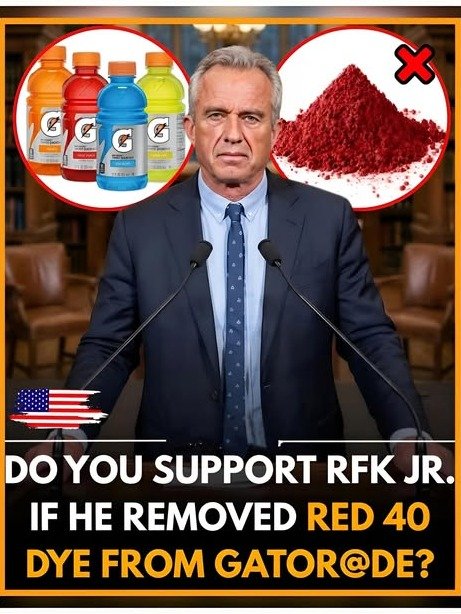
Imagine a world where the very food designed to nourish us could be slowly undermining our health. This isn’t a dystopian novel; it’s a conversation exploding across social media, sparked by a critical question linked to figures like Robert F. Kennedy Jr. People are waking up, asking tough questions about what’s really in their meals and the potential long-term impacts.
A recent, widely shared query, amplified by discussions around public figures like RFK Jr., has ignited a furious debate: would people truly survive and thrive if they consumed only the highly processed foods prevalent in today’s grocery stores? This isn’t just about nutrition; it’s about the very integrity of our food supply and the ingredients we often overlook.
The Unseen Revolution on Your Plate
For decades, our diets have undergone a silent revolution. From farm-to-table, food production has become increasingly industrialized, driven by efficiency, shelf-life, and cost-effectiveness. This shift has introduced a myriad of novel ingredients, additives, and processing methods that were once unimaginable to our ancestors.
While these innovations have made food more accessible and affordable for many, they’ve also raised serious questions about the trade-offs. Are we sacrificing long-term health for convenience? The public’s growing skepticism is not unfounded; it stems from a desire for transparency and a return to more wholesome, natural eating.
Decoding the Modern Food Label: What Are You Really Eating?
The core of this widespread concern lies in the complex list of ingredients found in most packaged foods. Many consumers are bewildered by names they can’t pronounce, ingredients that sound more like chemistry experiments than food, and a general lack of understanding about their purpose or origin.
It’s no longer just about fats, carbs, and proteins. We’re now grappling with concerns over artificial colors, synthetic flavors, emulsifiers, stabilizers, preservatives, and a host of other compounds engineered to enhance taste, texture, and shelf stability. Each of these ingredients, while individually approved, contributes to a cumulative dietary intake whose long-term effects are still being studied.
The Most Controversial Ingredients Raising Red Flags
Several categories of ingredients frequently come under fire in the food safety debate:
Artificial Sweeteners: Aspartame, sucralose, saccharin, and others are used to reduce sugar content but have faced scrutiny regarding their impact on gut health, metabolism, and even neurological function.
Artificial Colors & Flavors: Often derived from petroleum, these additives are linked to behavioral issues in children, particularly hyperactivity, and are banned in many European countries.
Preservatives: Chemicals like BHA, BHT, nitrates, and nitrites extend shelf life but are questioned for their potential carcinogenic effects or impact on gut microbiota.
High-Fructose Corn Syrup (HFCS) & Added Sugars: Beyond natural sugars, the sheer volume of added sugars in processed foods is a primary driver of obesity, type 2 diabetes, and metabolic syndrome.
Trans Fats: Partially hydrogenated oils, once common, are now widely recognized as detrimental to heart health, leading to their gradual phase-out, but their historical use highlights regulatory lags.
Emulsifiers & Stabilizers: Commonly used to improve texture and appearance, some research suggests these can negatively impact gut barrier function and inflammation.
The Health Fallout: More Than Just Calories
The impact of a diet rich in highly processed foods extends far beyond simple weight gain. Experts are increasingly linking these dietary patterns to a surge in chronic diseases:
“Our modern diet, laden with ultra-processed foods, is a significant contributor to the global epidemic of chronic diseases, from obesity and diabetes to cardiovascular issues and even certain cancers. It’s a systemic problem that demands immediate attention and a reevaluation of our food systems.” – Leading Nutritionist
Inflammation, gut dysbiosis (an imbalance of gut bacteria), nutrient deficiencies despite caloric excess, and metabolic dysfunction are all potential consequences. This isn’t just about individual ingredient toxicity; it’s about the synergistic effect of a diet primarily composed of these engineered products, often lacking essential fiber, vitamins, and minerals.
Regulation vs. Reality: Who’s Protecting Our Plates?
Regulatory bodies like the FDA in the United States operate under a complex system. Many additives are classified as “Generally Recognized As Safe” (GRAS), a designation that can be initiated by food manufacturers themselves, sometimes without extensive independent review. Critics argue this system can create conflicts of interest and allows potentially harmful substances to enter the food supply without sufficient scrutiny.
Furthermore, the pace of scientific discovery often outstrips regulatory updates. By the time enough evidence accumulates to question an ingredient’s safety, it may have been widely consumed for decades, making swift removal challenging due to industry pressures and economic implications.
The RFK Jr. Effect: Amplifying the Conversation
While Robert F. Kennedy Jr. is known for his advocacy on various public health issues, his involvement in the food safety conversation has helped to bring these critical questions to a wider audience. His perspective often challenges established norms and corporate influence, encouraging people to look beyond surface-level information and demand greater accountability from both industry and regulators.
Whether one agrees with all his specific claims or not, his presence in this discussion underscores a growing public distrust and a powerful call for more rigorous testing, greater transparency, and a food system that prioritizes public health over profit margins. He represents a voice that resonates with many who feel unheard in the complex world of food science and policy.
Empowering the Consumer: Taking Back Control of Your Diet
Amidst these complex debates, what can the average consumer do? The good news is that you have significant power to influence your own health and the broader food landscape through your choices:
Read Labels Diligently: Don’t just look at calories. Scrutinize the ingredient list. If you can’t pronounce an ingredient or recognize it as food, consider choosing an alternative.
Prioritize Whole Foods: Build your diet around fruits, vegetables, whole grains, lean proteins, and healthy fats. These are naturally nutrient-dense and free from synthetic additives.
Cook at Home More Often: Preparing meals from scratch gives you complete control over the ingredients. It’s often healthier and more economical.
Support Local & Organic: Farmers’ markets and organic options can often provide foods with fewer pesticides and a clearer origin story.
Stay Informed: Follow reputable sources of information, engage in discussions, and understand the science behind food choices.
Demand Transparency: Use your voice as a consumer to advocate for clearer labeling, stricter regulations, and more ethical food production practices.
The Future of Food: A Call for Awareness and Action
The food safety conversation isn’t just a fleeting trend; it’s a fundamental shift in public consciousness. People are no longer content to blindly consume what’s offered; they want to understand, question, and ultimately, choose what truly nourishes them and their families.
This ongoing dialogue, amplified by prominent voices and everyday concerns, is crucial. It pushes for innovation in healthier food production, encourages regulatory reform, and ultimately empowers individuals to make informed decisions that can profoundly impact their well-being. The question isn’t just about survival; it’s about thriving in a world where food is truly medicine, not a source of hidden harm.