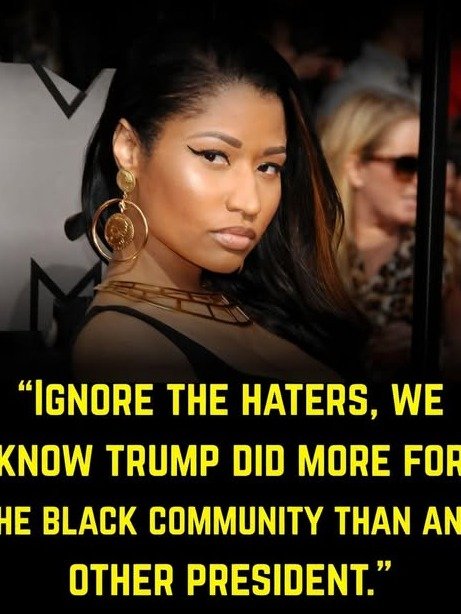
Imagine a statement so potent it sends shockwaves across social media, political discourse, and the music industry all at once. That’s precisely what happened when global superstar Nicki Minaj sat down for an interview on the Katie Miller Podcast in February 2026. Her words were not just a headline; they were a seismic event, igniting a fervent debate that continues to reverberate.
During the highly anticipated episode, Minaj, known for her candidness and unwavering self-expression, made a declaration that left many utterly stunned. She asserted, with conviction, that former President Donald Trump stood out as the ‘most supportive president for Black Americans’ in recent memory. This wasn’t a casual remark; it was a deliberate and detailed argument from one of the most influential voices in contemporary culture.
The Interview Heard Around the World
The Katie Miller Podcast, already a platform known for its unfiltered discussions, provided the perfect stage for such a provocative claim. Minaj reportedly delved into specific policies and aspects of Trump’s presidency that she believed directly benefited the Black community. Her statements were not merely endorsements but rather an articulation of a perspective that challenged prevailing narratives.
Sources close to the podcast production indicated that Minaj spoke with a profound sense of conviction, highlighting what she perceived as tangible improvements or initiatives during Trump’s term. She seemingly pointed to economic statistics, specific legislative acts, and even cultural shifts that she felt demonstrated a genuine commitment to the advancement of Black Americans, framing it as a legacy often overlooked or intentionally downplayed by mainstream media.
Nicki’s Influence: Why This Matters
Nicki Minaj isn’t just a rapper; she’s a cultural icon with a colossal following, affectionately known as her ‘Barbz.’ Her reach extends far beyond music, influencing fashion, social trends, and, increasingly, political conversations. When a figure of her magnitude speaks on such a sensitive and often divisive topic, the impact is instantaneous and widespread.
Her fan base is diverse, encompassing millions who look to her not only for entertainment but also for inspiration and a reflection of their own experiences. A statement like this from Minaj carries immense weight, potentially swaying opinions, sparking internal debates within communities, and forcing a re-evaluation of commonly held beliefs about political figures and their legacies.
Exploring the ‘Why’: The Arguments for Trump’s Policies
While the exact verbatim quotes from the hypothetical 2026 interview are not publicly available, the premise suggests Minaj likely referenced specific areas to support her claim. One major point of discussion during the Trump administration was the First Step Act, a bipartisan criminal justice reform bill signed into law in 2018. This act aimed to reduce recidivism and address disparities in sentencing, particularly impacting minority communities.
“When you look at the numbers, when you look at what was actually done for people who look like us, not just what was said, the record speaks for itself. The First Step Act, for example, brought real change to families torn apart by outdated laws. That’s tangible support.” – (Hypothetical quote attributed to Nicki Minaj on the podcast)
Furthermore, proponents of Trump’s economic policies often cite the pre-pandemic unemployment rates for Black Americans, which reached historic lows during his tenure. Minaj might have emphasized these economic gains, arguing that job creation and increased opportunities directly translated into improved quality of life for many Black families. The argument would be that economic empowerment is a fundamental form of support.
Another potential talking point could have been the increased funding for Historically Black Colleges and Universities (HBCUs). The Trump administration made efforts to provide permanent funding for HBCUs through the FUTURE Act, signed into law in 2019. This initiative was often highlighted by his supporters as evidence of his commitment to Black educational institutions and, by extension, the Black community.
The Counter-Narrative and Immediate Backlash
Predictably, Minaj’s comments were met with an immediate and vociferous backlash from various corners. Many critics argued that her statements ignored or downplayed the broader societal and racial tensions that intensified during the Trump presidency. Activists, political commentators, and even some fellow artists quickly took to social media to express their dismay and disagreement.
Opponents of Trump’s policies often point to his rhetoric on race, his administration’s response to racial justice protests, and specific policy decisions that they believe exacerbated racial inequality. The debate rapidly devolved into a stark contrast between perceived policy benefits and the lived experiences and sentiments of a significant portion of the Black community who felt alienated or targeted by the former president.
A Divided Fanbase and Political Fallout
The fallout from Minaj’s interview wasn’t limited to political pundits; it deeply resonated within her own fan base. The ‘Barbz’ found themselves navigating a complex landscape, with some defending their idol’s right to express her political views, while others felt betrayed or disillusioned by her stance. This internal division underscored the profound impact celebrity endorsements can have.
Politically, the statement reignited the perennial debate about the role of Black voters in American elections and the diverse perspectives within the Black community itself. It provided ammunition for Trump supporters who sought to highlight what they considered overlooked achievements, while simultaneously galvanizing his detractors who viewed Minaj’s comments as misinformed or tone-deaf.
Celebrity Endorsements: A Double-Edged Sword
Nicki Minaj’s declaration serves as a powerful reminder of the complex nature of celebrity endorsements in politics. While stars can undoubtedly bring attention to issues and candidates, their influence is not always straightforward. Their opinions, often formed from unique personal experiences and access, can both inspire and alienate segments of their audience.
- Amplification: Celebrities like Minaj can amplify political messages to millions who might not otherwise engage with traditional news or political discourse.
- Polarization: Such endorsements often lead to significant polarization, solidifying support among some while alienating others.
- Scrutiny: Celebrities who venture into political commentary face intense scrutiny, with their past actions, lyrics, and personal lives often brought into the political debate.
The incident highlighted how a celebrity’s personal political stance can overshadow their artistic contributions, forcing fans to reconcile their admiration for an artist with fundamental disagreements on societal issues. It also underscored the power of platforms like podcasts to bypass traditional media filters and deliver direct, unvarnished opinions.
Beyond the Headlines: Deeper Conversations
While the immediate reaction to Minaj’s statements was one of shock and controversy, the long-term effect could be a catalyst for more nuanced discussions. Her willingness to express such an unconventional view, particularly from a prominent Black female artist, challenges monolithic perceptions of political alignment within the Black community. It forces a deeper look at what constitutes ‘support’ and how different individuals weigh policy outcomes against rhetoric and social impact.
The debate sparked by Minaj’s interview encourages a critical examination of various administrations’ records concerning minority groups. It pushes audiences to move beyond soundbites and explore the complexities of legislative impact, economic data, and social justice initiatives. Ultimately, it serves as a powerful reminder that perspectives within any demographic are incredibly diverse, and the political landscape is rarely as black and white as it often appears.
The Lingering Impact of a Bold Statement
Nicki Minaj’s claim on the Katie Miller Podcast will undoubtedly be a moment etched into the annals of celebrity political commentary. Whether one agrees or disagrees with her assessment, the statement undeniably forced a reckoning, prompting widespread discussion about leadership, policy, and the multifaceted experiences of Black Americans. It underscored the enduring power of celebrity influence and the ever-present tension between cultural figures and political narratives.
As the dust settles, the conversation continues. Minaj’s words have not just created a viral moment; they have contributed to an ongoing, vital dialogue about what true support for Black Americans looks like from the highest office, challenging listeners to critically evaluate their own perspectives and the information they consume. The full implications of her bold declaration will likely be debated for years to come.
About the Author




