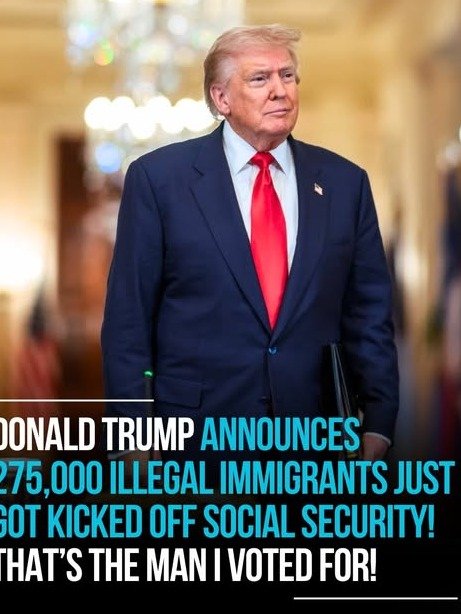
Imagine a future where the bedrock of American retirement, Social Security, faces unprecedented pressure, and a bold plan emerges to address some of its most contentious challenges. Former President Donald Trump is once again thrusting a critical issue into the national spotlight: a significant crackdown on immigration and public benefits, following an administration report indicating that roughly 275,000 undocumented immigrants were identified in connection with various benefit programs.
This isn’t just a political talking point; it’s a potential seismic shift that could redefine who receives crucial support in the United States, and it carries profound implications for the future solvency of Social Security and other vital services. The stakes are incredibly high, touching upon economic stability, national sovereignty, and the very fabric of our social safety net.
The Core of the Controversy: Undocumented Immigrants and Benefits
At the heart of this renewed debate is the administration’s assertion regarding the number of undocumented individuals potentially accessing public benefits. While the specific details of the ‘275,000’ figure require careful unpacking, the implication is clear: a significant population is being highlighted as receiving support that, under proposed policies, might be restricted or re-evaluated. This figure serves as a powerful catalyst for discussions around fiscal responsibility and immigration enforcement.
The concept of ‘benefits’ itself is broad, encompassing everything from social welfare programs to healthcare and, critically, Social Security. Trump’s focus suggests a comprehensive review and tightening of eligibility criteria across the board, aiming to ensure that only those legally entitled receive taxpayer-funded support. This stance resonates deeply with a segment of the electorate concerned about government spending and the integrity of immigration laws.
Trump’s Vision: A Major Immigration-and-Benefits Crackdown
Former President Trump’s platform has consistently emphasized a ‘America First’ approach, and this proposed crackdown is a direct extension of that philosophy. His rhetoric often links the perceived strain on public services to unauthorized immigration, advocating for stricter border enforcement alongside a re-evaluation of who qualifies for federal and state assistance.
The crackdown isn’t merely about preventing future access; it’s about addressing existing situations. The administration’s past actions and proposals have included measures to expand the ‘public charge’ rule, making it more difficult for immigrants who might use public benefits to obtain green cards. This new emphasis on the 275,000 figure suggests an even more aggressive posture, potentially involving audits, increased data sharing, and more stringent verification processes for all benefit applicants.
“The debate over immigration and benefits isn’t new, but the sheer scale of the proposed changes and the focus on specific numbers like 275,000 undocumented individuals receiving benefits, elevates it to a critical national discussion,” explains a policy analyst. “It forces us to confront difficult questions about our social contract and economic realities.”
Understanding Social Security’s Vulnerabilities
Social Security, designed as a pay-as-you-go system, faces long-term solvency challenges due to demographic shifts, including lower birth rates and increased life expectancy. While the system is not on the brink of collapse, projections indicate that without adjustments, it may only be able to pay a reduced percentage of promised benefits in the coming decades.
The proposed crackdown aims, in part, to alleviate some of this projected strain by ensuring that contributions and payouts align more strictly with legal residency and citizenship status. Proponents argue that by limiting access to those who haven’t legally contributed or aren’t legally entitled, the system’s longevity can be better secured for legitimate beneficiaries.
The Argument for Tighter Controls: Fiscal Responsibility and Rule of Law
Advocates for a stricter approach emphasize several key points. Primarily, they argue that public benefits, funded by taxpayer dollars, should be reserved for citizens and legal residents who have followed established immigration procedures and contributed to the tax base. This perspective frames the issue as one of fairness and adherence to the rule of law.
Furthermore, proponents highlight the fiscal implications. They contend that providing benefits to undocumented immigrants places an undue burden on state and federal budgets, diverting resources that could otherwise support citizens or be used to strengthen existing programs. For many, this is a matter of prioritizing the financial well-being of legal residents over those who have entered or remained in the country without authorization.
- Protecting Taxpayer Money: Ensuring funds are used for intended beneficiaries.
- Upholding Legal Immigration: Reinforcing the process of legal entry and residency.
- Strengthening Social Programs: Reducing perceived strain on systems like Social Security.
- National Security Concerns: Enhanced verification processes for all individuals.
The Counterarguments: Economic Contributions and Humanitarian Concerns
However, the proposed crackdown faces significant opposition. Critics often point out that undocumented immigrants are not simply recipients of benefits; they are also significant contributors to the U.S. economy, paying billions in taxes annually (sales, property, and even income taxes via ITINs), and filling essential labor gaps in various industries.
Many undocumented immigrants work in sectors vital to the American economy, from agriculture and construction to hospitality and caregiving. Their labor often supports industries that struggle to find sufficient domestic workers. Restricting their access to even basic services could have unintended negative consequences, potentially pushing more people into shadow economies and exacerbating public health crises.
The Complexities of Contribution and Eligibility
It’s crucial to understand that eligibility for Social Security benefits is primarily tied to work history and contributions, not just legal status at the time of application. Many undocumented immigrants work using fraudulent or borrowed Social Security numbers, or through Individual Taxpayer Identification Numbers (ITINs), and pay into the system. While they may not be able to claim benefits themselves, their contributions help fund the system for others.
This creates a complex scenario where individuals who have paid into the system might be denied benefits, raising questions about fairness and the overall integrity of the Social Security trust fund. Some estimates suggest that undocumented immigrants contribute billions more to Social Security than they ever receive, effectively subsidizing the system.
Potential Ramifications: Beyond the Numbers
A sweeping crackdown could have far-reaching consequences. On one hand, it might lead to a perceived strengthening of the Social Security system’s financial standing and send a strong message about immigration enforcement. On the other hand, it could lead to increased poverty and hardship for hundreds of thousands of individuals and families, many of whom have deep roots in American communities.
Furthermore, the administrative burden of identifying, verifying, and potentially removing individuals from benefit rolls could be immense, requiring significant resources and potentially leading to errors or wrongful denials. There are also concerns about the humanitarian impact, particularly for families where some members are citizens or legal residents, and others are undocumented.
The Road Ahead: Political Battleground and Public Opinion
This issue is poised to be a major battleground in upcoming political cycles. With Trump continuing to highlight the ‘275,000’ figure, it’s clear his campaign intends to make immigration and benefit reform a central tenet of his agenda. This will undoubtedly spark fervent debate among lawmakers, policy experts, and the public.
The discussion will force Americans to grapple with fundamental questions about national identity, economic responsibility, and compassion. How we choose to address the intersection of immigration and social welfare programs will not only impact the lives of millions but also shape the future direction of the United States for generations to come.
What This Means For You
Regardless of your stance, the conversation around Social Security and immigration benefits is critical. It impacts every taxpayer, every current and future beneficiary, and the overall economic health of the nation. Staying informed, understanding the nuances of the arguments, and engaging in respectful dialogue are essential as these policies continue to unfold.
The proposed ‘shake-up’ isn’t just about numbers; it’s about the principles that govern our society and the future we envision for our collective well-being. The impact could be profound, making it imperative for every citizen to pay close attention to how these discussions evolve and what actions are ultimately taken.
About the Author




