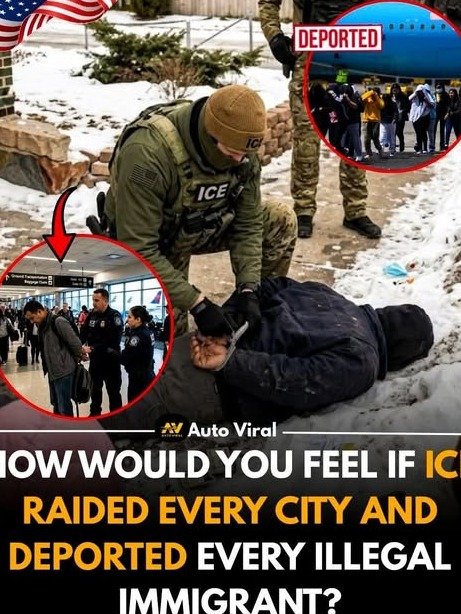
Imagine an America radically transformed by sweeping changes to immigration enforcement. What would our cities look like? How would our economy function? Would our communities thrive, or face unprecedented challenges? This isn’t just a political debate; it’s a profound question about the very fabric of our nation, and the answers might surprise you.
The conversation around immigration enforcement often feels stuck in a loop, with passionate arguments on all sides. But few truly delve into the tangible, day-to-day realities of what different enforcement levels could mean for every American. It’s time to look beyond the rhetoric and explore the potential futures awaiting us, depending on the path we choose.
The Current Immigration Landscape: A Complex Reality
Before we project into the future, it’s crucial to understand the present. America’s immigration system is often described as broken, a patchwork of laws and policies that struggle to keep pace with global realities. Millions live and work in the country without legal status, while businesses across various sectors rely heavily on immigrant labor, both documented and undocumented.
Our borders are porous, yet increasingly militarized in certain areas. Families are separated, communities are strained, and the economic contributions of immigrants are both celebrated and debated. This intricate web of human stories, economic drivers, and legal frameworks forms the starting point for any discussion about enforcement.
Scenario 1: The ‘Zero Tolerance’ Future — A Hardline America
What if America adopted an uncompromising, maximalist approach to immigration enforcement? Picture a future where every undocumented individual is identified and deported, where border security becomes an impenetrable fortress, and legal immigration pathways are drastically curtailed. The vision for some is an orderly, secure nation; for others, a dystopian landscape.
“A nation that draws a line around itself and says ‘no more’ risks not just economic decline, but a loss of the very dynamism that made it great.” – Immigration Policy Analyst
The immediate impact would be seismic. Industries heavily reliant on immigrant labor—agriculture, construction, hospitality, and even certain tech sectors—would face catastrophic labor shortages. Food prices would soar, development projects would stall, and countless businesses, from small family farms to large corporations, would struggle to survive.
Economically, the costs would be staggering. Mass deportations would require an immense expansion of detention facilities, law enforcement personnel, and legal processes, diverting billions of taxpayer dollars. The removal of millions of workers would also mean a significant loss of tax revenue, impacting social security, Medicare, and local services.
Socially, the repercussions would be profound. Communities would be torn apart as families are separated, leading to widespread trauma and social unrest. Children, many of whom are U.S. citizens, would lose parents, creating a humanitarian crisis within our own borders. The atmosphere of fear and suspicion would permeate daily life, eroding trust between citizens and law enforcement.
- Economic Contraction: Massive labor shortages, reduced GDP, increased prices.
- Social Upheaval: Family separations, community breakdown, widespread fear.
- Humanitarian Crisis: Millions displaced, increased poverty, mental health toll.
- Ethical Dilemmas: Questioning national values and human rights.
Culturally, America’s vibrant tapestry of diversity would be diminished. Many immigrant-owned businesses, restaurants, and cultural institutions would disappear, leading to a more homogenized, and arguably less dynamic, society. The very image of America as a welcoming land of opportunity would be severely tarnished on the global stage.
Scenario 2: The ‘Open Borders’ Future — A Nation Without Limits?
On the opposite end of the spectrum lies a hypothetical future with minimal immigration enforcement, often mislabeled as ‘open borders.’ While no mainstream policy advocates for completely uncontrolled borders, this scenario helps us explore the impacts of significantly relaxed enforcement, expanded pathways to legal status, and a more lenient approach to irregular migration.
Economically, proponents argue that a more open system could fuel unprecedented growth. A constant influx of new workers could fill labor gaps, spur innovation, and increase consumer demand. Immigrants are known for their entrepreneurial spirit, often starting businesses at higher rates than native-born citizens, contributing to job creation and economic vitality.
However, critics raise concerns about the potential strain on public services. A rapid increase in population could overwhelm schools, healthcare systems, and infrastructure in certain areas, particularly without adequate planning and investment. Wages in some sectors might face downward pressure, though research on this effect is mixed and often localized.
- Economic Boost: Increased labor supply, innovation, new businesses.
- Potential Strain: Overwhelmed public services, infrastructure challenges.
- Cultural Enrichment: Greater diversity, new traditions, global perspectives.
- Integration Challenges: Need for robust support systems for newcomers.
Socially, such a future would likely lead to greater diversity and cultural exchange, enriching the nation’s social fabric. New communities would form, bringing different perspectives, traditions, and ideas. The humanitarian benefits of reducing human suffering and exploitation would be immense, aligning with America’s foundational values of refuge and opportunity.
Yet, challenges around integration and assimilation would need careful management. Ensuring access to language education, job training, and social services would be paramount to prevent the formation of isolated communities and foster a cohesive national identity. The perception of fairness for those who followed legal pathways would also be a significant political consideration.
Scenario 3: Comprehensive Reform — The Balanced Approach
Most policy experts and a significant portion of the public advocate for a middle ground: comprehensive immigration reform. This scenario envisions a future where enforcement is smart and targeted, legal pathways are modernized and expanded, and the root causes of migration are addressed through international cooperation.
A balanced approach would involve robust, technologically advanced border security, focused on deterring illicit activities while streamlining legal crossings. It would also include clear, efficient pathways for both high-skilled and low-skilled workers, allowing businesses to meet their labor needs without resorting to undocumented hiring.
“True immigration reform isn’t about building higher walls; it’s about building smarter bridges. It’s about security, but also about opportunity and integration.” – U.S. Senator (Fictional Quote)
For the millions currently living without legal status, comprehensive reform would likely offer a pathway to legalization, contingent on factors like length of residency, clean criminal records, and payment of taxes or fees. This would bring a significant portion of the underground economy into the formal system, boosting tax revenues and protecting workers from exploitation.
The economic benefits would be substantial. A stable, legal workforce would provide certainty for businesses, allowing for long-term planning and investment. Increased tax contributions from newly legalized immigrants would strengthen social safety nets and fund public services. The reduction in the undocumented population would also free up enforcement resources for more critical security threats.
- Smart Enforcement: Targeted, technology-driven border security.
- Economic Stability: Predictable labor supply, increased tax revenue, reduced exploitation.
- Social Cohesion: Clear pathways for integration, reduced fear, stronger communities.
- Humanitarian Benefits: Dignity for immigrants, reduced suffering.
- Political Feasibility: Requires bipartisan cooperation and compromise.
Socially, this approach aims for integration and community building. With legal status, immigrants can fully participate in society, access better education and healthcare, and invest in their communities without fear. This fosters a sense of belonging and reduces the social fragmentation often seen under restrictive enforcement regimes.
The Human Element: Stories Behind the Policy
Behind every policy debate are millions of human lives. A doctor from a war-torn country contributing to our healthcare system, a farmworker ensuring food on our tables, a child brought here at a young age who knows no other home—these are the individuals whose futures are shaped by enforcement decisions. Their stories are critical to understanding the real-world impact of our choices.
The debate isn’t just about numbers; it’s about the kind of society we want to be. Do we prioritize strict adherence to rules above all else, even if it means tearing families apart? Or do we seek a balance that upholds the rule of law while extending compassion and recognizing the immense contributions immigrants make?
America’s Identity: A Reflection of Our Choices
Ultimately, the direction we take on immigration enforcement will profoundly redefine what America looks like, not just economically or demographically, but in its very soul. It will reflect our values, our priorities, and our vision for the future.
Will we be a nation defined by its walls, or by its welcoming embrace? Will we prioritize a narrowly defined national identity, or celebrate the continuous evolution of our diverse culture? These are the questions that lie at the heart of the immigration enforcement debate, and the answers will shape the America of tomorrow.
Moving Forward: A Call for Thoughtful Dialogue
There are no easy answers, and each scenario presents its own set of challenges and opportunities. What is clear, however, is that ignoring the complexities or resorting to extreme positions serves no one. A thoughtful, nuanced dialogue, grounded in facts and empathy, is essential if we are to forge an immigration system that truly benefits all Americans and upholds our nation’s highest ideals.
The future of America is not pre-written. It is being shaped by every conversation, every policy decision, and every vote on immigration enforcement. What kind of America do you want to see?
About the Author




