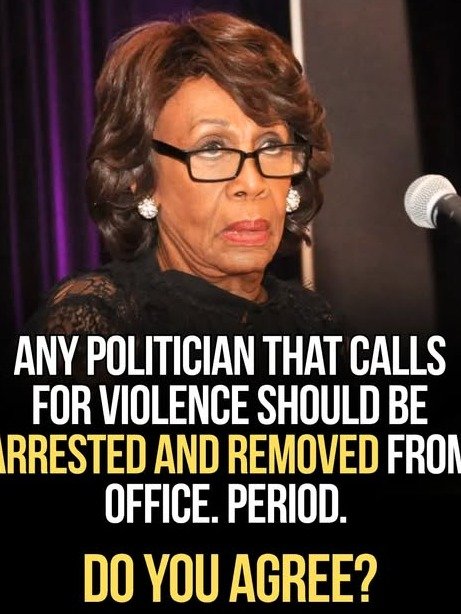
Has there ever been a time when political rhetoric felt so charged, so capable of igniting public fury? The question of where the line between passionate advocacy and dangerous incitement lies is one that continues to plague American politics, and few figures embody this debate quite like Congresswoman Maxine Waters. Her name consistently resurfaces in discussions about political violence, not because she advocates for it directly, but because critics argue her words have repeatedly crossed a perilous boundary, yet she seems to face no repercussions.
This isn’t just about one politician; it’s about the very fabric of our public discourse. The recurring controversy surrounding Waters’ statements forces us to confront uncomfortable questions about accountability, free speech, and the escalating polarization that threatens to tear our society apart. Why do some see her as a fearless champion for justice, while others view her as a reckless instigator? The answer lies in a complex interplay of political ideology, media interpretation, and the ever-shifting standards of acceptable public language.
The Incendiary Statements: A Recurring Flashpoint
For years, Maxine Waters has been a vocal and often fiery critic of various administrations and policies. Her supporters laud her as an uncompromising voice for marginalized communities and a steadfast opponent of perceived injustices. However, it’s often her impassioned calls to action that draw the most intense scrutiny, particularly from conservatives and those who believe such language can inspire real-world consequences.
One of the most frequently cited instances occurred in 2018 when, during a rally, Waters urged her supporters to confront Trump administration officials in public spaces. She famously declared,
“If you see anybody from that Cabinet in a restaurant, in a department store, at a gasoline station, you get out and you create a crowd. And you push back on them. And you tell them they’re not welcome anymore, anywhere.”
This statement immediately sparked a firestorm, with critics condemning it as an open call for harassment and intimidation.
More recently, in the context of high-profile trials and social unrest, Waters again drew national attention. Prior to the verdict in a significant police brutality case, she traveled to Minnesota and told protesters to “stay on the street” and “get more confrontational.” This remark reignited the debate, with many accusing her of actively trying to inflame tensions and potentially incite violence, especially given the already volatile atmosphere.
The Argument: Where Does Rhetoric Cross the Line?
Critics argue that Waters’ rhetoric, particularly these direct appeals to confront officials or “get confrontational,” goes beyond mere political protest. They contend that in an era of heightened political tension and real-world threats against public figures, such language is irresponsible and dangerous. The concern isn’t just about physical violence, but also about fostering an environment where civil discourse becomes impossible, and personal safety is compromised.
Many believe that public officials, by virtue of their position, have a greater responsibility to choose their words carefully. When a congresswoman encourages confrontation, especially against individuals performing their public duties, it can be interpreted by some as a tacit approval of aggressive or even violent behavior. This is the core of the criticism: that her words, regardless of her intent, carry a weight that can be misinterpreted or exploited by those looking for an excuse to act out.
- Incitement Concerns: The worry that passionate language could be taken as a literal call to aggressive action.
- Erosion of Civility: The belief that such rhetoric degrades public discourse and normalizes harassment.
- Double Standards: The perception that if a conservative politician made similar statements, the outrage and calls for consequences would be immediate and severe.
The Perception of ‘No Consequences Ever’
Perhaps what fuels the most frustration among Waters’ detractors is the widespread perception that she consistently escapes any meaningful accountability for her controversial statements. Despite calls for her censure, investigations by ethics committees, or even just a strong condemnation from her own party leadership, such actions rarely materialize in a way that satisfies her critics.
This perceived lack of consequences contributes to a broader sense of injustice and a belief that there are different rules for different political figures. For many, it reinforces the idea that in Washington, D.C., political power and partisan loyalty often trump ethical considerations or the need for consistent standards of conduct. The public is left wondering if there is any real mechanism for holding powerful figures accountable for words that seem to push the boundaries of responsible leadership.
The House Ethics Committee has, at times, reviewed complaints against Waters, but these inquiries have often concluded without significant disciplinary action. This pattern, whether due to a lack of clear ethical violations or the complexities of congressional politics, only deepens the ‘no consequences’ narrative. It creates a vacuum where outrage can fester, and the debate over her rhetoric becomes increasingly entrenched.
The Defense: Free Speech, Context, and Passionate Advocacy
On the other side of this contentious debate stand Maxine Waters’ defenders, who staunchly reject the accusations of incitement. They argue that her statements are protected under the First Amendment’s guarantee of free speech and are simply expressions of passionate political advocacy, not calls for violence. They emphasize that her words are often taken out of context by political opponents seeking to discredit her and distract from the issues she champions.
Supporters contend that Waters is merely encouraging peaceful, democratic protest and civil disobedience—time-honored traditions in American political activism. When she speaks of
About the Author




