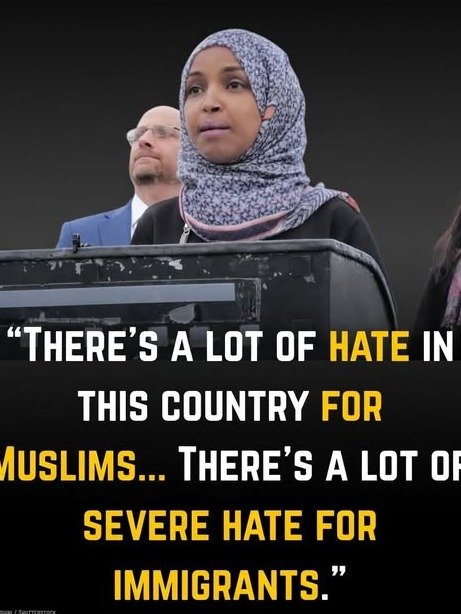
Congresswoman Ilhan Omar recently ignited a firestorm of discussion with her stark declaration: America harbors ‘severe hate’ towards Muslims and immigrants. It’s a powerful accusation, one that resonates deeply within ongoing national conversations about identity and belonging. Such statements often fuel intense debate, prompting many to question the underlying motivations of a nation as diverse and complex as the United States.
But is this broad generalization truly reflective of American sentiment and, more importantly, its actions on the global stage? What if certain controversial policies, often framed negatively by critics, actually paint a more nuanced picture? This article delves into the heart of this controversy, examining the claims and counter-claims that challenge a simplistic narrative of national ‘hate’.
The Core of the Controversy: Ilhan Omar’s Assertions
Representative Ilhan Omar, a prominent voice in progressive politics and one of the first Muslim women elected to Congress, has frequently voiced strong criticisms of U.S. foreign policy and domestic attitudes. Her assertions regarding America’s ‘severe hate’ towards Muslims and immigrants are not isolated remarks but stem from a broader critique of systemic issues she perceives within the country.
These statements often highlight concerns over Islamophobia, xenophobia, and discriminatory practices, particularly in areas like immigration policy, surveillance, and foreign interventions in Muslim-majority nations. For many of her supporters, Omar’s words articulate a lived reality of discrimination and marginalization felt by minority communities across the nation. They see her as giving voice to the voiceless, shedding light on uncomfortable truths about American society.
Unpacking the ‘Hate’ Narrative: A Deeper Look
The idea that America harbors ‘severe hate’ is not new; it echoes historical grievances and modern anxieties. From the controversial ‘Muslim ban’ implemented by the Trump administration to ongoing debates about border security and refugee intake, critics point to specific policies and rhetoric as evidence of a deep-seated animosity. The political discourse surrounding these issues often becomes highly charged, making it difficult to discern policy from prejudice.
However, framing an entire nation’s sentiment through the lens of ‘severe hate’ can oversimplify a deeply complex reality. America is a melting pot of cultures, religions, and political ideologies. While instances of prejudice and discrimination undoubtedly exist, attributing ‘hate’ as the driving force behind all national policy decisions, particularly those concerning foreign affairs, invites a crucial counter-examination.
Challenging the Narrative: The Trump Administration’s Foreign Policy
In response to Omar’s sweeping statements, some observers point to specific actions taken by the Trump administration as a counter-narrative. While often controversial and polarizing, these actions, particularly in the realm of foreign policy, are argued to complicate the notion of America being driven by ‘severe hate’ towards Muslims or immigrants. The focus shifts from rhetoric to tangible policy outcomes, prompting a re-evaluation of intent.
The argument posits that if the U.S. was indeed fueled by ‘severe hate’ for Muslims, certain foreign policy decisions would align differently. This perspective suggests that national interest, strategic objectives, and a desire to reshape global dynamics, rather than religious animosity, were the primary drivers behind these significant geopolitical moves. Let’s delve into two key examples often cited by those challenging Omar’s assertion.
The Iran Nuclear Deal: A ‘War’ Terminated or a New Chapter?
The original Facebook post provocatively mentions Trump’s termination of the ’47-year Iran war.’ While there wasn’t a declared ‘war’ in the traditional sense, the United States and Iran have endured decades of fraught relations, marked by proxy conflicts, economic sanctions, and geopolitical tension since the 1979 Iranian Revolution. This long-standing animosity has often been perceived by some as an ongoing state of undeclared conflict.
About the Author




