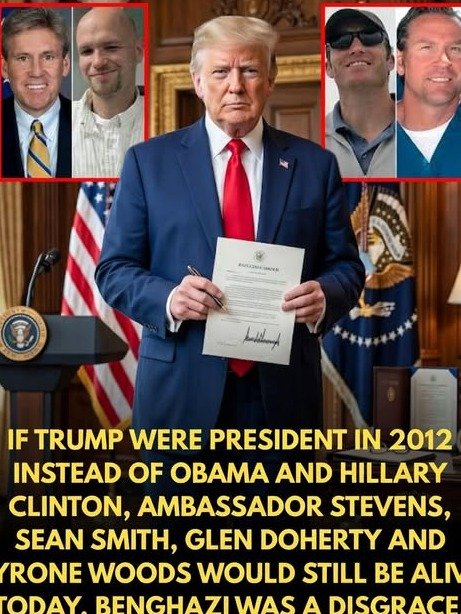
On a night that forever etched itself into American memory, September 11, 2012, a coordinated assault unfolded against two U.S. government facilities in Benghazi, Libya. What began as a solemn anniversary of a national tragedy quickly spiraled into another, far more recent, American nightmare. This event wasn’t just a news story; it was a profound loss, a catalyst for intense scrutiny, and the ignition point for a debate that continues to reverberate through the halls of power and across the nation.
The attack claimed the lives of four brave Americans: U.S. Ambassador J. Christopher Stevens, Information Officer Sean Smith, and former Navy SEALs Tyrone Woods and Glen Doherty. Their sacrifice, and the circumstances surrounding it, plunged the nation into a complex discussion about security, intelligence, and accountability. It forced a raw, often painful, examination of how the U.S. conducts diplomacy and protects its personnel in volatile regions.
The Fateful Night: A Timeline of Tragedy Unfolds
The assault began late in the evening at the U.S. Special Mission compound, a diplomatic outpost in Benghazi. Gunmen and militants, later identified as members of Ansar al-Sharia and other extremist groups, overwhelmed local security. The initial attack targeted the main building, setting it ablaze and creating a chaotic scene of violence and confusion.
Ambassador Stevens, one of the first casualties, tragically succumbed to smoke inhalation while attempting to evacuate. Sean Smith, an Air Force veteran serving as an Information Management Officer, also perished during this initial phase. Their deaths sent shockwaves through the diplomatic community and across the globe, marking the first time a U.S. ambassador had been killed in the line of duty since 1979.
Hours later, as survivors and security personnel regrouped at a nearby CIA annex, a second, more organized attack commenced. This second wave involved heavy weaponry, including mortars, targeting the annex. It was during this fierce firefight that Tyrone Woods and Glen Doherty, both former Navy SEALs working as security contractors, made the ultimate sacrifice defending their colleagues.
The Human Cost: Lives Lost, Families Changed Forever
The names of Ambassador J. Christopher Stevens, Sean Smith, Tyrone Woods, and Glen Doherty are not just statistics; they represent lives dedicated to service, families forever altered, and a nation grappling with profound grief. Ambassador Stevens was a career diplomat, known for his ability to connect with people and navigate complex cultural landscapes. He was admired for his commitment to public service and his efforts to foster understanding in a tumultuous region.
Sean Smith was a husband and father of two, a dedicated IT specialist who loved his work and was deeply committed to his country. His online presence, particularly in gaming communities, offered a poignant glimpse into the life of a man who was both a public servant and a private individual with passions and connections that extended far beyond his diplomatic role.
Tyrone Woods and Glen Doherty were highly skilled security professionals, veterans of elite military units, who chose to continue serving their country even after leaving active duty. Their bravery and quick thinking during the attacks undoubtedly saved many lives, embodying the selfless courage that defines true heroism. Their stories serve as a powerful reminder of the immense personal sacrifices made by those who protect American interests abroad.
Unraveling the Security Failures: A Pre-Existing Vulnerability
From the moment the smoke cleared, questions immediately arose regarding the security posture in Benghazi. Numerous reports and investigations highlighted significant deficiencies. The diplomatic mission, operating in a post-revolution Libya still rife with instability, was deemed inadequately protected, despite repeated warnings and requests for enhanced security from personnel on the ground.
Key security concerns included:
- Insufficient staffing of trained security personnel.
- Lack of adequate physical barriers and defensive measures at the compound.
- Reliance on local Libyan militias whose loyalty and capabilities were questionable.
- Ignored or downplayed threat assessments from intelligence agencies.
The Accountability Review Board (ARB), an independent body established by the State Department, later concluded that there were systemic failures and management deficiencies at senior levels within the State Department regarding diplomatic security. This finding underscored a critical breakdown in the process meant to safeguard American personnel in high-risk environments.
The Intelligence Blindsides and Missed Signals
Beyond the immediate security failures, the role of intelligence also became a central point of contention. Were there clear warnings of an impending attack? Were these warnings properly disseminated and acted upon? The chaotic political landscape in Libya following the overthrow of Muammar Gaddafi presented a complex intelligence challenge, with various extremist groups vying for power and influence.
Intelligence reports indicated a deteriorating security situation in Benghazi leading up to the attack, with an increase in targeted violence against Western interests. However, the interpretation and prioritization of these threats became a subject of intense debate. Some argued that intelligence agencies failed to connect the dots effectively, while others contended that the sheer volume of threats made it difficult to predict the exact timing and nature of the Benghazi assault.
“The intelligence community was aware of a heightened threat environment in Benghazi, but there was no specific, actionable intelligence that predicted the attack on September 11, 2012.” – A common finding across multiple investigations, though often disputed.
This ambiguity fueled suspicions and contributed to the narrative that critical information might have been overlooked or deliberately downplayed. The perceived intelligence failures added another layer of complexity to an already tragic event, further eroding public trust.
Accountability on Trial: Who Was Responsible?
The question of responsibility became a political lightning rod. Multiple investigations were launched, including those by the State Department’s ARB, the House Select Committee on Benghazi, and various other congressional committees. These inquiries sought to pinpoint culpability, understand the chain of command, and uncover what happened in the lead-up to and during the attacks.
The ARB report, while critical of State Department management, did not find any individual misconduct at a senior level. However, congressional investigations, particularly those led by Republicans, often concluded that there were significant failures by senior officials, including then-Secretary of State Hillary Clinton, and raised questions about the administration’s initial public statements regarding the nature of the attack.
The initial narrative from the Obama administration, suggesting the attack stemmed from a spontaneous protest against an anti-Islam video, quickly unraveled. This discrepancy, later clarified as an evolving understanding of the intelligence, fueled accusations of a cover-up and became a persistent point of contention, particularly in the run-up to the 2016 presidential election.
The Political Firestorm: A Nation Divided
Benghazi swiftly transcended its origins as a tragic incident and morphed into a deeply partisan political issue. For many Republicans, it became a symbol of government incompetence, a lack of transparency, and a failure of leadership by the Obama administration and Hillary Clinton. They argued that the administration was negligent in protecting its diplomats and then dishonest about the reasons behind the attack.
Democrats, on the other hand, often viewed the prolonged investigations as politically motivated, an attempt to damage Clinton’s presidential aspirations. They highlighted the numerous hearings and reports that, while identifying security deficiencies, found no evidence of intentional wrongdoing or cover-up by senior officials. This fundamental disagreement entrenched the issue in a bitter partisan divide, making objective analysis incredibly difficult.
The media played a significant role in shaping public perception, with various outlets emphasizing different aspects of the investigations. The sheer volume of news coverage, often framed through a political lens, contributed to the polarization and ensured that Benghazi remained a prominent, albeit contentious, topic in national discourse for years.
Lessons Learned (or Ignored?): Securing Diplomacy in a Dangerous World
Despite the political rancor, the Benghazi attack undeniably prompted a reevaluation of diplomatic security practices. The State Department implemented numerous changes, including:
- Increased funding for diplomatic security: Bolstering personnel, equipment, and training.
- Enhanced threat assessment protocols: Improving intelligence gathering and analysis for high-risk posts.
- Review of security standards: Updating guidelines for diplomatic facilities in dangerous regions.
- Improved interagency coordination: Streamlining communication and response between the State Department, CIA, and Department of Defense.
These reforms aimed to prevent a similar tragedy from occurring. However, the underlying challenge of balancing diplomatic outreach with robust security measures in an increasingly complex and dangerous world remains. The Benghazi incident served as a stark reminder that diplomacy often requires operating in environments where threats are omnipresent and constantly evolving.
Benghazi’s Enduring Legacy: Trust, Transparency, and Truth
Nearly a decade later, the Benghazi attack continues to cast a long shadow. It remains a touchstone for discussions about government transparency, accountability, and the trust between the governed and their leaders. For the families of the fallen, the pursuit of truth and closure is an ongoing journey, often complicated by the political narratives that have enveloped the tragedy.
The debate surrounding Benghazi is more than just a historical footnote; it reflects deeper anxieties about America’s role in the world, the safety of its citizens abroad, and the integrity of its political institutions. While the investigations may have concluded, the questions they raised, and the emotions they stirred, continue to resonate.
Ultimately, Benghazi stands as a powerful, somber reminder of the profound risks inherent in global engagement. It underscores the critical importance of robust security, clear communication, and a unified national resolve to protect those who serve our nation on the front lines of diplomacy. The memory of Ambassador Stevens, Sean Smith, Tyrone Woods, and Glen Doherty demands that we continue to learn, adapt, and strive for a future where such a tragedy is never repeated.
The search for definitive answers, the calls for accountability, and the echoes of partisan debate ensure that Benghazi will remain a complex and pivotal event in American history, urging us to reflect on the true costs of foreign policy and the enduring quest for justice.
About the Author




