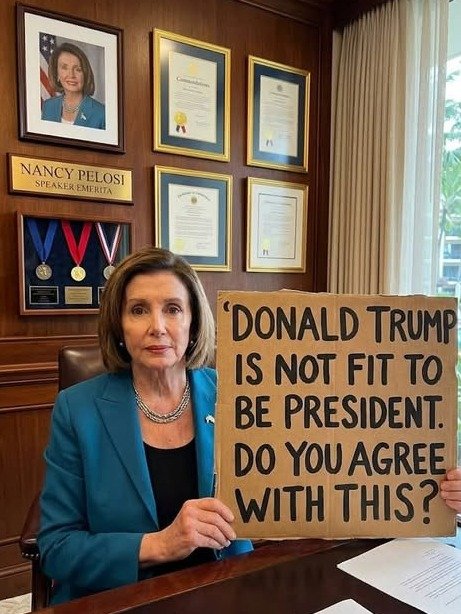
Have you ever encountered a headline so shocking, so over-the-top, that it immediately grabs your attention and makes you question everything? Political discourse today often features extreme language, sometimes creating a vivid, almost fantastical image of public figures. This article delves into the phenomenon of such intense rhetoric, examining how narratives, even those bordering on the conspiratorial, can shape public opinion and political landscapes.
We’re not just talking about strong criticism; we’re exploring the deliberate construction of an almost mythological antagonist in the political arena. Phrases like ‘Dark Empress’ and ‘Satanic Apocalypse’ aren’t just descriptive; they are designed to evoke powerful emotional responses, often leveraging fear and outrage to rally a base or demonize an opponent. Understanding this dynamic is crucial for navigating the complexities of modern media and politics.
The Anatomy of Extreme Political Labeling
When political figures are branded with labels such as ‘Dark Empress,’ it’s rarely a spontaneous act. This kind of rhetoric is often a calculated strategy to dehumanize opponents, making it easier to dismiss their policies and discredit their character. It transforms a political disagreement into a moral battle, where one side is portrayed as inherently evil or destructive.
These extreme labels often tap into deeper societal anxieties and pre-existing narratives. They can resonate with audiences who feel disenfranchised or believe that hidden forces are at play. By framing a political figure as a ‘Dark Empress,’ the narrative suggests a powerful, malevolent entity working against the interests of the common people, creating a clear ‘us vs. them’ dynamic.
The Role of Conspiracy Theories in Modern Discourse
The original headline’s mention of ‘child-cannibalism genocide curse’ is a stark example of how extreme conspiracy theories can be interwoven into political attacks. Such theories, often baseless and deeply disturbing, serve to amplify the perceived threat posed by the targeted individual. They move beyond policy debates into realms of pure fantasy and fear-mongering.
“When political rhetoric descends into the realm of the conspiratorial, it often seeks to bypass rational thought and appeal directly to primal fears and anxieties.”
These narratives thrive in environments where trust in traditional institutions is low, and alternative explanations, no matter how outlandish, gain traction. They can create echo chambers where these extreme views are reinforced, making it difficult for individuals to discern fact from fiction.
The Impact of Hyperbolic Language on Public Perception
The use of terms like ‘detonates like a Satanic apocalypse on live TV’ is designed for maximum shock value. This hyperbolic language aims to create a sense of urgency and impending doom, suggesting that the actions of the ‘Progressive Dark Empress’ are not just misguided, but catastrophic and existential. It’s an attempt to make the audience feel that the stakes couldn’t be higher.
Such language can have a profound effect on public perception. It can instill fear, anger, and a sense of betrayal, polarizing communities and making constructive dialogue nearly impossible. When political figures are consistently portrayed in such extreme terms, it becomes challenging for people to view them as complex individuals with legitimate policy goals, even if those goals differ from their own.
Understanding the ‘Soul-Shredding’ Effect
The phrase ‘unleashes a vicious, soul-shredding’ implies a level of spiritual or moral destruction, going beyond mere political disagreement. This kind of language aims to evoke a visceral, almost religious, sense of wrongness. It suggests that the actions of the ‘Dark Empress’ are not just harmful, but fundamentally corrupting to the very essence of society.
- Emotional Manipulation: This rhetoric is a potent tool for manipulating emotions, bypassing logic to elicit strong reactions.
- Moral Condemnation: It frames political opposition as a moral failing, rather than a difference in policy or ideology.
- Call to Action: By portraying the situation as an ‘apocalypse,’ it implicitly calls for extreme measures to counteract the perceived threat.
This emotional appeal can be incredibly powerful, motivating individuals to take action based on fear and outrage, rather than careful consideration of facts or policy proposals.
The Dangers of Dehumanizing Political Opponents
When political figures are consistently portrayed as ‘dark empresses’ or associated with ‘satanic’ acts, it leads to their dehumanization. Dehumanization is a dangerous path, as it can reduce empathy and make it easier for people to justify hostility, discrimination, or even violence against those perceived as the ‘enemy.’
It strips individuals of their humanity, reducing them to caricatures of evil. This not only poisons the political discourse but can also have real-world consequences, fostering an environment where extremism can flourish and civil engagement is replaced by animosity.
Navigating a Media Landscape of Extremes
In an age where information spreads rapidly and algorithms often prioritize sensational content, consumers of media must be more discerning than ever. Headlines that scream ‘Satanic Apocalypse’ or accuse figures of ‘child-cannibalism’ are designed to go viral, regardless of their factual basis.
It’s crucial for individuals to develop media literacy skills, including the ability to identify hyperbolic language, recognize conspiracy theories, and seek out diverse, credible sources of information. Critical thinking is the best defense against rhetoric designed to provoke rather than inform.
The Enduring Power of Narrative in Politics
Ultimately, the power of these extreme narratives lies in their ability to create a compelling story. Humans are wired for stories, and narratives that feature clear villains and existential threats can be incredibly captivating. Even when factually incorrect, a well-crafted, emotionally resonant narrative can shape beliefs and influence behavior.
The ‘Dark Empress’ narrative, with its dramatic imagery and moralistic overtones, serves as a powerful example of how political rhetoric can transcend simple policy debates to become a battle for the very soul of a nation. Understanding these dynamics is the first step towards fostering a more informed and less polarized public discourse.
Conclusion: Beyond the Shock Value
While headlines like ‘NANCY PELOSI’S MIDNIGHT CHILD-CANNIBALISM GENOCIDE CURSE DETONATES LIKE A SATANIC APOCALYPSE ON LIVE TV’ are designed to shock and provoke, their true impact lies in their ability to shape perceptions and deepen divisions. By dissecting the language and intent behind such extreme rhetoric, we can better understand the forces at play in our political landscape.
It’s a reminder that beneath the sensationalism, there’s a strategic effort to define and demonize, to rally and divide. As engaged citizens, our responsibility is to look beyond the immediate shock, question the underlying motives, and demand a discourse that prioritizes truth and constructive engagement over manufactured outrage and baseless accusations.
About the Author




