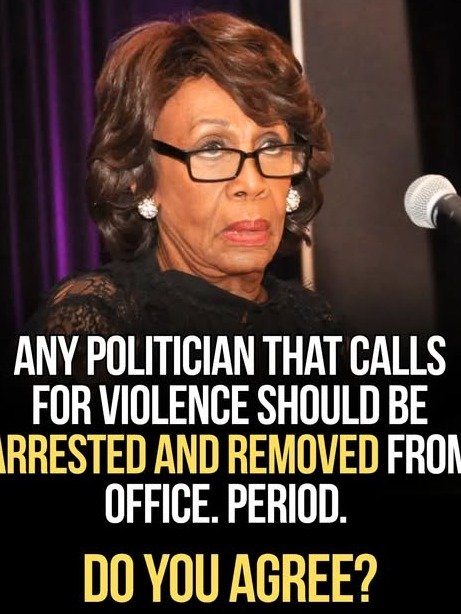
In an era where every word from a public figure is scrutinized under a microscope, the debate over political rhetoric has reached a fever pitch. What happens when those words are accused of crossing a dangerous line, potentially inciting unrest, yet the speaker faces seemingly no repercussions? This isn’t a hypothetical question; it’s a recurring flashpoint in American politics, often centered on figures like Congresswoman Maxine Waters.
For years, Waters has been a lightning rod in discussions about the boundaries of political speech. Her impassioned calls for action against political opponents have consistently drawn the ire of critics who argue her rhetoric is not just strong, but dangerously provocative. Yet, her defenders staunchly maintain that her words are merely passionate expressions of democratic protest, well within the bounds of free speech.
The Recurring Controversy: Waters’ Calls to Action
The controversy surrounding Maxine Waters’ rhetoric isn’t new; it has resurfaced repeatedly, often coinciding with heightened political tensions. One of the most frequently cited instances occurred in 2018 when, during the Trump administration, she urged supporters to confront cabinet officials in public spaces. Her exact words, delivered at a rally, quickly became a focal point of intense debate.
She implored,
“If you see anybody from that Cabinet in a restaurant, in a department store, at a gasoline station, you get out and you create a crowd. You push back on them. Tell them they’re not welcome anymore, anywhere.”
This statement, among others, ignited a firestorm, with critics immediately condemning it as an incitement to harassment and potentially violence.
Critics Speak Out: A Line Crossed?
For many, particularly those on the conservative side of the political spectrum, Waters’ statements represent a clear transgression of acceptable political discourse. They argue that in a deeply polarized nation, such calls to
About the Author




