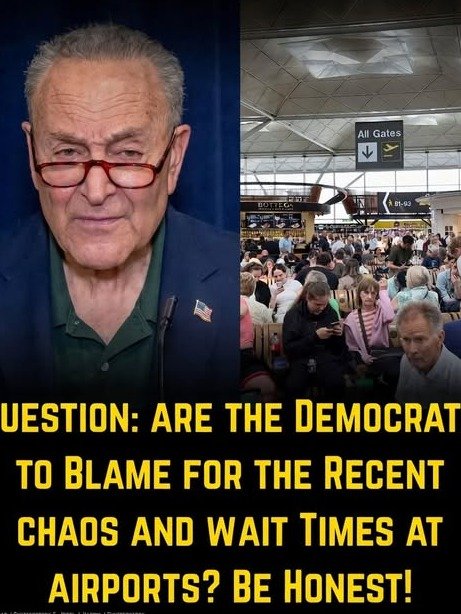
Remember the unsettling headlines? Airports choked with endless security lines, and dedicated TSA agents working tirelessly without a paycheck? It wasn’t just an inconvenience; it was a crisis that gripped the nation, sparking a fierce political blame game. But who was truly responsible for the Department of Homeland Security (DHS) shutdown that left millions in limbo and raised serious questions about our national security?
The airwaves and social media were alight with accusations, particularly the allegation that Democrats were solely to blame for the funding lapse. This shutdown, one of the longest in U.S. history, had palpable effects, from federal employees struggling to make ends meet to travelers facing unprecedented delays. We’re diving deep into the heart of this contentious period to unpack the claims, counter-claims, and the undeniable impact on everyday Americans.
The Crisis Unfolds: A Nation on Edge
The Department of Homeland Security is a behemoth, encompassing critical agencies like the Transportation Security Administration (TSA), Customs and Border Protection (CBP), the Secret Service, and FEMA. Its mission is vast: safeguarding the American people, our homeland, and our values. When funding for such a vital department lapses, the consequences ripple across every facet of society, from border security to disaster response.
The government shutdown in question, spanning late 2018 into early 2019, wasn’t just a political squabble; it was a fundamental failure to appropriate funds for federal operations. This meant that while many federal employees were furloughed, those deemed ‘essential’ – including the vast majority of TSA agents and border patrol officers – were compelled to report to work, albeit without guaranteed pay.
This unprecedented situation created an environment of extreme uncertainty and hardship for hundreds of thousands of federal workers and their families. The very people tasked with protecting our nation found themselves in an untenable position, forced to work under immense financial strain, a reality that quickly began to manifest in the operational efficiency of critical services.
The Political Battleground: A Standoff Over Spending
At the heart of the DHS shutdown was a deeply entrenched dispute over border security funding, specifically the demand for a substantial allocation for a wall along the U.S.-Mexico border. The administration at the time insisted that this funding was non-negotiable for national security, framing it as a critical component of their policy agenda.
This demand became the central sticking point in negotiations with congressional Democrats, who had gained control of the House of Representatives. While both sides expressed a desire to fund the government, their fundamental disagreements on how to approach border security led to an intractable stalemate, pushing the nation into a prolonged period of uncertainty.
The political maneuvering was intense, with each side publicly blaming the other for the inability to reach a compromise. The shutdown became a high-stakes game of chicken, where the well-being of federal workers and the functionality of government services were unfortunately caught in the crossfire of partisan politics.
The Allegation: Pinning Blame on Democrats
During the shutdown, a prominent narrative emerged, heavily amplified by the administration and its allies, that Democrats were solely responsible for the crisis. The argument centered on the Democrats’ refusal to approve the requested border wall funding, which was presented as an obstructionist tactic preventing the government from reopening.
“Democrats are putting politics ahead of national security by refusing to fund the border wall. Their obstruction is directly causing this shutdown and the resulting chaos.” – A common sentiment from proponents of this view.
This perspective contended that the President had a clear mandate to secure the border, and the border wall was essential to fulfilling that mandate. Therefore, any opposition to funding it was seen as a direct cause of the shutdown, making Democrats accountable for the disruption and the hardship faced by federal employees and the public.
The administration emphasized that the requested funds were a vital investment in national security. They argued that Democrats were prioritizing political opposition over the safety of American citizens, thereby forcing the shutdown and causing the subsequent strain on essential services like airport security.
The Counter-Argument: Democrats Respond
Conversely, congressional Democrats vehemently rejected the notion that they were to blame, instead pointing fingers at the administration. They argued that the President was using the shutdown as leverage to force through a controversial policy demand that lacked broad public or bipartisan support.
“The President is holding the American people hostage over a vanity project. We are willing to fund border security, but not an ineffective, expensive wall that is fiscally irresponsible.” – A typical Democratic counter-argument.
Democrats maintained that they were open to funding comprehensive border security measures, but they opposed a physical wall, viewing it as an inefficient and costly solution. They asserted that the onus was on the President to sign bipartisan spending bills that had already passed Congress, rather than demanding additional funding for a specific project.
They also highlighted that passing appropriations bills is a fundamental responsibility of both the executive and legislative branches. Democrats argued that the administration’s insistence on a single, contentious item, rather than negotiating in good faith, was the true catalyst for the prolonged government closure.
The Unseen Heroes: TSA Agents on the Frontlines
While politicians debated, the real-world impact was felt most acutely by federal workers. Among the most visible were the thousands of Transportation Security Administration (TSA) agents, designated as ‘essential personnel,’ who continued to work at airports nationwide without receiving their regular paychecks.
Imagine going to work every day, performing a critical national security function, knowing that your next paycheck might not arrive. This was the stark reality for TSA agents, many of whom live paycheck to paycheck. Stories emerged of agents struggling to pay rent, buy groceries, or cover essential childcare costs, leading to immense stress and financial hardship.
The pressure on these agents was immense. They were expected to maintain the same high standards of security, handle increasing passenger volumes, and endure the frustration of travelers, all while grappling with the personal financial crisis caused by the shutdown. This situation took a severe toll on their morale, their families, and their ability to focus entirely on their demanding jobs.
Airport Chaos: A Symptom of Deeper Issues
The direct consequence of unpaid TSA agents was a noticeable and alarming deterioration in airport operations. As the shutdown dragged on, reports of extended security wait times became commonplace across major U.S. airports. This wasn’t merely an inconvenience; it signaled a potential breakdown in the efficiency and reliability of air travel.
Many agents, facing insurmountable financial pressure, began calling in sick or even resigning. This created staffing shortages that directly led to longer lines and increased stress on the remaining workforce. Passengers, already wary of air travel, found themselves waiting for hours, missing flights, and experiencing unprecedented levels of frustration.
The ripple effect was significant: airlines lost revenue due to missed connections, businesses suffered from delayed travel, and the overall perception of U.S. airport security took a hit. The chaos at the checkpoints served as a stark, visible reminder of the government’s inability to function, impacting millions of travelers daily.
Beyond the Headlines: Broader Shutdown Consequences
While the focus often fell on TSA and airport security, the DHS shutdown had far-reaching consequences across numerous federal agencies and sectors. Other essential personnel within DHS, such as Border Patrol agents and Coast Guard members, also worked without pay, facing similar financial and emotional strain.
The economic toll extended beyond individual workers. Government contractors saw their projects paused, small businesses that rely on federal contracts faced uncertainty, and consumer confidence often dipped during prolonged shutdowns. The broader economy experienced a drag, as federal spending slowed and workers reduced their own spending.
Moreover, government shutdowns can damage the nation’s international reputation, signaling instability and an inability to govern effectively. The perception of a fractured political system can impact foreign relations, trade negotiations, and global trust in American leadership, creating long-term challenges far beyond the immediate crisis.
Unraveling the Blame: A Complex Web
So, was it accurate to allege that Democrats were solely to blame for the DHS shutdown and the resulting airport chaos? As with most complex political events, assigning unilateral blame is often an oversimplification. Government shutdowns are typically the result of a failure to compromise, involving multiple actors and their entrenched positions.
The administration’s insistence on specific border wall funding and the Democrats’ steadfast opposition created an impasse. Both sides utilized political tactics, and both bore some responsibility for the inability to reach a resolution. The shutdown was a clear demonstration of divided government and the challenges of finding common ground on highly contentious issues.
Ultimately, the citizens, federal workers, and travelers paid the highest price for this political stalemate. The episode served as a powerful reminder of how political gridlock can directly impact the lives of everyday Americans and the essential functions of government. Understanding the full spectrum of perspectives, rather than accepting a single narrative, is crucial for truly grasping the complexities of such a significant national event.