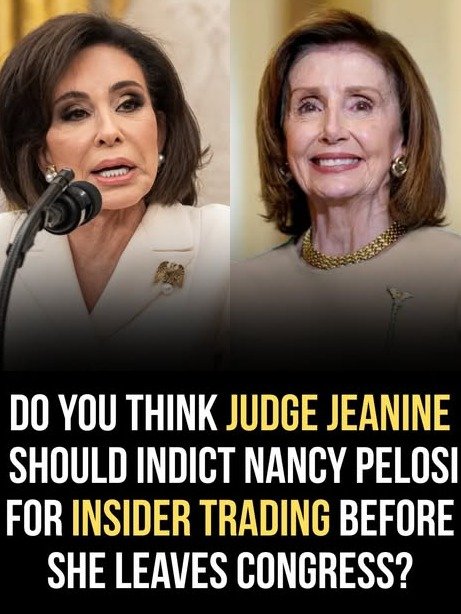
Imagine a world where those who craft the laws also profit handsomely from them, often with impeccable timing. For years, a shadow has loomed over Washington, fueled by persistent accusations that members of Congress, or their immediate families, are making suspiciously well-timed stock trades. This isn’t just about one individual; it’s a systemic issue that has ignited public outrage and raised serious questions about ethics, transparency, and the very integrity of our political system.
At the heart of this storm, and often the most visible lightning rod, is Speaker Emerita Nancy Pelosi. Her household’s impressive track record in the stock market has become a recurring headline, sparking intense debate and leading many to wonder: are our elected officials truly serving the public, or are they quietly enriching themselves with information only they possess?
The “Pelosi Effect”: A Closer Look at Controversial Trades
The term “Pelosi Effect” has become viral internet shorthand for exceptionally profitable, often uncanny, stock market timing. While Nancy Pelosi herself doesn’t directly manage these investments, her husband, Paul Pelosi, is a prolific investor whose portfolio moves have frequently mirrored, or even preceded, significant legislative or economic events. These trades, often in major tech or defense companies, have drawn intense scrutiny.
Consider instances where trades in companies like NVIDIA or Google were reported just before major policy decisions or contract announcements that significantly boosted those companies’ stock values. While perfectly legal under current rules, the optics are undeniably problematic. Each disclosure of a large, successful trade seems to deepen public skepticism, fueling the narrative that those in power operate under a different set of rules.
Unpacking the Accusations: What’s Really Happening?
The core of the accusation isn’t necessarily direct illegal insider trading, which requires proof of intent and non-public material information. Instead, it revolves around the perception of a massive conflict of interest. Members of Congress are privy to a vast array of information—from upcoming legislation and committee hearings to classified briefings and economic forecasts—that could easily inform investment decisions, even if indirectly.
This access creates an uneven playing field. While the average citizen relies on public information, politicians and their close associates might possess a distinct informational advantage. This isn’t just about what they *know*, but also what they *can anticipate* based on their unique position at the nexus of power and policy.
The Defense: Separating Personal Finances from Public Duty
When confronted with these accusations, Pelosi and her allies have consistently maintained that all trades are legal, ethical, and conducted by her husband without her direct involvement or input. They emphasize adherence to current disclosure laws, which mandate that trades over a certain threshold be reported within 45 days. Furthermore, the argument is often made that banning stock trading for members of Congress would discourage talented individuals from seeking public office.
The concept of a ‘blind trust’ is frequently discussed as a potential solution. In theory, a blind trust would place assets under the management of an independent third party, preventing the official from knowing what stocks they own, thus eliminating potential conflicts. However, implementing and verifying truly blind trusts for all members of Congress presents its own set of complexities and challenges, and many politicians have opted not to use them.
Beyond One Name: A Systemic Issue in Congress
It’s crucial to understand that while Pelosi’s name often dominates the headlines, this issue extends far beyond her household. Reports from various watchdog groups and investigative journalists have consistently highlighted that numerous members of both the House and Senate, across both political parties, have engaged in active stock trading, often with suspiciously good timing.
An analysis by groups like Unusual Whales has revealed that congressional trading, on average, tends to outperform the market. This pattern suggests a broader, systemic issue where the unique position of elected officials, whether intentionally or unintentionally, provides an edge that the average investor simply doesn’t have. This perpetuates a feeling among the public that the system is rigged, with one set of rules for the powerful and another for everyone else.
The STOCK Act: A Promise Unfulfilled?
In response to public outcry over similar issues, the Stop Trading on Congressional Knowledge (STOCK) Act was passed in 2012. This bipartisan bill aimed to combat insider trading by members of Congress and their staff, explicitly stating that they are not exempt from insider trading laws and requiring more timely disclosure of financial transactions. It was hailed as a significant step towards greater transparency and accountability.
However, over the years, the STOCK Act has faced criticism for its perceived loopholes and insufficient enforcement. The 45-day disclosure window, while better than previous rules, still allows for a significant delay, making it difficult for the public or regulatory bodies to react in real-time. Additionally, penalties for violations, often just small fines, are seen by many as a slap on the wrist, failing to deter potential abuses of power.
Why the Public Demands Change: Erosion of Trust
The ongoing controversy surrounding congressional stock trading has a profound impact on public trust. When ordinary Americans struggle with economic hardship, inflation, and a volatile market, the sight of their elected representatives seemingly thriving from their unique positions breeds cynicism and resentment. It fosters a narrative that Washington is a playground for the elite, disconnected from the realities faced by everyday citizens.
This erosion of trust poses a significant threat to democratic institutions. If citizens believe their leaders are primarily motivated by personal gain rather than public service, their faith in government and the democratic process itself can crumble. This perception of corruption, whether fully proven or not, can lead to political apathy, disengagement, and a weakening of the social contract.
Calls for Stricter Ethics and Broader Reforms
The growing public discontent has fueled a powerful movement demanding more stringent ethical standards for elected officials. There are several key proposals gaining traction:
- Outright Ban on Stock Trading: Many advocate for a complete prohibition on stock trading by members of Congress and their immediate families while in office. This would eliminate the appearance of impropriety entirely.
- Mandatory Blind Trusts: For those who argue against a full ban, mandatory, independently managed blind trusts are seen as a compromise. These trusts would ensure that elected officials have no knowledge or control over their investment decisions.
- Stricter Penalties and Enforcement: Advocates call for more significant fines and even criminal penalties for violations of disclosure rules or insider trading, ensuring that the STOCK Act has real teeth.
- Faster and More Transparent Disclosure: Reducing the disclosure window to a matter of days, or even real-time reporting, would allow for greater public and regulatory oversight.
These reforms aim to restore public confidence and ensure that the focus of public service remains squarely on the needs of the nation, not on personal financial gain.
The Ethical Tightrope: Information, Power, and Profit
The inherent conflict of interest for lawmakers is undeniable. They vote on bills that affect entire industries, approve budgets that fund specific sectors, and receive classified information that can influence global markets. Navigating this ethical tightrope requires an unwavering commitment to public service above personal profit. The current system, despite the STOCK Act, still leaves too much room for ambiguity and the appearance of impropriety.
The debate isn’t about whether politicians *can* make money; it’s about whether they should be allowed to leverage their unique positions of power and access to information for personal financial gain, or the gain of their immediate families. The very foundation of a fair and just society rests on the principle that no one is above the law, and that those who govern do so with integrity and transparency.
What’s Next for Congressional Ethics?
The pressure for reform is mounting. With increasing bipartisan support for stricter rules, the conversation around congressional stock trading is unlikely to fade. Public opinion polls consistently show overwhelming support for banning or severely restricting stock trading by members of Congress. This isn’t a partisan issue; it’s an issue of fundamental fairness and accountability that resonates across the political spectrum.
The future of congressional ethics will depend on whether lawmakers are willing to prioritize public trust over personal financial freedom. As citizens, it’s vital to stay informed, demand transparency, and hold our elected officials accountable. Only through sustained pressure and a collective commitment to ethical governance can we truly ensure that our leaders are serving the people, not their portfolios.
About the Author




