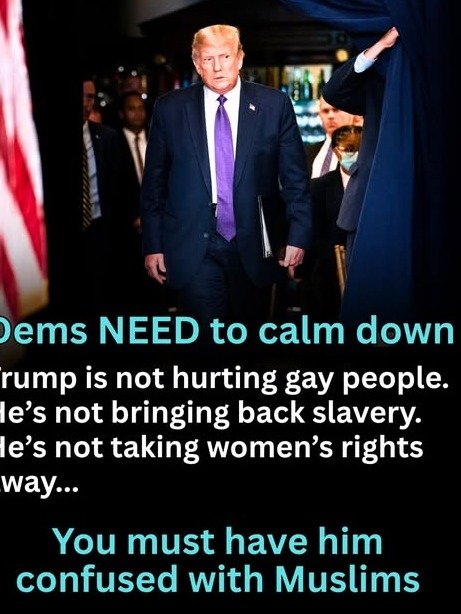
Imagine living in a constant state of emergency. Every news alert, every social media post, every conversation screams impending doom, warning of an existential threat just around the corner. For many Americans, this isn’t a hypothetical scenario; it’s the exhausting reality of modern politics, especially concerning the discourse around figures like Donald Trump.
We’ve reached a saturation point. The constant drumbeat of ‘end-of-the-world’ language has become a pervasive backdrop to our lives, turning every policy dispute into a historic battle for the soul of the nation. It’s a phenomenon we’re calling ‘Panic Politics,’ and its psychological toll on the American public is becoming undeniable.
The Relentless Cycle of Alarmism
For years, the political landscape has been dominated by a narrative of perpetual crisis. Whether you’re on the left or the right, the message often feels the same: the stakes couldn’t be higher, and failure means catastrophic consequences. While some issues genuinely warrant serious attention, the consistent framing of every single disagreement as an existential threat has created a dangerous feedback loop.
This relentless alarmism, particularly pronounced during and after the Trump presidency, has desensitized many to genuine concerns. When everything is an emergency, nothing truly feels like one. The emotional bandwidth required to engage with such high-stakes rhetoric day in and day out is simply unsustainable for the average person, leading to widespread fatigue and disengagement.
From Debate to Doomsday: The Erosion of Nuance
One of the most damaging aspects of ‘Panic Politics’ is its impact on reasoned debate. When every political opponent is portrayed as an enemy, and every policy disagreement as an attack on fundamental values, there’s little room left for compromise or even understanding. The complexity of governing, which requires nuanced discussion and give-and-take, is replaced by a binary, all-or-nothing struggle.
This ‘us vs. them’ mentality turns political discourse into a zero-sum game. Instead of seeking common ground, the objective becomes total victory over an opponent depicted as dangerous or even evil. This isn’t just about politicians; it infiltrates everyday conversations, straining relationships and deepening societal divides.
The Trump Effect and Beyond
While the phenomenon of ‘Panic Politics’ predates Donald Trump, his political rise and presidency undoubtedly amplified it to unprecedented levels. Both his supporters and his detractors frequently employed language that painted the opposing side as an apocalyptic force. For his base, he was the last hope against a corrupt establishment; for his critics, he represented an existential threat to democracy itself.
“When every fight is framed as a historic threat, and every policy dispute as a battle for the very fabric of society, the public inevitably tunes out. The boy who cried wolf has nothing on modern political rhetoric.”
This isn’t to say that concerns weren’t legitimate on either side. However, the *intensity* and *frequency* of the doomsday framing became the default mode, rather than an occasional, reserved tool for truly dire circumstances. This pattern has, unfortunately, continued to permeate the political discourse even after his term.
The Media’s Role in Amplifying Alarm
Traditional and social media platforms play a significant, often unwitting, role in perpetuating ‘Panic Politics.’ In a 24/7 news cycle driven by clicks and engagement, sensational headlines and dramatic narratives often win out over measured analysis. Outrage and fear are powerful emotions that drive sharing and viewership, creating an incentive for media outlets to lean into alarmist framing.
Social media, in particular, excels at creating echo chambers where individuals are constantly fed information that confirms their existing biases and amplifies their fears. Algorithms prioritize content that generates strong reactions, inadvertently pushing more extreme and panic-inducing narratives to the forefront of our feeds. This makes it incredibly difficult for individuals to escape the constant political noise.
Why the Hyperbole? The Strategic Use of Fear
It’s important to understand that ‘Panic Politics’ is often a deliberate strategy. Leaders and campaigns use high-stakes rhetoric for several reasons:
- Mobilization: Fear is a powerful motivator. Framing an election or policy debate as an existential threat can galvanize a base and drive voter turnout or activism.
- Fundraising: Urgent calls to action, often accompanied by warnings of dire consequences, are highly effective for soliciting donations.
- Demonization of Opponents: By portraying the opposition as inherently dangerous or destructive, it becomes easier to justify extreme measures or dismiss their arguments without genuine consideration.
- Agenda Setting: Constant alarmism can force certain issues to the forefront of public consciousness, even if they might not otherwise warrant such prominence.
While these tactics can be effective in the short term for specific political goals, they come at a significant cost to the long-term health of democratic discourse and the mental well-being of the populace.
The Cost to Democracy and Mental Health
The continuous bombardment of ‘end-of-the-world’ narratives has severe consequences:
- Political Burnout: Many Americans simply tune out, feeling overwhelmed and helpless. This leads to apathy and disengagement, which can be detrimental to a functioning democracy.
- Erosion of Trust: When every crisis is declared ‘the worst ever,’ and then often passes without the predicted apocalypse, public trust in political leaders and media institutions erodes.
- Increased Polarization: The constant framing of issues as existential battles deepens divides, making it harder for people to find common ground or even empathize with those on the other side.
- Mental Health Impact: Living under a constant perceived threat, even if largely rhetorical, can contribute to anxiety, stress, and a pervasive sense of dread.
We are reaching a point where the constant state of alarm has dulled our senses, making it harder to discern genuine threats from political theater. This desensitization is a dangerous path, potentially leaving us unprepared for *real* crises when they inevitably arise.
Breaking the Cycle: How to Navigate Panic Politics
So, what can be done when the political air is thick with panic? Navigating this environment requires intentional effort:
- Cultivate Media Literacy: Be critical of headlines and sources. Understand that many outlets have a financial incentive to sensationalize. Seek out diverse perspectives and fact-checking resources.
- Limit Exposure: It’s okay to take breaks from the news and social media. Constant immersion in the political maelstrom is not healthy. Set boundaries for your consumption.
- Focus on Local: While national politics dominates headlines, much impactful change happens at the local level. Engaging with community issues can feel more tangible and less overwhelming.
- Seek Nuance: Actively look for reporting and commentary that offers balanced perspectives, explores complexities, and avoids overly dramatic language. Challenge yourself to understand opposing viewpoints, even if you disagree.
- Practice Self-Care: Recognize the psychological toll of ‘Panic Politics’ and take steps to protect your mental well-being. Engage in activities that bring you joy, connect with friends and family, and practice mindfulness.
Ultimately, the power to shift away from ‘Panic Politics’ lies not just with leaders and media, but with individuals. By demanding more reasoned discourse and refusing to be perpetually swept up in waves of alarm, we can collectively push towards a healthier, more sustainable political environment.
A Call for Calm in the Chaos
The weariness among Americans is palpable. The constant end-of-the-world language around figures like Donald Trump, and indeed across the political spectrum, is not just tiring; it’s actively undermining our ability to function as a cohesive society. Every fight framed as a historic threat, every policy dispute escalated to an existential crisis, ultimately diminishes our capacity to address real challenges effectively.
It’s time for a collective deep breath. We need to move beyond the knee-jerk alarmism and demand a return to more grounded, nuanced discussions. Only then can we hope to rebuild trust, bridge divides, and tackle the pressing issues facing our nation without succumbing to perpetual panic.
About the Author




