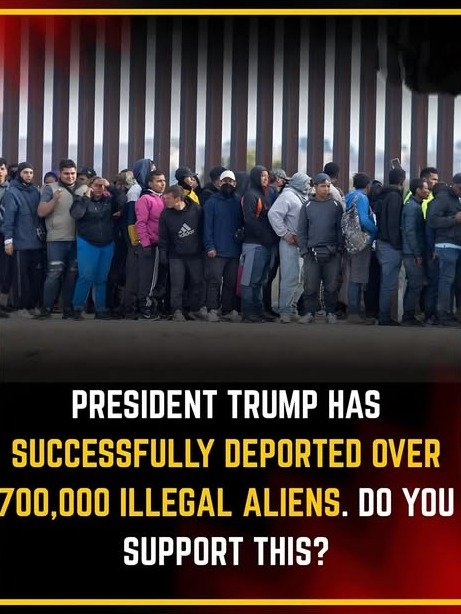
Imagine a house without a locked front door, or a business without clear entry rules. The very idea feels unsettling, doesn’t it? This simple analogy helps us grasp a far more complex, yet equally fundamental, concept: the absolute necessity of strong border enforcement for any sovereign nation.
Our national borders are not just lines on a map; they represent the very fabric of our sovereignty, our security, and our shared values. They are the physical demarcation of our collective identity and the first line of defense against a myriad of challenges, both seen and unseen.
Ignoring the integrity of these borders is akin to neglecting the foundations of a building. It might stand for a while, but eventually, the structural weaknesses will become undeniable, leading to instability and potential collapse. This is why the debate around border security isn’t merely political rhetoric; it’s a critical discussion about the future and stability of our nation.
The Unbreakable Foundation of National Sovereignty
At its core, a nation’s sovereignty is defined by its ability to govern itself within its own territory. This power is inherently tied to the capacity to control who and what enters and exits its boundaries. Without secure borders, a nation effectively loses control over its own destiny, its resources, and the safety of its citizens.
Strong border enforcement isn’t about isolation; it’s about control. It’s about a nation’s fundamental right to determine its own population, protect its economic interests, and maintain its cultural integrity. When these controls weaken, the very concept of nationhood begins to erode, giving way to disorder and uncertainty.
Every country in the world, from the smallest island state to the largest continent-spanning power, understands this principle. The idea that a nation can thrive without defining and defending its borders is, quite frankly, a dangerous illusion that ignores centuries of human history and geopolitical realities.
Safeguarding National Security: More Than Just a Wall
The most immediate and undeniable benefit of robust border enforcement is enhanced national security. In an increasingly complex global landscape, threats can emerge from any direction, and an unsecured border presents a gaping vulnerability that adversaries and criminal elements are all too eager to exploit.
Consider the myriad of dangers: international terrorism, drug trafficking, human smuggling, and the flow of illicit weapons. These are not abstract threats; they are real, tangible dangers that directly impact the safety and well-being of every citizen. A porous border serves as an open invitation for those who wish to do harm.
Effective border security measures, including advanced technology, dedicated personnel, and strategic infrastructure, act as a vital deterrent and detection system. They allow authorities to vet individuals, intercept contraband, and prevent dangerous elements from infiltrating our communities, thereby protecting our homes, schools, and public spaces.
The Rule of Law: The Backbone of a Just Society
One of the most crucial arguments for strong border enforcement is its direct link to the rule of law. Laws are not suggestions; they are the agreed-upon framework that governs society, ensuring fairness, order, and justice for all. When laws, particularly those pertaining to national entry, are consistently disregarded, the entire legal system is undermined.
The principle is simple:
Laws exist for a reason, and leadership means ensuring they are upheld.
This isn’t just about immigration; it’s about the fundamental integrity of our governance. If a nation cannot enforce its most basic entry requirements, what does that say about its ability to enforce any other law?
Allowing unchecked crossings sends a dangerous message that certain laws can be ignored without consequence. This erosion of respect for the law can have far-reaching implications, fostering a sense of impunity that can ripple through other aspects of society, leading to a breakdown of order and public trust.
Economic Stability and Resource Strain
While often overlooked in the security debate, the economic implications of uncontrolled borders are profound. Every nation operates on a finite set of resources, from public services like healthcare and education to housing and infrastructure. Unmanaged population influxes can place immense strain on these systems.
Consider the local communities along border regions, or even major cities far from the border, that suddenly face overwhelming demands on their social services. Schools become overcrowded, healthcare facilities are stretched thin, and housing shortages become exacerbated. This isn’t sustainable and often leads to increased taxes or reduced quality of services for existing citizens.
Furthermore, an uncontrolled labor market can depress wages in certain sectors, impacting the livelihoods of legal residents and citizens. Strong border enforcement helps maintain a regulated and orderly immigration system that aligns with a nation’s economic capacity and workforce needs, ensuring stability and fairness for all.
Leadership’s Indispensable Role in Enforcement
The call for strong border enforcement is fundamentally a call for responsible leadership. It requires political will, strategic planning, and the allocation of necessary resources to ensure that laws are not just on the books, but actively and effectively enforced. Leadership means making tough decisions, not shying away from them.
Effective leadership in border security involves several key components:
- Clear Policies: Establishing unambiguous laws and regulations for entry and exit.
- Resource Allocation: Providing border agencies with adequate funding, personnel, and technology.
- Strategic Planning: Developing long-term strategies to adapt to evolving threats and migration patterns.
- International Cooperation: Working with neighboring countries and global partners to address root causes and manage flows.
- Accountability: Ensuring that enforcement actions are conducted legally, ethically, and humanely, while still being effective.
Without this decisive leadership, border enforcement efforts become fragmented, inefficient, and ultimately, ineffective. It is the responsibility of those in power to prioritize national security and uphold the rule of law, even when faced with complex humanitarian challenges.
Addressing Misconceptions and Humanitarian Concerns
The discussion around border enforcement often becomes entangled with humanitarian concerns, and rightly so. Compassion and the ethical treatment of individuals are vital considerations. However, strong enforcement and humanitarianism are not mutually exclusive; in fact, an orderly system can better address humanitarian needs.
A secure border, managed by clear laws, allows for controlled and legal pathways for those seeking asylum or refuge, ensuring they can be processed safely and fairly. Conversely, an uncontrolled border often exposes vulnerable individuals to exploitation by criminal organizations, leading to dangerous journeys and tragic outcomes.
About the Author




