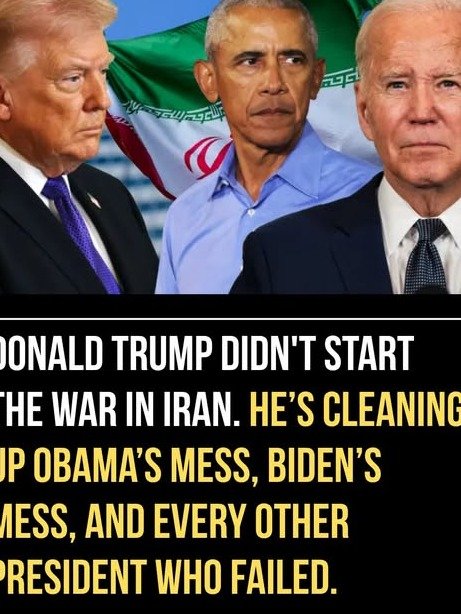
What if the headlines you’re reading about Iran today are only scratching the surface of a crisis decades in the making? Forget the easy answers and political blame games; the truth behind Iran’s escalating threat is a complex, 40-year saga of missteps, missed opportunities, and a dangerous game of geopolitical chess that has brought us to the brink.
The current global alarm over Iran didn’t just appear overnight, nor did it begin with any single presidential administration. This isn’t a problem that started with Trump, or Obama, or even Bush. Instead, it’s the culmination of four decades of intricate historical events, strategic blunders, and a pattern of international responses that, arguably, allowed the threat to fester and grow.
The Seeds of Revolution: A Nation Divided
To truly understand the modern Iranian threat, we must rewind to the era before the 1979 Islamic Revolution. For decades, Iran was ruled by the Shah, a monarch often seen as a staunch U.S. ally, but also as an authoritarian leader who suppressed dissent and whose Western-backed modernization efforts alienated vast segments of the population.
Beneath the surface of apparent stability, deep currents of resentment were brewing. A powerful clergy, a burgeoning intellectual class, and a populace yearning for self-determination and an end to perceived foreign meddling laid the groundwork for a seismic shift. This period, often overlooked, planted the initial seeds of anti-Western sentiment that would define the new regime.
1979: The Birth of a New Threat
The Islamic Revolution in 1979 was not merely a change of government; it was a fundamental reordering of Iran’s identity and its place in the world. The overthrow of the Shah and the establishment of the Islamic Republic under Ayatollah Khomeini marked a dramatic pivot away from Western alignment, fueled by revolutionary fervor and a doctrine of exporting its unique brand of Islamic governance.
The infamous hostage crisis at the U.S. embassy, which lasted for 444 days, solidified Iran’s image as an anti-Western, revolutionary power. This event wasn’t just a diplomatic incident; it was a declaration of defiance that signaled a new, unpredictable player on the global stage, setting a confrontational tone that would persist for decades.
Forged in Fire: The Iran-Iraq War’s Lasting Impact
Just a year after the revolution, Iran was plunged into a brutal eight-year war with neighboring Iraq, initiated by Saddam Hussein. This devastating conflict, which claimed hundreds of thousands of lives, profoundly shaped the nascent Islamic Republic, embedding a deep sense of vulnerability and a fierce determination for self-reliance in its national psyche.
The war also convinced Iran of the necessity to develop its own robust military and, crucially, its own unconventional capabilities to deter future aggression. This period was instrumental in fostering Iran’s pursuit of missile technology and, eventually, its clandestine nuclear program, driven by a powerful narrative of national survival against overwhelming odds and perceived international indifference.
The Nuclear Ambition: A Global Red Line Emerges
By the early 2000s, whispers of Iran’s secret nuclear program turned into undeniable facts. The revelation of hidden uranium enrichment facilities and heavy water plants sent shockwaves through the international community. Suddenly, the world faced the terrifying prospect of a revolutionary, anti-Western state acquiring the ultimate weapon.
This discovery initiated a long, arduous dance of diplomacy, sanctions, and threats. International bodies like the IAEA struggled to gain full access, while the UN Security Council passed multiple resolutions demanding Iran halt its enrichment activities. Yet, despite mounting pressure, Iran defiantly pressed forward, often playing a cat-and-mouse game with inspectors.
The Era of ‘Weak Agreements’ and ‘Empty Warnings’
For years, the international community’s approach to Iran has been characterized by a cycle of escalating rhetoric, limited sanctions, and ultimately, what many critics describe as
About the Author




