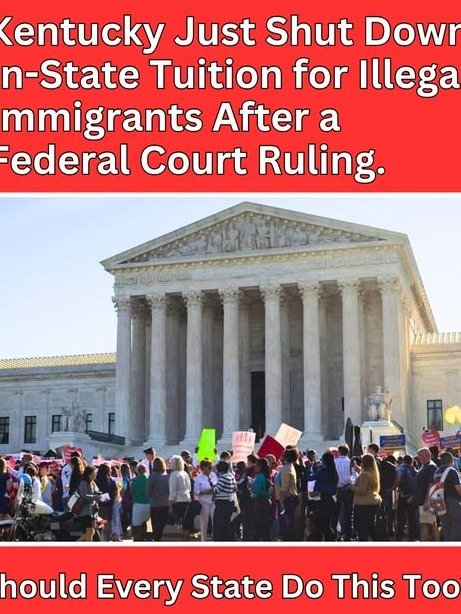
A recent court ruling in Kentucky might seem like a localized issue concerning college tuition, but peel back the layers, and you’ll discover it’s actually the opening shot in a much larger, intensely personal battle over who qualifies for taxpayer-supported benefits across America. This decision isn’t just about the cost of higher education; it’s revealing a deep societal divide and setting a potential precedent that could ripple far beyond the Bluegrass State.
For years, states have grappled with the complex question of whether undocumented students, often brought to the U.S. as children, should be eligible for in-state tuition rates at public universities. This debate touches on economics, ethics, legal interpretations, and the very definition of community. Kentucky’s highest court has now weighed in, drawing a line that could redefine access to public services for many.
The Heart of the Kentucky Ruling
The controversy in Kentucky centered on a policy that allowed certain students, including some undocumented individuals, to pay in-state tuition rates. This policy was designed to make higher education more accessible to a group of residents who, despite their immigration status, had grown up in Kentucky, attended its K-12 schools, and contributed to local communities.
However, a legal challenge argued that state law specifically reserves in-state tuition for those who are legal residents or citizens of the United States. The plaintiffs contended that extending these benefits to undocumented individuals effectively subsidized their education with taxpayer dollars, a practice they deemed unlawful and unfair.
The Kentucky Supreme Court ultimately sided with the plaintiffs, ruling that the state’s statutes explicitly link in-state tuition eligibility to legal residency. This decision effectively bars undocumented students from accessing the significantly lower tuition rates, forcing them to pay out-of-state tuition, which can be prohibitively expensive, or forgo higher education altogether.
“This ruling isn’t just about tuition; it’s about the fundamental question of who qualifies as a ‘resident’ for the purpose of receiving state-funded benefits,” stated one legal analyst following the decision. “It highlights the tension between state-level policies and federal immigration law.”
Beyond Tuition: The Broader Battle Over Benefits
While the Kentucky ruling specifically addresses in-state tuition, its implications extend far beyond university campuses. It has become a powerful symbol in a much larger national debate about who should qualify for an array of taxpayer-supported benefits and public services. This includes everything from driver’s licenses and healthcare access to social services and unemployment benefits.
The core of this “bigger fight” revolves around the legal status of individuals versus their contributions to society. Proponents of broader access argue that many undocumented immigrants are integral parts of their communities, paying taxes (sales, property, and often income via ITINs), working jobs, and raising families. Denying them basic services, they contend, creates a marginalized underclass and can have negative public health and economic consequences for everyone.
Conversely, those who advocate for stricter eligibility often emphasize the rule of law and the finite nature of public resources. They argue that taxpayer funds should primarily benefit legal citizens and residents, and that extending benefits to undocumented individuals incentivizes illegal immigration and places an undue burden on state budgets.
A Patchwork of Policies Across the Nation
The Kentucky decision stands in contrast to the approach taken by many other states. Currently, at least 25 states and Washington D.C. have policies that allow undocumented students to pay in-state tuition rates, often with specific requirements such as having attended state high schools for a certain number of years. These states often cite economic benefits, social integration, and humanitarian concerns as reasons for their policies.
- States like California, Texas, and New York have long-standing laws permitting in-state tuition for eligible undocumented students.
- Other states, such as Arizona and Georgia, have explicitly banned in-state tuition for undocumented students, often through legislative action or court rulings similar to Kentucky’s.
- The debate is ongoing in many state legislatures, reflecting the deeply divided public opinion on this complex issue.
This creates a complex and often confusing landscape for students and policymakers alike, highlighting the lack of a unified federal approach to immigration and its impact on state-level benefits.
Economic and Social Ripple Effects
The economic impact of such rulings is multifaceted. For universities, a decrease in enrollment of qualified students, even if they were paying in-state rates, can affect budgets and diversity. For the students themselves, the increased cost of out-of-state tuition can be a barrier to upward mobility, potentially trapping them in lower-wage jobs and reducing their future earning potential and tax contributions.
From a broader societal perspective, denying access to higher education for a segment of the population can lead to a less educated workforce and a missed opportunity for economic growth. Many economists argue that investing in education for all residents, regardless of status, ultimately benefits the entire state economy by increasing human capital and tax revenues.
However, opponents often counter that while these individuals may contribute, the primary responsibility of state governments is to their legal citizens and residents. They argue that the costs associated with providing benefits to undocumented immigrants, even if offset by some contributions, still represent a diversion of resources that could otherwise be used for legal residents.
The Political Hotbed: Immigration at the State Level
This debate is deeply intertwined with national immigration politics, even when playing out in state courts. As federal immigration reform remains gridlocked, states have increasingly become the battlegrounds for defining the rights and responsibilities of undocumented residents.
The Kentucky ruling reflects a conservative interpretation of state law, aligning with a broader political movement that seeks to limit benefits for undocumented immigrants. Conversely, states with more liberal policies often reflect a desire for integration and support for the “Dreamers” narrative—those brought to the U.S. as children through no fault of their own.
This ongoing tension underscores the profound challenges of a decentralized approach to a fundamentally national issue. Each state’s decision adds another layer to the complex tapestry of immigration policy in America, often creating disparate outcomes for individuals based solely on geography.
What’s Next for Kentucky and Beyond?
For Kentucky, the immediate impact of the ruling means that undocumented students will face significantly higher tuition costs, potentially limiting their access to higher education. Advocacy groups and immigrant rights organizations are likely to continue to push for legislative solutions that could restore in-state tuition eligibility, or explore other legal avenues.
Nationally, the Kentucky Supreme Court’s decision could embolden similar legal challenges in other states where in-state tuition policies for undocumented students exist. It serves as a reminder that these policies are often vulnerable to legal scrutiny and can be overturned, even if they have been in place for years.
The debate over who qualifies for taxpayer-supported benefits is far from over. The Kentucky ruling is not an endpoint, but rather a significant development in an ongoing, passionate discussion about fairness, legality, and the future of millions of individuals living within our borders. It forces us all to confront fundamental questions about our values and the kind of society we aspire to build.
Finding Common Ground in a Divided Landscape
As this debate continues, it becomes increasingly clear that finding common ground will require nuanced discussions that move beyond simple yes-or-no answers. It demands an examination of the economic realities, the human impact, and the legal frameworks that govern our communities.
Whether through legislative action, future court challenges, or shifts in public opinion, the question of who draws the line on benefits—and where that line is drawn—will continue to shape the lives of countless individuals and the future direction of states across the nation. The Kentucky ruling has simply brought this critical conversation to the forefront, demanding our attention and careful consideration.
About the Author




